It was common in the pre-modern world for the champions of rival armies to engage in head-to-head combat — hence the stories of Paris and Menelaus in Homer’s Iliad and David and Goliath in the Bible. In 1520, Henry VIII of England and Francis I of France let off steam during peace negotiations at the “Field of Cloth of Gold” by having a wrestling match. (Henry lost despite his superior weight.) In 1593, King Naresuan of Thailand and Crown Prince Mingyi Swa of Burma settled a battle with a duel on their war elephants. (The king won.)
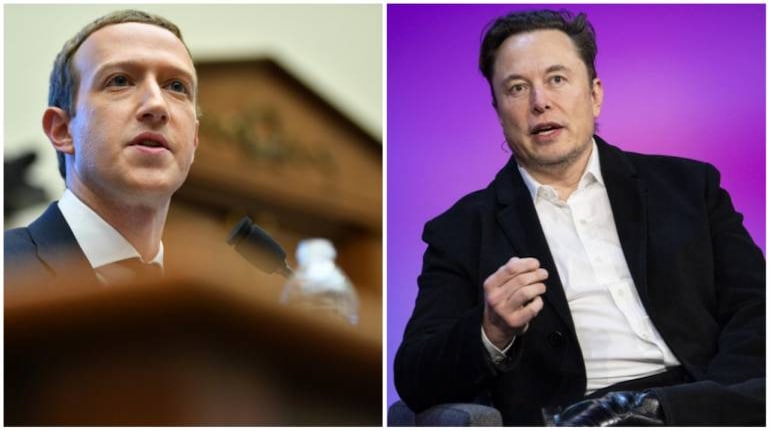
Now this practice is being revived in the very heart of the modern world: Long-time rivals Elon Musk and Mark Zuckerberg are engaged in negotiations to have a cage match, with Las Vegas and the Colosseum in Rome touted as a possible venue.
Few serious people think that the grudge match will take place (though PR people and betting companies are doing their best to stoke up the story). But, if it does, Zuckerberg will doubtless triumph.
Zuckerberg looks terrifyingly fit, to judge from the selfies he likes to post — his shoulders are thick with muscle and his forearms bulge. Musk looks pudgy by contrast. Zuckerberg can complete the Murph Challenge (named after a Navy SEAL who lost his life in Afghanistan in 2005) in 40 minutes: a mile run, 100 pull-ups, 200 push-ups, 300 air squats, and another mile run, and all while wearing a 20-pound vest. He is also a champion practitioner of Brazilian jiujitsu (a variety of judo). Musk’s exercise regime might be politely described as modest by comparison. “I have this great move that I call “The Walrus”, where I just lie on top of my opponent & do nothing,” Musk tweeted.
Musk has succeeded in doing something extraordinary with his one-two mismanagement of Twitter (he has even tried to ration access to an institution that grows fat on free content provided by users) and raising the issue of a cage fight: making Zuckerberg look cool. Only the other day the Meta CEO was best known for invading privacy and betting heavily on a metaverse that nobody wanted to enter. Now he is the muscle-bound savior of social media. Still, the cage match nonsense also shines a light on the peculiar state of the tech elites who do so much to shape our lives.
What could say “macho” louder than a cage match? In 2018 Bloomberg’s Emily Chang published Brotopia: Breaking Up the Boys’ Club of Silicon Valley, in which she chronicled how Silicon Valley is even more male-dominated than Wall Street. Valley companies apply various “bro-filters” in recruiting talent — they initially favored “nerds” but then shifted to alpha-types. The Bros behave like adolescent boys as soon as they enjoy any success. Zuckerberg had Facebook business cards proclaiming, “I’m CEO…Bitch.” Musk celebrated his first big payday by buying a McLaren F1 sports car, which can do 240 miles per hour, and almost killed himself and his passenger, Peter Thiel, when he tried to demonstrate its performance. Despite Chang’s call for a “break-up,” the culture seems the same today as it was in 2018.
And what could say “cult of personality” more clearly than the fuss that has surrounded the cage fight? Tech CEOs are far from the “servant leaders” that leadership gurus like to praise. They are celebrities who attract as much publicity as they can. They measure their success in the number of “followers” they have on social media and the number of people they employ.
Musk is the master of this with his 145 million followers on Twitter and his addiction to publicity stunts such as smoking marijuana on a podcast with Joe Rogan (another Bro type) and giving his children weird names. But other Valley figures such as Peter Thiel and Jeff Bezos also enjoy cult-like followings, which they constantly stoke with odd statements, in Thiel’s case, and rocket launches, in Bezos’.
Zuckerberg is not alone in his obsession with physical fitness. Geeks no longer wear shapeless T-shirts to advertise their indifference to physical appearance (and hygiene). Today, the T-shirts are worn tight to show off their sculpted arms and torsos. Tim Cook, Apple CEO, is a self-confessed “gym rat” who gets on the treadmill at five every morning. Sergey Brin, Google’s co-founder, pushes his body to the limits with a dizzying variety of sports: skydiving, rollerblading, roller hockey, “ultimate frisbee” and high-flying trapeze. The streets of San Francisco are lined, together with the homeless, with gyms advertising the latest health regime.
This preoccupation with physical fitness is linked to a more general preoccupation with self-optimisation: Valley types want to make their personal “operating machines” more efficient just as they want to make their computers’ operating machines faster and better. The Valley is the world’s center of “life extension” — with well-remunerated “longevity scientists” divided between “health-spanners” (who merely want to extend the length of time we can live healthy lives) and “immortalists” (who think we can live forever).
Tech world is full of people who pop pills, sniff powders and ingest potions to improve their health. Ray Kurzweil, the cheerleader of the singularity, supposedly takes 100 pills a day. A significant group also take various mind-expanding drugs to sharpen their perceptions — a micro-dose of LSD supposedly gives you a mental edge in much the same way as a “morning snifter” was purported to do in the days of Bertie Wooster. Jack Dorsey, the serial entrepreneur who founded Twitter, is celebrated in the Valley for pursuing an extraordinary physical regime extending well beyond a few exercises. He starts the day with an infrared sauna and an ice bath, walks five miles to work, only eats one meal a day, and fasts at weekends (“time slows down,” he says, to nobody’s surprise).
Tech types undoubtedly engage in all this physical activity to improve the things that make their fortunes — their minds. The old Victorian adage “mens sana in corpore sano” (“a fit mind in a fit body”) works as well for the Silicon Empire as it did for the British Empire. But there is more than just mental optimisation to the current obsession with the body. There is a sense of getting even. The oldest division in the American high school is between jocks and nerds. The jocks get all the glory and the girls. The nerds get sand kicked in their face. Today, nerds-turned-CEOs are bent on delivering the jocks a two-fold humiliation: making all the money in the world while also developing perfect bodies.
There is also a sense of reconnecting with something primal. Leadership is not only about seeing further than your rivals. It is about exerting physical dominance over others. A wealth of research literature suggests not only that we are more inclined to follow physically superior types — taller people are more likely to win leadership roles than us shorter types, for example. It suggests that, once people take leadership roles, they strike dominant poses and throw their weight about. Bosses spread themselves behind large desks, stand tall when speaking to subordinates, and speak in declarative sentences.
In his recent The Age of the Strongman (2022), Gideon Rachman of the Financial Times argues that his thesis is true literally as well as metaphorically. Vladimir Putin likes to pose bare-chested hunting and fishing. Xi Jinping prides himself on his impressive stature. Erdogan arranged a football match in which he scored a hat trick. Narendra Modi’s supporters boast that he has a 56-inch chest. The Age of the Strongman clearly extends to the world’s most cerebral — and liberal — enclave as well as to its populist regions.
We may highlight our educational credentials when we’re trying to get hired, particularly in the tech world. We may spend our days trapped in a virtual world courtesy of Silicon Valley. But underneath it all we’re still nothing more than naked apes — strutting around in front of our rivals and flexing our muscles if we have them (or dreaming of flexing our muscles if we don’t) in a never-ending contest of physical gamesmanship.
Adrian Wooldridge is the global business columnist for Bloomberg Opinion. Views are personal and do not represent the stand of this publication.Credit: BloombergDiscover the latest Business News, Sensex, and Nifty updates. Obtain Personal Finance insights, tax queries, and expert opinions on Moneycontrol or download the Moneycontrol App to stay updated!
Find the best of Al News in one place, specially curated for you every weekend.
Stay on top of the latest tech trends and biggest startup news.