It is rare for a judgment by any Court to attract copious reportage and op-ed space beyond the country’s borders. But the recent judgment by the UK Supreme Court declaring as unconstitutional the proroguing of Parliament by the Boris Johnson government did just that. Effectively, Parliament would remain in session till the date of Brexit, and therefore can oversee the government’s strategy.
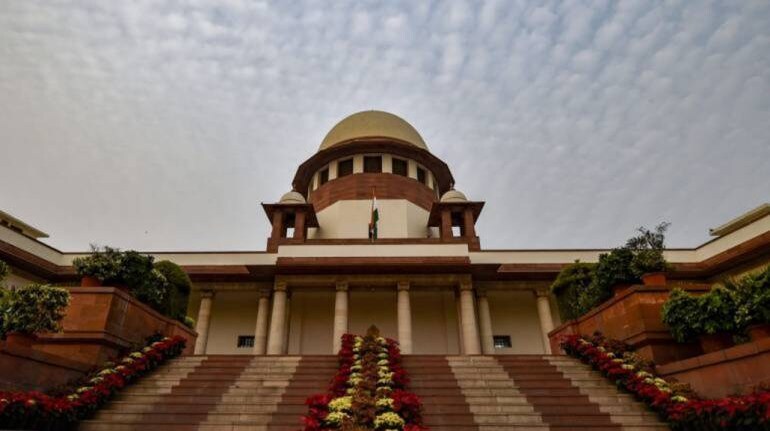
In India, it was met with regretful longing by lawyers and activists, and perhaps for good reason. Behold, a Court that stood up for the Constitution, overruling the government’s protestations, and in record time.
One of the arguments by the Crown’s lawyers was that without the threat of Parliament’s oversight, the threat of leaving the European Union on October 31 would seem more credible, helping Britain negotiate better terms of exit with the EU – as strong a “national interest” angle as any. Another argument was that the power to prorogue was a prerogative power of the government, and having complied with the all the procedural formalities, it was not up to challenge in Court.
Yet, the UK Supreme Court, in a unanimous verdict, struck down the prorogation, and ruled that Parliament cannot be denied its right to have oversight over the government at such a crucial time. But even more importantly, the speed with which they heard arguments and pronounced judgment befitted the seriousness of the dispute. Meanwhile in India, this week the Supreme Court adjourned its hearing into the government’s actions in Kashmir by another six weeks, meaning that the challenge won’t be heard till after the bifurcation of the state takes effect on October 31. Even as the state remains under lockdown (it would be about 100 days if this continues till then), the people would be deprived of one of the most fundamental of rights – access to justice.
But that’s just one example. Last week, the Supreme Court ruled that Maharashtra Chief Minister Devendra Fadnavis can be prosecuted for allegedly not declaring criminal cases pending against him. But the judgment came just as he is set to complete his term as CM.
The petitions challenging Aadhaar were filed in 2014, but the hearing was delayed. By the time the petitions were finally heard, almost 99 percent of the country had enrolled, presenting a fait accompli to the apex court.
It is quite likely that the Kashmir cases might meet the same fate. You could say the same about the battle over investigating possible corruption in the Rafale procurement, electoral bonds, or paper-trails in Electronic Voting Machines, all of which saw the court dragging its feet.
Then there is the issue of the Court blindly accepting the government’s assertions. That is best displayed in the Aadhaar judgment, where the Court blindly accepted the Attorney General’s submission that “no State would be interested in the mass surveillance of 1.2 billion people of the country, or even the overwhelming majority of officers and employees or professionals.”
There are, of course, differences between the UK case and the Indian examples. The British government was seeking to evade scrutiny by Parliament, whereas in India, a majority government had the full backing of Parliament. But it is at times like this that the courts must raise itself as a protector of the Constitution.
The great Nani Palkhivala developed the theory of “basic structure” to say even the three arms of the government are still subservient to the Constitution. Therefore, the government could not be allowed to change an essential feature (say, the maximum 5-year term for the Lok Sabha) even with a brute majority. And Fundamental Rights are the most essential feature of the Constitution.
If anything, the UK SC judgment shines a light on the court’s role in such situations. Speaking on justiciability (the court’s power to adjudicate on something) of the prorogation, the UK SC laid down that merely because the Prime Minister is accountable to Parliament does not mean that courts have no role to play in deciding on the constitutional validity of its decisions. And if an issue was justiciable, then the court will only be performing its powers under the Constitution by adjudicating upon it.
And therein lies the rub. By not adjudicating on cases, the Indian Supreme Court is failing the duty thrust upon it by the Constitution as protectors of the citizen. But who will hold it to account?
Abraham C Mathews is an advocate based in Delhi. Twitter: @ebbruz. Views are personal.
Discover the latest Business News, Sensex, and Nifty updates. Obtain Personal Finance insights, tax queries, and expert opinions on Moneycontrol or download the Moneycontrol App to stay updated!
Find the best of Al News in one place, specially curated for you every weekend.
Stay on top of the latest tech trends and biggest startup news.