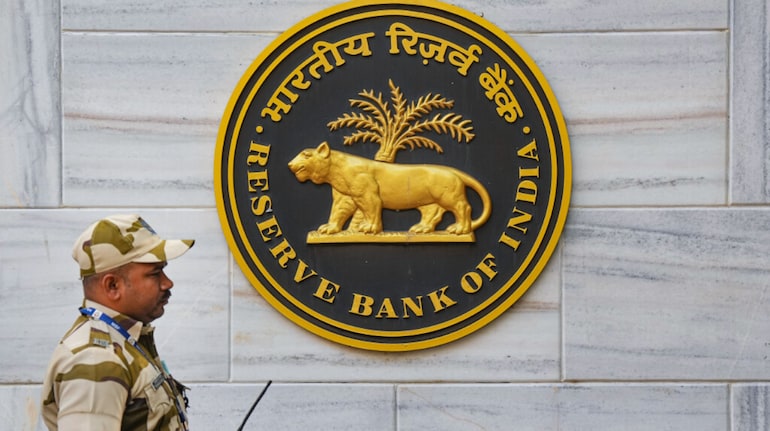
The RBI’s monetary policy seems to mark a significant change in direction, particularly in regulation and potentially when it comes to inflation targeting. Importantly, Governor Sanjay Malhotra has accomplished this without media commentary about the RBI doing the government’s bidding. The policy was not overly exuberant- the cut was 25 basis point rather than 50, the stance was maintained at neutral, and there was no promise of unlimited liquidity.
Malhotra, appointed in December, has also been praised for his poised performance on Friday, in his first significant public appearance after becoming governor.
As for the policy itself, the cut in repo rate of 25 bps was widely anticipated. The markets did not seem overly impressed with the Nifty ending marginally lower.
The Bank Nifty declined 223 points, possibly because markets may have expected more specific measures to increase liquidity. The system liquidity --- as measured by the average net position under the Liquidity Adjustment Facility--has been experiencing a deficit in December and January largely because of advance tax payments and RBI’s dollar purchases which results in an increase in the supply of rupees.
The latter may have been the most significant contributor.
Market participants expect a shallow rate-cutting cycle of 50 to 75 bps in the course of 2025.
Total equated monthly installments (EMI) payouts will decline, providing a further and significant boost to consumption in the wake of the income tax cuts announced in the budget. The rise in EMIs on account of relatively high interest rates is believed to have contributed to the weakness of consumption, particularly in urban areas. The rate cut should help.
Lens on Cost of Regulation
The sharpest departure from the previous policy regime was in regulation. Regulations intended to enhance consumer protection and financial stability may impact efficiency, Governor Malhotra said. Just as there is no free lunch, regulation has costs. Thus “the benefits and costs of each and every regulation” will be examined.
Governor Malhotra referred to three proposed regulations. These are the Liquidity Coverage Ratio (LCR)- high quality assets which banks must hold to cover potential outflow from deposits- and bank provisioning linked to expected credit loss (ECL) and rules covering projects under implementation.
The LCR and ECL norms are being deferred as news reports, the former reportedly by more than a year.
This is not exactly DOGE territory, but it does clearly mark a change in emphasis. A few banks and NBFCs have been hit by curbs on business which have continued for months.
It remains to be seen whether the new governor will rethink this approach, by, for instance, imposing fines rather than stopping business.
Further RBI rules have significant restrictions on shareholding and voting rights, which are seen as having come in the way of the sale SBI’s stake in Yes Bank. It remains to be seen if this will be reviewed.
The emphasis on reducing the burden of regulation mirrors the budget speech and the Economic Survey.
The RBI may not quite get out of the way as the Economic Survey recommended, but it has promised to think harder, in the new dispensation, about the growth-reducing cost of regulation.
Growth and Inflation
Though less clear than the bits on regulation, there may also be a little more focus on growth rather than inflation.
The governor promised to “improve the macroeconomic outcomes in the best interest of the economy using the flexibility embedded in the framework while responding to the evolving growth-inflation dynamics.” RBI-watchers have interpreted this as meaning that the flexible part of the ‘flexible inflation targeting framework’ will become more important if growth were to falter.
The monetary policy committee has projected a growth rate of 6.7 percent for FY26 compared to 6.4 percent this fiscal. Next fiscal, as per RBI, growth peaks at 7 percent in the quarter before tapering off at 6.5 percent in the last two quarters. CPI is projected to be 4.2 percent. It remains to be seen if the RBI is willing to cut rates more aggressively if growth were to falter.
Discover the latest Business News, Sensex, and Nifty updates. Obtain Personal Finance insights, tax queries, and expert opinions on Moneycontrol or download the Moneycontrol App to stay updated!
Find the best of Al News in one place, specially curated for you every weekend.
Stay on top of the latest tech trends and biggest startup news.