Umer Beigh
After scrapping the special status of Jammu & Kashmir in August, the Centre has finally released key leaders of the National Conference, Farooq Abdullah (on March 13) and his son Omar Abdullah (on March 24), both of whom have been the former chief ministers of the erstwhile state. While they remained under detention, the Bharatiya Janata Party (BJP) promoted a third front in the form of the Jammu and Kashmir Apni Party (JKAP) headed by Altaf Bukhari.
Rumour is that New Delhi has struck a deal with Abdullahs to reassure their renewed roles for participating in the embedded structure of mainstream politics in the region, which possibly could be an assurance given on land and jobs reservation for the locals. By monopolising the arguments on Article 370, New Delhi single-handedly has won its zero-sum game by completely changing the status quo making mainstreamers redundant once again. It must be remember that the abrogation of J&K’s special status caused more damage to pro-Indian polity than to the pro-Hurriyat section.
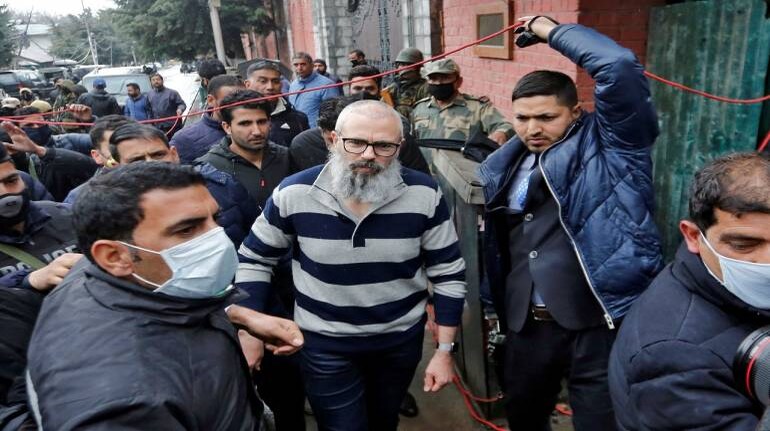
During these eight months of uncertainty, the emerging faces might claim to have the capacity to replace the older lot, but New Delhi realises the existence of Omar Abdullah and Peoples Democratic Party’s (PDP’s) Mehbooba Mufti in the electoral forum will always keep mainstream politics relevant. Seeing the release of Omar Abdullah along with his MP father through these events, commoners don't seem to be thrilled with the release of selected politicians.
For an average Kashmiri, these developments amid the ongoing COVID-19 outbreak are less likely to change their overwhelmingly difficult circumstances — though may are speculating of whether history will repeat itself in Kashmir. Could Omar Abdullah's release be compared along the lines of his grandfather, Sheikh Abdullah, who was forced to make a compromise to safeguard his political career during the 1970s? Then senior Abdullah was pitted against the arch rival Bakshi Ghulam Mohammad. Today Bukhari has volunteered for a similar job after seemingly being pushed by the central government.
How far the National Conference can manoeuvre itself in a new setup in order to be acceptable to New Delhi's standards will depend on the decisions of its senior leaders. Meanwhile, members of the PDP are still ascertaining whether their leader Mufti poses a major challenge to the evolving power dispensation in Kashmir. However, the reality remains even if Mufti and the Abdullahs assumingly come together to form an alliance, they still have to abide by the new rules set by the Centre.
Going against the latest Union Territory norms will invoke trouble, and the central government knows ways how to choke any kind of dissent in the region.
Amidst this, Bukhari, along with a handful of opportunists politicians, might try to exploit the situation to form a government in the upcoming elections, but junior Abdullah still seems to be first ‘favourite’ contender for chief ministership as hinted by former intelligence chief AS Dulat. Pertinently, there won't be any win-win situation in this setup for coming into power.
Many Kashmir observers claim that Omar Abdullah’s detention was partly imposed and partly assumed to collaborate and evade the burden of collaboration, and can thus be termed as ‘passive collaboration’. Considering his position has never been in favour of scrapping J&K’s special status, does this indicate that he will be posing a fight for its restoration? Perhaps his release may only prove helpful in reigniting the political activities that have largely remained suspended since August 5.
However, it remains to be seen how far Omar Abdullah will take the Gupkar Declaration (where mainstream political parties in the Valley decided to join hands to continue the demand for a special status) further, and how much his decisions will avoid the kind of upheaval being witnessed within the PDP. Importantly, the acceptance of key political actors, including Mufti and J&K Peoples Movement chief Shah Faesal to move beyond the calls of restoration of statehood will determine how long their ‘detention’ under the draconian Public Safety Act will be held.
Finally, the magnitude of the ongoing fight against COVID-19 across India nor the peace process in Afghanistan will distract the Centre’s focus on having a command over the developments in Jammy & Kashmir. Before the people of Kashmir could assume what was next for them, they have found themselves in another long self-quarantine.
Umer Beigh is a Kashmir-based journalist. Views are personal.

Discover the latest Business News, Sensex, and Nifty updates. Obtain Personal Finance insights, tax queries, and expert opinions on Moneycontrol or download the Moneycontrol App to stay updated!
Find the best of Al News in one place, specially curated for you every weekend.
Stay on top of the latest tech trends and biggest startup news.