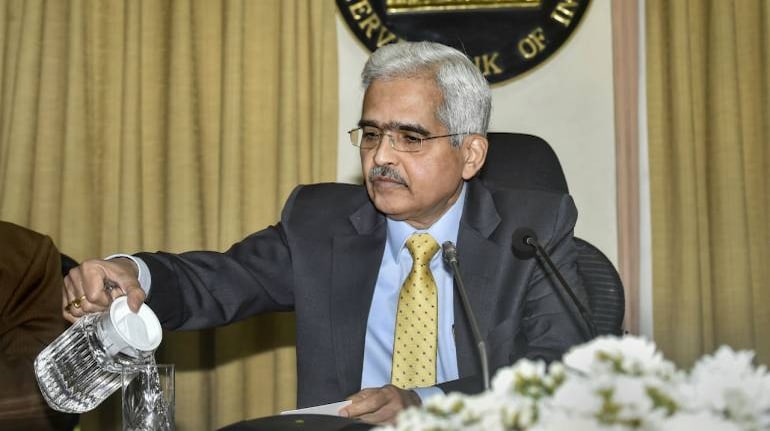
Reserve Bank of India (RBI) Governor Shaktikanta Das on March 27 delivered the second biggest single stroke repo rate cut — 75 basis points — in the central bank’s history, emphasising the devastation that the COVID-19 pandemic could cause across the broader economy.
Only four times before this has the repo — the rate at which banks borrow from the RBI — been slashed by a bigger margin — 100 basis points.
Three of these cuts came in less than three months during October 2008 to January 2009 amid a piling rubble of the global financial crisis precipitated by the stunning collapse of Wall Street icon Lehman Brothers.
Between October 20, 2008, and January 5, 2009, then RBI Governor D Subbarao wielded the knife on the repo, slashing it by 350 basis points in four tranches — from 9 percent to 8 percent on October 20, 2008, from 8 percent to 7.5 percent November 3, 2008, from 7.5 percent to 6.5 percent on December 8, 2008, and from 6.5 percent to 5.5 percent on January 5, 2009.
Before this, the repo rate was sliced such extremely only once — on March 31, 2004, from 7 percent to 6 percent, to lower borrowing costs and aid growth as the economy was entering a period of rapid expansion.
This time, however, could be different. The 75 basis point cut (one basis point is one hundredth of a percentage point) has already pushed the benchmark policy rate to its lowest ever level of 4.4 percent.
This could well be just the beginning of a series of more cuts as the monetary authority pulls all stops to infuse liquidity, and confidence, in an economy battered by the world’s biggest lockdown.
Another round of rate cut will likely bring the repo rate closer to the cash reserve ratio (CRR) — the share of deposits that banks have to park with the central bank.
The RBI has also hacked the CRR by 100 basis points for a year to three percent, bringing it to its lowest level since 1962, the year when India fought a bitter mountain war with China.
Technically, the CRR is at its lowest level since the RBI’s institution in 1935. The RBI adopted a broader definition for the CRR in 1962, standardising it as the proportion of banks’ total time and demand deposits, as compared to earlier when it was mix of different ratios for time (fixed) and demand (savings) deposits.
Such sharp cuts in the CRR has come very rarely in the RBI’s 85 year history. On July 1, 1974 the CRR was cut by 200 basis points, from 7 percent to 5 percent, as the world, and the Indian, economy was nursing deep wounds from a global oil crisis.
The CRR kept on progressively increasing and remained in double digits, before the central bank slashed it by 100 basis points — from 13 percent to 12 percent — on July 6, 1996, barely 20 days before the full budget was presented after the Lok Sabha elections threw up a hung Parliament.
The next big cut in the CRR came on November 3, 2001, when the RBI sliced it by 175 basis points — from 7.5 percent to 5.75 percent — as the dot com bust and the Asian currency tailspin’s tidal wave swept through the banking system.
The biggest cut in CRR of 250 basis points — from 9 percent to 6.5 percent — came on November 3, 2008, as the RBI hurried to pump in liquidity in wake of the global banking crisis.
Now, however, the conditions are different, as also the intended outcomes. Unlike 2008, which was triggered by an internal debt bubble within the financial system that needed regulatory fixing, the current one has been brought upon by a global public health emergency.
One couldn’t have imagined that in India, the repo will come so close to the CRR. A few more rounds of cuts, India may well be pushing close towards a theoretical possibility of zero percent policy rate regime. Don’t rule that out. For no one is quite sure about the trail of destruction that the Coronavirus pandemic will leave across economies.

Discover the latest Business News, Sensex, and Nifty updates. Obtain Personal Finance insights, tax queries, and expert opinions on Moneycontrol or download the Moneycontrol App to stay updated!
Find the best of Al News in one place, specially curated for you every weekend.
Stay on top of the latest tech trends and biggest startup news.