






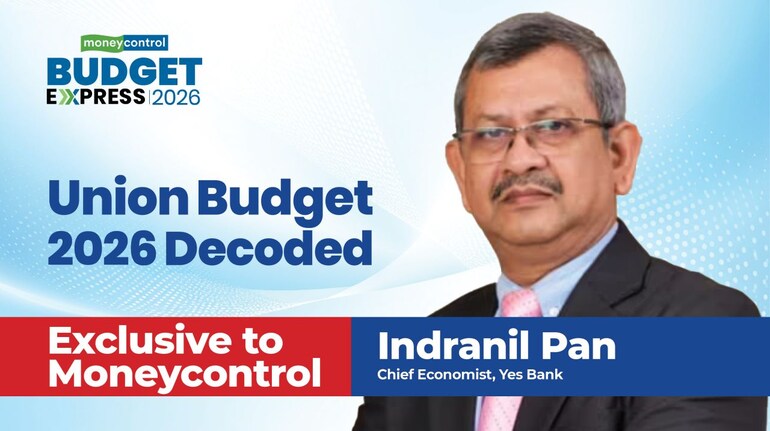

The building blocks of the Budget continue to be similar when compared to previous Budgets: that of building a self-reliant, vibrant growth economy with all economic agents participating in the process, aimed at achieving the objectives of Viksit Bharat. The balance struck in this Budget has been that of addressing near term challenges, while not forgetting the long-term strategic goals of the economy. Importantly, the focus is on continuing with the reforms momentum, building a robust and resilient financial sector and using technology, including AI applications to provide for better governance.
The basic assumptions of the Budget seem to be in order. The Budget math assumes a 10% nominal growth, up from 8% in FY26. This is likely to be beneficial from the perspective of tax collections, which heavily depend on the nominal growth of the economy. The fiscal consolidation strategy also stays intact despite challenges towards allocating more funds for States under the Finance Commission. After sticking to the target of 4.4% for FY26, the Budget targets 4.3% Gross Fiscal Deficit as % of GDP.
What is heartening is to see the capex push has continued with a target spend of Rs 12.2 lakh crore, or 3.1% of GDP. The focus has been on Dedicated Freight Corridors, 20 new National Waterways over the next 5 years, a ship repair ecosystem and a Coastal Cargo Promotion Scheme, high speed rail corridors between cities etc. Till date, despite a high growth in the capex of the government, private investment demand has remained weak.
To provide an incentive to the private capex, the government has proposed to set up an Infrastructure Risk Guarantee Fund to provide partial credit guarantees to lenders. There is also an attempt to develop the corporate bond market and the municipal bond market with larger issuance sizes, much needed to provide the growth ecosystem with adequate funds. These announcements are in line with the concerns placed in the Economic Survey that India suffers from high cost of capital due to relatively shallow corporate bond markets, limited institutional investor depth, and regulatory restrictions on capital flows.
Click Here To Read All Budget News
There was a focus on legacy industries whereby the Budget proposes the scaling up of manufacturing in “7 strategic and frontier sectors”, that is sought through a push to the semiconductor industry and the Electronics Components Manufacturing Scheme (launched in April 2025). The Budget also envisages to boost production of high value and technologically advanced Construction and Infrastructure Equipment (CIE).
On the services side, to attract global investments in data centres into India, a tax holiday was provided to the sector till 2047 to foreign companies that provide cloud services to customers globally by using data centre services from India. Labour-intensive sectors that have been impacted due to US tariffs receive some focus while there is a thrust to strengthen the MSME ecosystem by providing for an equity support to the SMEs via a dedicated Rs 10,000 crore SME Growth Fund.
The one call out is the higher-than-expected gross borrowings by the Centre at Rs 17.2 lakh crore. We have been estimating the gross borrowing requirement of the States also at a high level of around Rs 12.9 lakh crore. Thus, total borrowings by States and Centre via dated securities are likely at Rs 30 lakh crore, in an atmosphere where demand side factors can be a problem.
FPI investments in debt have seen outflows in recent times while hopes of India getting included in the Bloomberg Index have been dashed. Further, demand from banks and other financial institutions could be lower as bank deposit growth and financial institutions’ AUM growth have been under pressure. Banks have also seen a rise in credit, leading to lower investments in G-Secs and SDLs.
Moreover, starting April 1, 2026, new LCR (Liquidity Coverage Ratio) regulations will be operational, which would benefit banks by 6-7% on the LCR. Further, G-Secs were supported in FY26 through RBI’s easing of monetary policy and OMO (Open Market Operations) purchases of securities. With BoP (Balance of Payment) deficit likely to come down in FY27, the size of OMOs may come down in FY27. Overall, we expect the steepness in the yield curve to persist with the 10-year yield locked in a 6.60-6.85% range in H1FY27.
Disclaimer: The views and investment tips expressed by experts on Moneycontrol are their own and not those of the website or its management. Moneycontrol advises users to check with certified experts before taking any investment decisions.
Discover the latest Business News, Sensex, and Nifty updates. Obtain Personal Finance insights, tax queries, and expert opinions on Moneycontrol or download the Moneycontrol App to stay updated!
Find the best of Al News in one place, specially curated for you every weekend.
Stay on top of the latest tech trends and biggest startup news.





