






When was the last time India witnessed Rahul Gandhi holding a rally in the national capital around a single, sharply defined issue?
The Bharat Jodo Yatra was not issue specific. It was a pan-India mobilisation exercise for the Congress, broad in symbolism but diffuse in political confrontation. How often have leaders like Akhilesh Yadav, Tejashwi Yadav, Arvind Kejriwal, or Uddhav Thackeray taken to the streets through sustained walking rallies, beyond the occasional roadshow style appearance? How often has the country seen an opposition leader wage a battle simultaneously on the streets, in Parliament, in courtrooms, and in the capital itself?
Mamata’s playbook
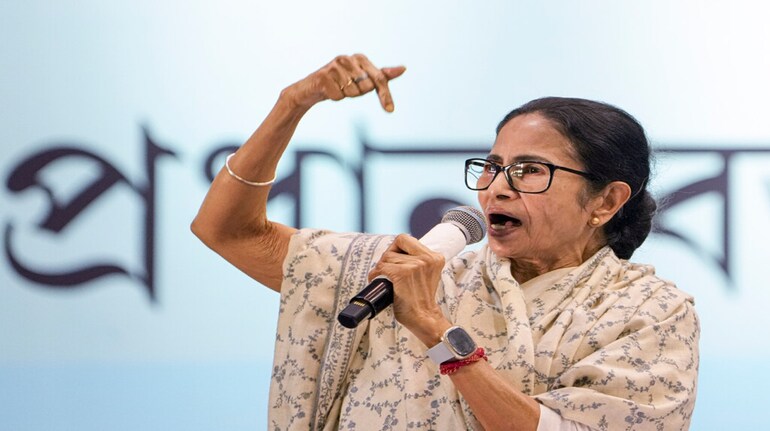
Contrast this with what Mamata Banerjee is doing today. As the sitting chief minister of West Bengal and the Trinamool Congress supremo, she is confronting the largest political party in the country head on.
She is present during ED raids instead of retreating. She is fighting the Special Intensive Revision issue with the Election Commission on the streets of Bengal and inside institutional offices, including the Chief Election Commissioner’s chamber, where she personally appeared with over one hundred and fifty allegedly deleted yet living voters. She has even appeared before the Chief Justice to plead for justice on behalf of Bengal.
In politics, optics matter
Whether her methods have legal sanctity, or whether obstructing the ED constitutes a crime, are matters for the courts to decide. But politics is not fought only in courtrooms. It is fought in public view. It must be seen as a fight. In an age of performative power and visible resistance, opposition politics cannot remain timid, procedural, or invisible. If the opposition wishes to survive, it must relearn how political battles are actually fought.
How SIR moved from periphery to core of TMC’s strategy
The SIR of electoral rolls was not originally at the heart of the Trinamool Congress strategy for the 2026 West Bengal election. It was an administrative process, important but peripheral, one among many moving parts in a difficult political landscape. Only after the Bihar experience did Mamata Banerjee elevate it into the central political battle of the moment, recasting large scale deletions as a deliberate act of disenfranchisement aimed at Bengali voters.
This shift reveals how quickly a skilled politician can transform a procedural exercise into an existential electoral issue.
Mamata sidestepped BJP’s playing field
Bengal today faces multiple challenges including corruption allegations, rising violence, governance fatigue, polarisation, and minority appeasement charges. BJP has chosen polarisation as its primary electoral weapon. Mamata Banerjee understands that the moment polarisation becomes the axis of her campaign, she risks being branded as exclusively pro Muslim, a label that could alienate a section of Hindu voters.
Given the BJP’s organisational strength and the ideological backing of the Rashtriya Swayamsevak Sangh, she knows this terrain favours her opponent. The SIR issue, by contrast, offers her a grounded and immediate concern that cuts across communities.
SIR’s draft roll excluded 5.8 million voters from the existing list
The scale of the controversy explains the political pivot. Draft rolls published on December 16, 2025, recorded over 58 lakh deletions, shrinking the electorate from 7.66 crore to 7.08 crore. Large numbers were marked as deceased, shifted, absent, duplicated, or unmapped, while logical inconsistencies initially flagged over one crore cases before partial correction. Though rooted in a broader national cleanup drive, the timing and magnitude in Bengal raised legitimate questions.
Deletions cut across communities
Drawing from Bihar’s 2025 SIR experience, where opposition protests failed to sustain momentum despite Supreme Court intervention, Mamata Banerjee chose direct political confrontation. Border districts were hit hard, affecting Matua Hindus lacking documentation, while Muslim dominated areas saw heightened migrant tagging and rural women faced exclusion due to surname changes after marriage.
By making SIR the focal point, Mamata has forced the BJP onto the defensive, compelling it to explain administrative failures rather than advance ideological narratives. In doing so, she has shown how opposition politics can convert bureaucratic processes into mass mobilisation, potentially reshaping the 2026 contest.
Multifront mobilisation
While the SIR affected several states including Tamil Nadu under the DMK and Kerala under the Left Congress combine, the fiercest resistance came from West Bengal. Mamata Banerjee chose confrontation over caution, stretching the fight from the streets to Parliament and finally to the Supreme Court. From sit-ins outside Nabanna and mass protests in Kolkata to rallies in Delhi and sustained parliamentary pressure, the escalation culminated on February 4, 2026, when she personally appeared before the Supreme Court seeking to argue her own case.
Her courtroom presence was not legal theatre. Questioning why Bengal alone was subjected to such scrutiny while Assam was spared, she accused the Election Commission of functioning like a “WhatsApp Commission,” acting on politically motivated instructions rather than constitutional mandate.
Political messaging in Mamata’s court appearance
Whether the court ultimately records her arguments or not is a separate legal question. Politically, the objective was already achieved. A sitting chief minister standing before the Chief Justice seeking justice for her people created a powerful image and generated widespread sympathy.
Rahul Gandhi’s approach stands in contrast
This sharply contrasts with how opposition politics is often practiced. Rahul Gandhi raised allegations of vote theft through press conferences and presentations, including a high-profile display before the Bihar election, but declined to move court when asked for proof. The issue failed to translate into popular momentum because people did not see a sustained fight. On the ground, voters respond less to presentations and more to visible resistance.
Anchoring the protest in Bengali self-respect
Mamata Banerjee did not treat the SIR as a technical dispute. She wove it into a larger emotional narrative touching Bengali self-respect, central neglect, cultural marginalisation, ED pressure on I-PAC, and the quiet suffering of voters pushed out of the system.
The charge was simple and potent. This was not about lists. It was about dignity, fear, and injustice.
The most striking element of this strategy was her decision to use poetry as protest. Her book SIR: 26 in 26, released at the Kolkata Book Fair on January 22, 2026, carried 26 poems written over a few intense days. Figures like Amartya Sen and Joy Goswami appearing in SIR notices were used to underline how indiscriminate and culturally insulting the process had become.
This narrative allowed her to speak across communities. Hindu Matua voters who had earlier supported the BJP after the Citizenship Amendment Act, found themselves vulnerable due to lack of documentation. Muslim voters faced renewed suspicion through illegal migrant labelling. Rural women, whose surnames changed after marriage without formal paperwork, saw their names vanish in large numbers. Each group found its own fear reflected in the same story.
Mamata’s blueprint to keep the BJP unsettled
In the Narendra Modi era, this has emerged as the most intense and sustained challenge mounted by an opposition chief minister against the Centre. Electoral outcomes may still lie in the future, but Mamata Banerjee’s journey from the streets to the Supreme Court has already offered a practical lesson in aggressive federalism. A closer look confirms that this was not an impulsive protest but a structured campaign.
This then is Mamata’s political approach. Identify an issue that touches everyday life. Escalate it visibly from streets to institutions. Anchor it emotionally. Federalise it until it becomes unavoidable. For an opposition often accused of timidity, her campaign demonstrates how tenacity can convert administrative procedures into symbols of democratic erosion and reshape the political battle heading into 2026 assembly elections.
(Views are personal and do not represent the stand of this publication.)
Discover the latest Business News, Sensex, and Nifty updates. Obtain Personal Finance insights, tax queries, and expert opinions on Moneycontrol or download the Moneycontrol App to stay updated!
Find the best of Al News in one place, specially curated for you every weekend.
Stay on top of the latest tech trends and biggest startup news.




