KP Nayar
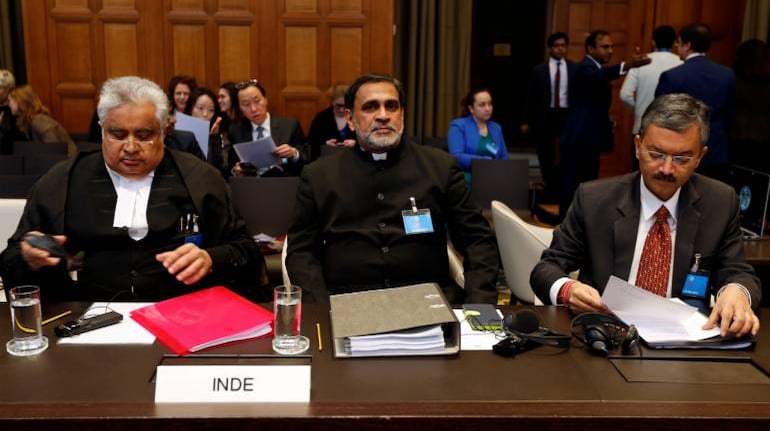
Diplomacy, as much as law, carried the day for India at the International Court of Justice (ICJ) in the Kulbhushan Jadhav case on July 17. India put forward strong legal arguments against Pakistan’s actions vis-à-vis Jadhav, but in the end it was diplomats at the ICJ who weighed in on the verdict, which for the most part, went in New Delhi’s favour.
Seven of the ICJ’s current judges are diplomats, men and women who have been ambassadors. Some of them rose up the ladder from lower positions at their embassies, jobs which have had nothing to do with the legal profession. Of course, all these seven judges studied law, and have been acquainted with the legal profession in their home countries. However, for the better part of their careers, they have been professional diplomats.
Three other judges have been with their foreign ministries, either heading the treaties divisions of these ministries or they have worked with the United Nations, handling international issues with legal ramifications. In that sense, their persona has been more that of diplomats than of men and women engaged in jurisprudence.
Only five of the ICJ’s 15 judges have been out and out judicial people, having practiced or taught only law throughout their careers. This includes the Indian judge, Dalveer Bhandari. With two-thirds of the court which pronounced a verdict on Jadhav made up of professional diplomats, the decision was overwhelmingly a diplomatic manoeuvre backed by arguments based on law.
As diplomats, many of the current ICJ judges worked closely with their Indian counterparts on various postings and have a favourable impression of India. They did not need any briefs or legal presentations on the relative merits and demerits of Indian and Pakistani societies or the values that have shaped them respectively.
The senior-most judge at the ICJ, Peter Tomka, is from Slovakia. He has been a judge at the court since February 2003, its vice-president for three years from 2009 and served as the president of the court from 2012 until four years ago. For three years, Tomka was the arbitrator in the Indus Waters Kishenganga case between India and Pakistan before the ICJ. He was Slovakia’s Permanent Representative to the UN from 1999 to 2003 when his Indian counterparts were Kamalesh Sharma and Vijay Nambiar. This was Tomka’s second stint at the same post at the UN in New York.
Another judge, Nawaf Salam’s interaction with Indian diplomats has been more intense. As Lebanon’s Permanent Representative to the UN in New York for 10 years, his tenure in the UN Security Council overlapped with that of his Indian counterpart, Hardeep Singh Puri, for a year in 2011. The UNSC’s closed environment and intense pace make diplomats permanent friends or permanent enemies. Between India and Lebanon, in this case, it was the former.
The ICJ, by its make-up and character, and because it is located in The Hague, does not have the star power of the UN General Assembly or the UNSC in glitzy New York. So it is often assumed that this court is purely a judicial body, where unsmiling men and women sit in judgment wearing ceremonial black robes and wigs. Actually, it is like any other UN body where diplomats negotiate quid pro quos in informal consultations and engage in give and take although the ICJ and the UN at large would like us to believe otherwise.
Impressions are important in the judiciary worldwide. After all judges – except in countries where there is no death penalty – have the right to take away lives. So diplomats-turned-judges acquire pretensions of having adopted the codes, manners and appearances of justices once they are elected to the ICJ.
For this reason, India was fortunate in the entire course of the filings and arguments in the Jadhav case to have had a lawyer, Venu Rajamony, as its ambassador at The Hague. He is concurrently Permanent Representative to UN organisations in The Netherlands, including the ICJ. The Indian Foreign Service (IFS) has many qualified physicians, IIT and IIM graduates, even veterinary doctors and agriculture specialists in its cadre. Rajamony is a lawyer with an LLB degree and was a journalist before he joined the IFS. When India approached the ICJ on Jadhav’s conviction by Pakistan, there were only four senior Indian diplomats with any formal or academic acquaintance with the legal profession in its ranks.
The Netherlands hosts more than 100 ambassadors from all over the globe, all of whom are also accredited to UN organisations in The Hague. It makes a big difference when an ambassador with a background in law deals with the ICJ’s registry or sits across the table with its judges. Without doubt, Rajamony’s interaction with the ICJ as a lawyer contributed to the atmospherics in India’s favour in the Jadhav case.
KP Nayar reported on the United Nations from its headquarters for 15 years. Views are personal.

Discover the latest Business News, Sensex, and Nifty updates. Obtain Personal Finance insights, tax queries, and expert opinions on Moneycontrol or download the Moneycontrol App to stay updated!
Find the best of Al News in one place, specially curated for you every weekend.
Stay on top of the latest tech trends and biggest startup news.