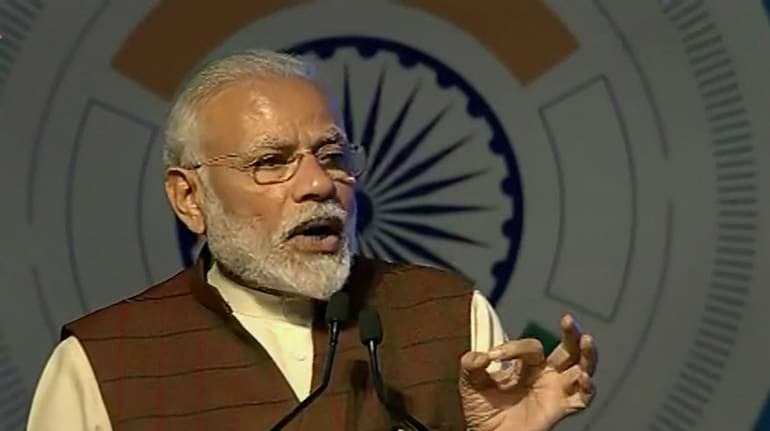
On July 30, while inaugurating new Supreme Court building built by India in Mauritius, Prime Minister Narendra Modi outlined Indian approach towards development assistance abroad. He asserted that the fundamental principle of Indian development cooperation is ‘respecting our partners’. He also stressed that Indian policy is ‘human centric’, free of conditions, and ‘not influenced by political and commercial considerations’. He mentioned few other Indian projects in Afghanistan, Nepal, Sri Lanka, Maldives, Guyana and Niger.
Although most countries do exaggerate developmental and humanitarian objectives of their foreign aid, Indian experiences is relatively unique. For decades, India struggled against the concept of ‘donor-recipient’ at multilateral forums. It believed that rich northern countries had an ‘obligation’ rather than a voluntary ‘charitable’ reason to assist development efforts in their former colonies. In its earlier development phase, India itself relied on significant foreign aid. Its own experience as a recipient of aid has deeply influenced India’s approach to its own development cooperation programmes.
With its own growth story unfolding, India is increasing sharing its experiences and even resources with other developing nations. Indian policy makers prefer to call these activities ‘development partnerships,’ rather than aid provided by ‘new donors’ or ‘emerging donors’.
Over the years, activities appeared officially within the framework of South-South Cooperation (SSC). The SSC idea emerged as a principle of solidarity among developing countries. India played an important role in its development within the Non-Aligned movement (NAM), Group of 77 (G77), and the UN system, particularly in the UN Conference on Trade and Development (UNCTAD).
In recent years, development cooperation has clearly become a significant aspect of Indian foreign policy discourse and strategic thinking. Though we have a new Development Partnership Administration (DPA) division within the Ministry of External Affairs (MEA), the institutional mechanism of Indian development cooperation is still evolving.
Current Indian development activities abroad include lines of credit (LOCs), capacity-building training programmes, and bilateral grant assistance projects. Although there is no central database to track all these activities together, various estimates suggest that India may be providing development assistance worth $3 billion a year. In the last two decades, LOCs worth more than $25 billion have been provided to about 60 developing countries.
A large number of grant assistance projects have been implemented in the neighbourhood and Africa. Despite difficult economic situation at home, demand for these activities is likely to grow further during and after COVID-19. Many analysts also look at Indian interventions as an act of counterbalancing growing Chinese influence in South Asia, the Indian Ocean Region and Africa.
Besides bilateral projects, New Delhi has also taken steps toward triangular cooperation with few western partners and UN agencies. Agreements or MOUs have been signed with the United States, the European Union, Japan, World Food Programme, the UNDP, etc. Some triangular projects are already being implemented in Afghanistan and Africa.
In a dynamically changing geopolitical and economic scenario, India may need to develop a new coherent development cooperation strategy to effectively manage its activities. As its activities abroad have expanded significantly both in geographical coverage and scope, New Delhi first needs to create an official/semi-official database. This will help dissemination, visibility and proper analyses.
Second, New Delhi may begin to issue white papers on its development cooperation activities. China issued its first white paper in 2011. An official white paper on Indian activities has the potential to generate serious discussion on the issue within and outside India. It can also bring more transparency and accountability.
Third, India may need to establish a professional development agency to design, coordinate, and implement its activities. Currently these are coordinated by different departments within the MEA, Indian embassies, Ministry of Finance and the EXIM Bank. The agency will also prove crucial in developing joint projects with other multilateral and bilateral donors. With clear objectives, strategy and relevant data, impact of interventions can also be evaluated.
Due to inter-departmental and inter-ministerial rivalries, many earlier initiatives to establish such an agency did not go very far. Although the DPA within the MEA is a substantial improvement over earlier ad-hoc arrangements, it is still not an independent agency run by development professionals. Brazil, Mexico and Thailand established their agencies many years back. The China International Development Cooperation Agency (CIDCA) was established in 2018.
With a right strategy and institutional mechanism, India can also influence international narrative. Presently, the global development architecture is dominated by the Organization for Economic Development and Cooperation (OECD) donors and institutions such as the World Bank. Indian hopes for alternative norms through the BRICS may be fading now. With changing geopolitics, New Delhi may not be averse to create some harmonisation between frameworks created by the OECD and the evolving patterns of South-South partnerships.
Gulshan Sachdeva is Chairperson, Centre for European Studies at Jawaharlal Nehru University and founding Board Member of the Forum for Indian Development Cooperation. Views are personal.
Discover the latest Business News, Sensex, and Nifty updates. Obtain Personal Finance insights, tax queries, and expert opinions on Moneycontrol or download the Moneycontrol App to stay updated!
Find the best of Al News in one place, specially curated for you every weekend.
Stay on top of the latest tech trends and biggest startup news.