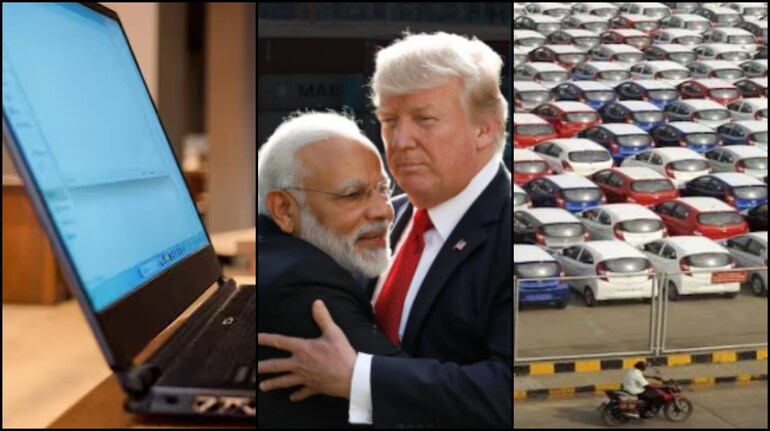

President Donald Trump announced on February 2, after a call with Prime Minister Narendra Modi, that the United States and India had agreed to a trade understanding reducing US reciprocal tariffs on Indian goods from 25% to 18% with immediate effect. The move signals a meaningful effort to stabilise and strengthen one of the world’s most important economic relationships. While many operational details will be clarified over time, the direction of the agreement is constructive: lower trade friction, expanded market access, and deeper cooperation in energy and strategic sectors.
The tariff reduction is an immediate positive for Indian exporters, particularly in textiles, engineering goods, pharmaceuticals, and electronics — sectors that depend heavily on access to the US market. Lower duties improve price competitiveness and provide greater certainty for businesses planning production and investment.
US statements also suggest that India may expand purchases of American goods across energy, technology, agriculture, coal, defence equipment, and manufacturing. Estimates have referenced potential purchases of up to $500 billion over time, though the pace and structure of these commitments will become clearer as negotiations progress.
With the recent FTA with the European Union and the new trade understanding with the United States, India’s strategy to produce more, export more, and compete globally is becoming clearer — reinforced by Budget 2026’s focus on expanding domestic capacity and industrial capability.
Strong Trade Base to Build On
This development builds on an already solid trade foundation. In FY25, bilateral trade between India and the US was about $132 billion, making the US one of India’s largest trading partners. India maintains a goods trade surplus with the US, driven by exports of pharmaceuticals, engineering products, electronics, gems and jewellery, and textiles. Improved tariff conditions can further strengthen these flows and support employment and industrial growth.
For the US, India represents a rapidly expanding market for high-value goods and services, including energy products, aircraft, technology solutions, and advanced manufacturing inputs. A calibrated increase in Indian imports from the US would help balance trade while deepening supply-chain integration.
Energy at the Centre of the Shift
Energy cooperation is likely to be a central pillar of the evolving partnership. India is the world’s third-largest crude oil importer, bringing in roughly 4.8 million barrels per day of crude in recent years. Oil imports form a significant part of India’s merchandise import bill.
In FY25, Russia accounted for around 30–40% of India’s crude oil imports, reflecting the availability of discounted supplies. This helped refiners manage costs and supported domestic fuel stability but also added a geopolitical dimension to trade discussions. India has already begun diversifying sources, with US crude exports to India rising in 2025 alongside continued supplies from the Middle East.
A gradual increase in US energy imports would not only reshape trade flows but also broaden India’s energy sourcing strategy.
Complementing India’s Structural Economic Reforms
The Free Trade Agreement (FTA) with the European Union earlier this year, along with the recent trade understanding with the United States, aligns closely with India’s broader economic strategy. In line with this, the latest Union Budget reflects greater emphasis on strengthening the supply side of the economy. Policy focus now includes:
* Expanding manufacturing capacity in semiconductors, electronics components, and capital goods
* Improving infrastructure and logistics efficiency
* Supporting MSMEs to scale operations
* Incentivising production, exports, and domestic capacity creation
The overarching objective is clear: India aims to produce more, export more, and compete more effectively in global markets.
Currency, Capital Flows and Market Impact
A more stable trade relationship with the US carries macro-financial benefits. Stronger export visibility and higher trade in capital goods and energy can support INR stability against the USD by improving India’s external balance. Greater policy clarity and closer strategic ties may also strengthen foreign investor confidence.
If export growth combines with supply-side reforms, it could revive private sector capital expenditure. Higher capex supports job creation, credit expansion, and corporate earnings — constructive signals for markets over the medium term.
A Positive Direction, With More to Learn
Overall, the tone and direction of the India–US trade understanding are positive. Lower tariffs, broader market access, and deeper energy cooperation support growth and long-term alignment. While the detailed terms are still being worked out, the announcement signals a constructive reset in economic relations, consistent with India’s push toward a stronger, production-led growth model.
Disclaimer: The views and investment tips expressed by experts on Moneycontrol are their own and not those of the website or its management. Moneycontrol advises users to check with certified experts before taking any investment decisions.
Discover the latest Business News, Sensex, and Nifty updates. Obtain Personal Finance insights, tax queries, and expert opinions on Moneycontrol or download the Moneycontrol App to stay updated!
Find the best of Al News in one place, specially curated for you every weekend.
Stay on top of the latest tech trends and biggest startup news.