






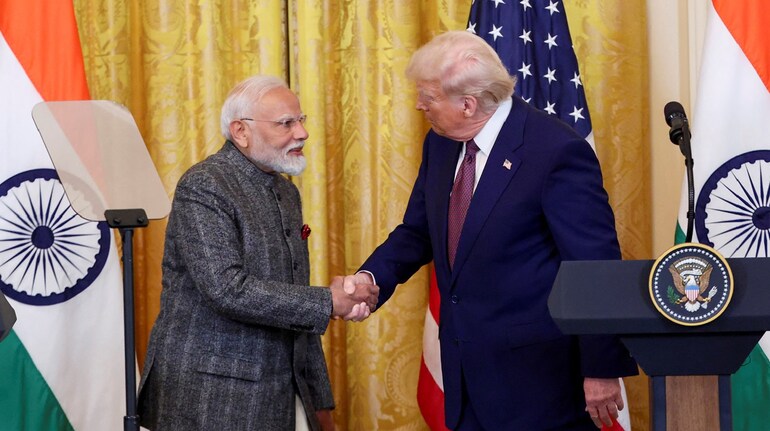

It is a sign of the economic and military dominance of the US that most countries feel compelled to celebrate glaringly unequal trade deals with it. India is no exception.
The framework for interim agreement with the US commits India to eliminate or reduce tariffs on all the industrial goods and a wide range of food and agricultural products while the US will still apply ‘reciprocal tariff’’ of 18 percent on several goods imported from India.
Other trade agreements
It is not that Indian duty concessions to the US are a new phenomenon as India reduced the import duties on various U.S. agricultural products, including blueberries and cranberries on February 20, 2024. However, India has not offered similar concessions in any of its recent trade deals such as those with Australia, New Zealand and the EU.
The India–Australia Trade Deal (AI-CECA) was signed on 2 April 2022 and came into force on 29 December 2022. The deal protected India’s key agricultural sectors like dairy, wheat, sugar and apples etc. by keeping them in an exclusion list.
In its deal with New Zealand, India agreed to reduce tariffs on apples, kiwifruit, wine and infant dairy formula but only a certain quantity is to be allowed for import. Sheep meat was however allowed to be imported without duty.
In the India–European Union Free Trade Agreement (EU FTA) signed on 27 January 2026 India agreed to reduce duty on wines and spirits from 150% to 20-40% but this is to be achieved over a phased timeline.
Some key areas set for a tariff cut in the US deal
The US-India joint statement specifically mentions that India will eliminate or reduce tariff on a wide range of US agricultural products, including dried distillers’ grains (DDGS), red sorghum for animal feed, tree nuts, fresh and processed fruits, soybean oil, wine and spirits and additional products. These additional products are not specified.
The case of dried distillers’ grains (DDGS)
India currently produces about 5.5 million tonnes of DDGS from rice and maize. This is a by-product of ethanol produced by distilleries. DDGS production in India has increased over the last 2-3 years from ethanol production, impacting the animal feed supply chain. Currently, in Uttar Pradesh, DDGS is sold at Rs. 24,000-24,250 per tonne. Rice-based DDGS is selling at Rs. 27000 per tonne in UP markets.
The last traded US DDGS price level is about $256 into Vietnam. So DDGS imported from the US should be approximately $265 (cost and freight at Nhava Sheva port). It translated to about Rs 27,000 per metric tonne.
US DDGS quality is generally more consistent, globally standardised and lower in risk factors (like mycotoxins) which can make it a preferred choice in formal feed markets. Indian maize DDGS has similar nutritional potential but currently has more variability in moisture and toxin control. Therefore, Indian DDGS faces higher aflatoxin risk due to humidity and storage practices.
The mixed impact in India on potential DDGS imports
Going forward, Indian grain distilleries will face competition from imported DDGS and their profit margin may be squeezed. Due to excess ethanol capacity in India, the oil marketing companies are able to absorb less than the total ethanol produced in India. It will therefore directly impact their capacity to purchase maize from Indian farmers.
The feed consumers such as poultry, aqua and dairy processors may, however, positively respond to duty free import of DDGS from the US.
There is also a good possibility that high quality DDGS may replace soybean meal. In that case, the soybean farmers will also be adversely impacted by duty free import of DDGS from the US.
Red Sorghum: Long-term impact is not clear
Indian sorghum is white. With US red sorghum, poultry industry may tend to replace corn with red sorghum. Price parity is not yet clear and the phytosanitary relaxations to be given by India are not yet known. At current sorghum prices, at approximately $280, import of sorghum may be unlikely. However, in the long run, cheap import of red sorghum may depress maize and soybean prices.
Soybean oil: Likely shift in imports from Argentina to the US
Soybean oil will see low or zero tariff. It is not yet clear if the lower tariff will apply to degummed soybean oil or to refined soybean oil. The present rate of duty on this is 16.5% on degummed oil and 35.75% on refined soybean oil.
If duty on soybean oil is reduced to zero, origin of import may shift from Argentina to US. Current Argentina crude soybean oil price is $ 1270. In oil year 2024-25 India imported 2.89 million tonnes of soybean oil from Argentina and 1.14 million tonnes from Brazil. We also imported about 0.75 million tonnes from Nepal at zero duty under the South Asian Free Trade Area (SAFTA). If soybean oil from the US comes out cheaper because of zero duty, Indian refiners will surely prefer that to Argentina.
About 95% of soybeans grown in Argentina are GM varieties (primarily glyphosate-resistant "Roundup Ready" or insect-resistant strains). So, soybean oil from GM varieties of US should not be a cause of concern to Indian consumers.
Meat, fruits and vegetables
There is a growing demand for high-quality and organic fruits and vegetables in India. The richer consumers of India may provide ready market for blueberries, cranberries, and avocados.
Conclusion
More than the agricultural exports to India, US companies would be looking for Indian commitment of buying $500 billion of energy and other products in the next five years.
In the Union Budget presented on February 1, 2026 tariff duty concessions were proposed for several sectors in which US companies have high stake. These include aerospace, nuclear technology, clean energy equipment, electronics and medical devices etc. Even then reaching import target of $500 billion may not be easy to achieve. This will have also have an impact on India’s balance of payments unless India’s exports are also substantially higher.
The deals with both the EU and US will make alcohol cheaper thus bringing good cheer to tippers. However, even this will have an adverse impact on farmers producing raw material – grapes and barley etc.
As we get more details of the agreement, there will be more analysis on the possible impact on Indian agriculture and its resource-poor farmers.
Siraj Hussain is a former Union Agriculture Secretary. Garima Jain has worked in reputed global commodity companies in leadership positions. Views are personal and do not represent the stand of this publication.
Discover the latest Business News, Sensex, and Nifty updates. Obtain Personal Finance insights, tax queries, and expert opinions on Moneycontrol or download the Moneycontrol App to stay updated!
Find the best of Al News in one place, specially curated for you every weekend.
Stay on top of the latest tech trends and biggest startup news.





