






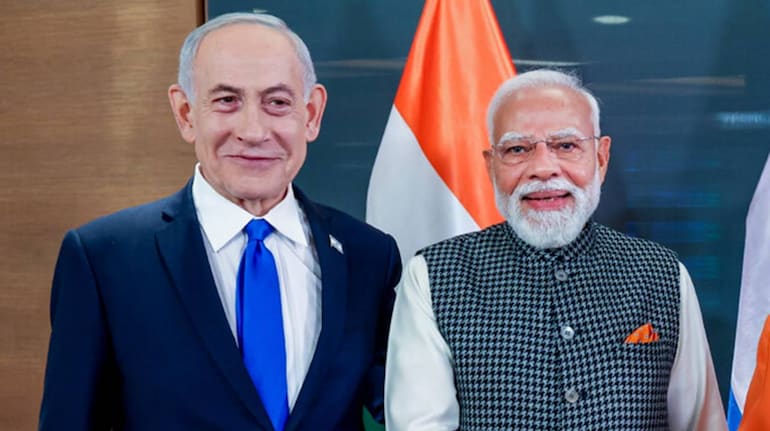
Prime Minister Narendra Modi’s address to Israel’s Knesset on February 25, 2026, signalled a profound metamorphosis in bilateral ties. For decades, the Indo-Israeli relationship was defined by a buyer-seller model, a quiet, transactional exchange of hardware and munitions.
The 2026 Jerusalem visit, however, has officially shattered this legacy. We are witnessing the birth of a Silicon-to-Soil pact: a shift from mere procurement toward a co-innovation ecosystem where Israeli R&D meets Indian industrial scale.
Yet, for this special strategic partnership to realise its full potential, both nations must navigate significant structural limitations and transition toward a more integrated, risk-resilient framework.
The most visible manifestation of this shift is the radical expansion of the Indo-Israel Agricultural Project (IIAP). While earlier phases focused on localised proof-of-concept pilots, the 2026 roadmap aims to expand the existing 43 Centers of Excellence (CoEs) to a staggering 100.
This is not merely a quantitative leap; it represents a qualitative pivot toward Blue Food Security and precision water management.
By moving beyond simple drip irrigation to AI-driven hydroponics and desalination-linked aquaculture, these CoEs are evolving into regional hubs for the Global South. The logic is strategically sound: Israel provides the cutting-edge R&D, the lab, while India offers a massive, varied geography, the field, to refine and scale these solutions.
However, a critical limitation remains the last-mile dissemination of this technology to smallholder farmers, who often lack the capital to adopt intensive Israeli methodologies. Furthermore, non-defense trade has plateaued between $6 billion and $8 billion, hampered by a stalled Free Trade Agreement (FTA) and concerns over India’s intellectual property (IP) regime. Without a formal trade architecture, the Silicon-to-Soil vision remains vulnerable to regulatory bottlenecks and high tariff barriers on high-tech agricultural inputs.
A futuristic element of the Prime Minister’s address was the proposal to integrate India’s Digital Public Infrastructure (DPI), the India Stack, with Israel’s high-tech financial sector. The vision of an integrated payment corridor enabling real-time UPI-based cross-border transactions serves as the soft infrastructure mirroring the physical India-Middle East-Europe Economic Corridor (IMEC).
While this fintech diplomacy is a masterstroke of de-hyphenation, it faces immense hurdles. A corridor is only as strong as its weakest link; for IMEC to be bankable, Israel must present a credible security package to mitigate physical and cyber risks to ports and rail links.
Domestically, India’s exposure to sophisticated fraud schemes and limited digital literacy in rural areas could bottleneck the rapid adoption of joint fintech solutions. Moreover, Israeli high-tech firms remain wary of India's regulatory environment and data protection standards, which continue to evolve under the 2026 AI regulations.
The trust deficit in digital data sharing remains a significant friction point that a parliamentary speech alone cannot resolve.
Beyond the technological hurdles lies the persistent challenge of geopolitical alignment. While the Knesset speech emphasised uncompromising solidarity, India continues to walk a tightrope of strategic autonomy.
New Delhi’s refusal to join formal military blocs, such as the proposed Hexagon of Alliances, reflects its need to balance ties with the UAE, Saudi Arabia, and Iran. This balancing act often creates a ceiling for the security partnership.
While Israel seeks a more overt military alignment, India views the relationship through the lens of capability enhancement rather than collective defense. This divergence in strategic objectives can lead to friction when Israel expects vocal support on regional conflicts that India prefers to address through multilateral frameworks or quiet diplomacy.
For the partnership to mature, there must be a candid acknowledgement that total alignment is neither possible nor desirable for a rising power like India.
The final pillar of this ecosystem is the deep-tech trifecta of Artificial Intelligence, quantum computing, and semiconductors. Even in the defense sector, the shift toward Mission Sudarshan Chakra indicates that India is no longer satisfied with off-the-shelf purchases like the Iron Dome; it instead seeks to integrate Israeli laser-tech into an indigenous, AI-enabled shield.
To move forward, the relationship must undergo a fundamental structural reassessment that prioritises capability over commerce. This begins with the creation of modular Intellectual Property (IP) structures, clear legal pathways for co-production that protect Israeli innovation while satisfying India’s Make in India mandates, effectively moving away from the restrictive Black Box approach to technology transfer.
The partnership must evolve toward deeper operational integration, moving beyond the mere sale of sensors to the sharing of sophisticated battle management expertise. This involves a granular understanding of how Intelligence, Surveillance, and Reconnaissance (ISR) plugs into targeting cycles, requiring more robust institutional links between India’s DRDO and Israel’s MAFAT.
Simultaneously, a trilateral push leveraging the I2U2 framework (India, Israel, USA, UAE) could prove transformative; by using Emirati capital and American foundational technology to power Indo-Israeli co-production, the partners can effectively bypass bilateral financing constraints.
Crucially, this must be underpinned by institutionalising the stalled FTA negotiations, specifically through a High-Tech Annex designed to provide fast-track clearances for startups and research labs. For the investment community, it shifts the needle from speculative interest to a more predictable regulatory environment, allowing Indian tech startups to more effectively tap into deep pools of Israeli venture capital.
Ultimately, the recent visit confirms that the Indo-Israeli bond has transcended the sum of its hardware. It is now a partnership of shared destinies, but its success depends on whether both nations can move past transactionalism to build a truly resilient, co-innovated future. The shift from buyer-seller to co-innovators is not just a change in nomenclature; it is a strategic necessity for survival in an increasingly fragmented global order.
(Tarun Agarwal is an Associate Fellow at the Center of Policy Research and Governance, New Delhi, where he leads the International Relations and Conflict vertical.)
Views are personal and do not represent the stand of this publication.
Discover the latest Business News, Sensex, and Nifty updates. Obtain Personal Finance insights, tax queries, and expert opinions on Moneycontrol or download the Moneycontrol App to stay updated!
Find the best of Al News in one place, specially curated for you every weekend.
Stay on top of the latest tech trends and biggest startup news.




