






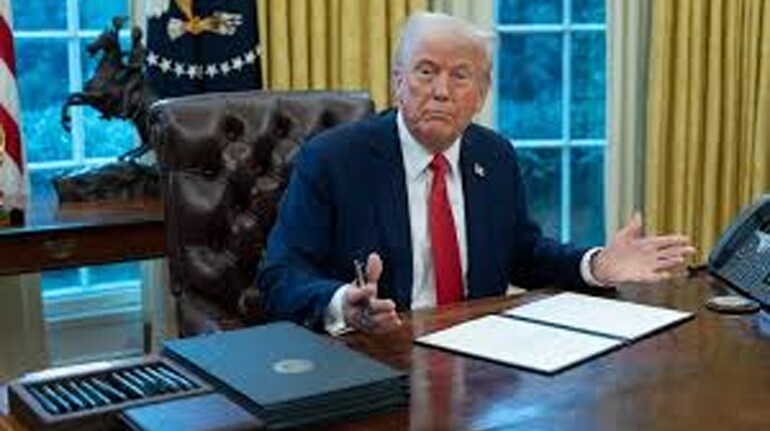
American President Donald Trump's recent threats to impose escalating tariffs on several European Union (EU) and NATO member countries over their opposition to the US acquiring Greenland represents a significant escalation in an ongoing transatlantic dispute and points to an unprecedented geo-political development, with potentially corrosive implications for both the EU and NATO.
A worst-case scenario for the alliance would be an intra-NATO military confrontation that would pit the US against its closest allies – and though this ought to be a very low probability exigency, in the current Trump-driven turbulence it is a case of ‘anything can happen.’
Phased escalation
The Trump threats target nations like Denmark (which administers Greenland), Sweden, France, Germany, the Netherlands, Finland, Britain, and Norway- some of which have recently deployed small military contingents to the island for security exercises.
Tariffs could start at 10-15% in February 2026 and rise to 25% by June if no deal is reached, framing the move as retaliation for "playing a dangerous game" in the Arctic. This follows earlier hints of potential military action, though the current focus is economic coercion.
He framed the move as necessary for national security, emphasizing Greenland's role in modern defence systems like the "Golden Dome" (a reference to advanced missile defence) and against threats from China and Russia.
Why Greenland matters
Greenland, the world's largest island and an autonomous territory of Denmark, holds significant strategic value due to its distinctive geographic position and resources. Its location in the Arctic places it at the centre of emerging global security dynamics, particularly as climate change melts polar ice, opening new shipping routes like the Northwest Passage and exposing untapped natural resources.
This makes Greenland a key vantage point for monitoring military and civilian activities in the region, including submarine movements and potential threats from adversaries like Russia.
Militarily, it hosts the US-operated Thule Air Base, which is crucial for missile defence, early warning systems, space surveillance, and satellite tracking.
Geopolitically, control over Greenland enhances influence in the Arctic, where competition with powers like China and Russia is intensifying.
Economically, the island is rich in rare earth minerals essential for technology and renewable energy, as well as fisheries that could grow in importance with warming waters.
The Cold War experience
However, Trump insists that the rationale for his extraordinary Greenland policy is driven by US security and strategic considerations and this is a valid formulation, borne out by the Cold War experience.
Greenland played a pivotal role during the Cold War (1947–1991) for both the US and NATO, primarily due to its geographic position in the North Atlantic and Arctic regions. As an autonomous territory of Denmark - a NATO founding member-Greenland served as a forward outpost for monitoring Soviet activities, securing transatlantic sea lanes, and enhancing early warning capabilities against potential nuclear or conventional attacks. Its importance stemmed from the era's bipolar tensions, where the US and its allies sought to contain Soviet expansion, particularly in the maritime domain.
Criticality of the GIUK gap
The GIUK gap (short for Greenland–Iceland–United Kingdom gap) was one of the most critical strategic maritime chokepoints during the Cold War (roughly 1947–1991). It refers to the expanse of open ocean in the North Atlantic between Greenland (to the west), Iceland (in the middle), and the United Kingdom (to the east), forming two main passages of water.
During the Cold War, the Soviet Union's powerful Northern Fleet—based primarily on the Kola Peninsula near Murmansk- had only limited routes to reach the open Atlantic Ocean for operations. The GIUK gap represented the primary (and most practical) outlet for Soviet submarines and surface ships to break out into the broader Atlantic.
Soviet submarines (especially nuclear-powered attack submarines and ballistic missile submarines, or SSBNs) needed to transit through or near this gap to threaten NATO shipping lanes, deploy for patrols, or position to strike targets in North America or Western Europe.
In a potential "hot" war, Soviet forces breaking through the GIUK gap could interdict vital transatlantic reinforcement convoys carrying troops, supplies, and equipment from the United States and Canada to Europe—potentially deciding the outcome of a conflict on the European mainland.
NATO viewed control of the GIUK gap as essential to containing Soviet naval power. A common saying among strategists was that "a war could be won at the Fulda Gap (on the central European front) but it could also be lost in the GIUK Gap.
Will Trump catalyse NATO’s unravelling?
When NATO was formed during the early Cold War years, Lord Hastings Ismay who served as NATO's first Secretary General (1952– 57) noted that the purpose of the military alliance was "to keep the Russians out, the Americans in and the Germans down."
With the US now threatening to turn predator over Greenland, the EU is rattled and all bets are off. President Trump completes one year in office on January 20 (Tuesday) and it would be doubly ironic if he were to set in motion a chain of events that will mark the unravelling of NATO and irreparably weakening the very alliance that was formed to blunt the challenge posed to American primacy by the Russia-China strategic partnership.
(Views are personal, and do not represent the stance of this publication.)
Discover the latest Business News, Sensex, and Nifty updates. Obtain Personal Finance insights, tax queries, and expert opinions on Moneycontrol or download the Moneycontrol App to stay updated!
Find the best of Al News in one place, specially curated for you every weekend.
Stay on top of the latest tech trends and biggest startup news.




