






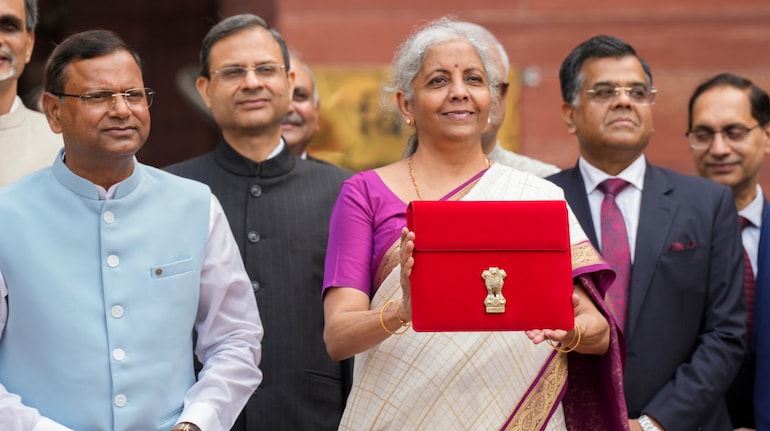

As India approaches the FY27 Union Budget on February 1st, 2026, fiscal policy is set for a structural shift with the government moving from a fiscal deficit target to a debt anchored framework. This transition places the spotlight on the central government's debt ratio, expected to be set near 55.10% of GDP in FY27, as part of a glidepath toward 50% by FY31. Under this rule, the primary deficit, rather than the fiscal deficit, becomes the key monitorable for markets.
With nominal GDP growth expected to improve and interest rates stabilising, a primary deficit lower than 1% of GDP should be sufficient to meet the medium term debt target, allowing fiscal consolidation to proceed gradually rather than aggressively.
For FY26, despite weaker than expected tax revenues and a revenue shortfall of around Rs 1.7 lakh crore, the government is likely to meet its fiscal deficit target of 4.4% of GDP. Higher than usual RBI dividends and tighter spending control, especially on revenue expenditure, may have helped offset the tax drag.
Consumption has begun recovering following income tax relief and GST rationalisation, supporting growth even as global tariff tensions weigh on export-oriented sectors. Nominal GDP growth, however, has undershot earlier expectations, adding complexity to fiscal arithmetic.
Click Here To Read All Budget Expectations
The FY27 Budget is likely to target a fiscal deficit of around 4.3% of GDP, consistent with the new debt framework. Market borrowing will be the most closely watched element, even at Fiscal deficit of 4.3% the gross issuance may rise to Rs 16.5 lakh crore (if Govt switch bonds with RBI and uses T bill, then gross borrowing programme may be below Rs 16 lakh crores as well), driven by heavy maturities and stable capex spending.
Net borrowing is likely near Rs 12 lakh crore. The government is expected to reduce reliance on long tenor bonds given tepid investor appetite and elevated long term yields, keeping supply concentrated in the belly of the curve.
The role of the RBI will remain pivotal in smoothing the borrowing cycle. The central bank holds roughly Rs 1 lakh crore worth of bonds maturing in FY27, and whether these are refinanced via switches or absorbed through secondary market operations shall influence liquidity conditions accordingly. Simultaneously, state finances face tightening constraints, and the scale of State Development Loan (SDL) issuance in FY27 could be the real test.
Given the OMO bond purchases is being uses as a primary source of adding durable liquidity in the banking system hence demand supply equation likely to remain balanced.
The government’s focus on capex, subsidy rationalisation, and structural reforms strengthens prospects for sustainable growth hence likely positive for INR and capital markets. A market friendly Budget with lower Gross borrowing (less than Rs 16 lakh crore) and featuring clarity on the debt glidepath, efficient switch operations and restrained long end issuance shall be positive for the fixed income investors.
Disclaimer: The views and investment tips expressed by investment experts on Moneycontrol.com are their own and not those of the website or its management. Moneycontrol.com advises users to check with certified experts before taking any investment decisions.
Discover the latest Business News, Sensex, and Nifty updates. Obtain Personal Finance insights, tax queries, and expert opinions on Moneycontrol or download the Moneycontrol App to stay updated!
Find the best of Al News in one place, specially curated for you every weekend.
Stay on top of the latest tech trends and biggest startup news.





