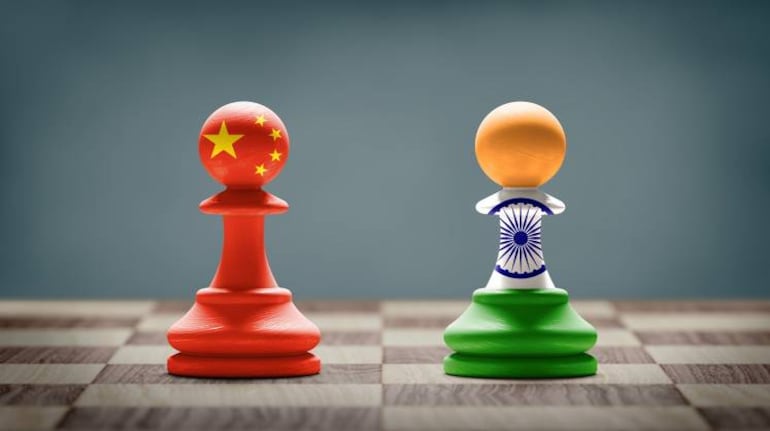
Prime Minister Narendra Modi has turned on its head the adage that actions speak louder than words. By delivering his shortest speech since becoming Prime Minister in 2014 at the Quadrilateral Security Dialogue (Quad) summit two weeks ago, Modi’s words sent a message to Asia and the Pacific that spoke louder than his actions.
Modi spoke a mere 131 words to the President of the United States and to the Prime Ministers of Australia and Japan during the meeting. Joe Biden spoke more than four times longer than did Modi. Australia’s Scott Morrison and Japan’s Yoshihide Suga were not far behind Biden.
Contrast this with Modi’s spoken words in the White House Rose Garden’s sweltering summer heat after his first bilateral meeting with Donald Trump in 2017. Trump, in his discomfiting jacket and tie, fidgeted under the blazing sun throughout, as Modi went on and on, impervious to the fact that the unpredictable 45th US President appeared to have heard only two words in Modi’s address. One was when the Prime Minister mentioned Trump’s daughter Ivanka Trump, the second time was when Modi mentioned “America First,” one of Trump’s campaign promises.
It is bewildering that in India, it is taken for granted in all the public discourse about the first Quad summit that it is all about China when Modi made it plain that the Quad’s role under the present global circumstances is about everything else. Except for a ritual reference to “a free, open, and inclusive Indo-Pacific,” Modi unequivocally stated that the summit’s agenda, as of now, is about vaccines, climate change, and emerging technologies.
India wants to “make the Quad a force for global good,” Modi emphasised. No global good can come out of a Cold War on Asian soil directed against China, which is what much of the Indian strategic community appears to be wanting from the revival of Quad by Trump and its evolution, which is a work in progress.
Australia’s emphasis too was on the global pandemic and the imperative of emerging together from the global recession. “We join together as Quad leaders of nations to welcome what I think will be a new dawn in the Indo-Pacific through our gathering,” Morrison said. It was clear that his idea of a new dawn was not any smoggy Indo-Pacific dawn caused by gathering pollutants through confrontation with China.
A few months ago, Australia and the US held their joint meeting of defence and foreign ministers, a periodic exercise known as AUSMIN, short for Australia-United States Ministerial Consultations. It is instructive what Australia’s Foreign Minister Marise Payne said in Washington after that strategically crucial meeting. “The relationship that we have with China is important, and we have no intention of injuring it, nor do we intend to do things that are contrary to our interests,” Payne said, quoting her Prime Minister at that press conference.
“We make our own decisions, our own judgments in the Australian national interest and about upholding our security, our prosperity, and our values,” said Payne, supplementing her own outlook on China. “We have a strong economic engagement (with China,) other engagement, and it works in the interests of both countries.” Australia is clearly not inclined to jump into any Quad bandwagon against Beijing if it comes to that.
At the first Quad summit, Modi was testing the waters for future engagement among the participants. The often underplayed truth is that Modi does not know Biden well. During the latter’s many decades of foreign affairs activism in the US Senate, Modi was not engaged in electoral politics. When he entered the electoral fray late in life, by Indian standards, Modi was confined to Gujarat. During the two years after becoming Prime Minister, when Democrats occupied the White House, Modi’s engagement was primarily with Biden’s boss, President Barack Obama.
By the time Obama arrived in India as Chief Guest for the Republic Day Parade, it was “Barack” and “Narender” between the two of them. With Biden, Modi still has some way to go. Biden addressed Modi during the Quad meeting by formally referring to the office he holds: “Prime Minister Modi.” Modi was formal too. His opening line was “President Biden, Prime Minister Morrison, and Prime Minister Suga.”
Not so with the Prime Ministers of Japan and Australia vis-à-vis Biden. This stood out at the Quad summit. Japan’s Suga addressed Biden not with the customary “Mr. President,” but as “Joe,” not once but twice. Jaws dropped when Suga began his speech by calling the Australian leader “ScoMo,” not “Mr. Morrison.” The formal prefix of “Mr” was reserved only for Modi, a big change from his easy familiarity with Suga’s predecessor, Shinzo Abe. Morrison’s easy familiarity with Suga was evident when he addressed the Japanese leader by not even his full first name. “Yoshi” was for the Australian.
The excitement among China-baiters in New Delhi over the Quad summit ignores India’s engagement of BRICS, which groups India with Brazil, Russia, China, and South Africa. New Delhi spent many years in an unwavering quest for membership of the SCO, the Shanghai Cooperation Organisation, where China and Russia are the guiding forces. Modi is not about to squander India’s options in multi-polarity by an unconditional embrace of the Quad.
Discover the latest Business News, Sensex, and Nifty updates. Obtain Personal Finance insights, tax queries, and expert opinions on Moneycontrol or download the Moneycontrol App to stay updated!
Find the best of Al News in one place, specially curated for you every weekend.
Stay on top of the latest tech trends and biggest startup news.