






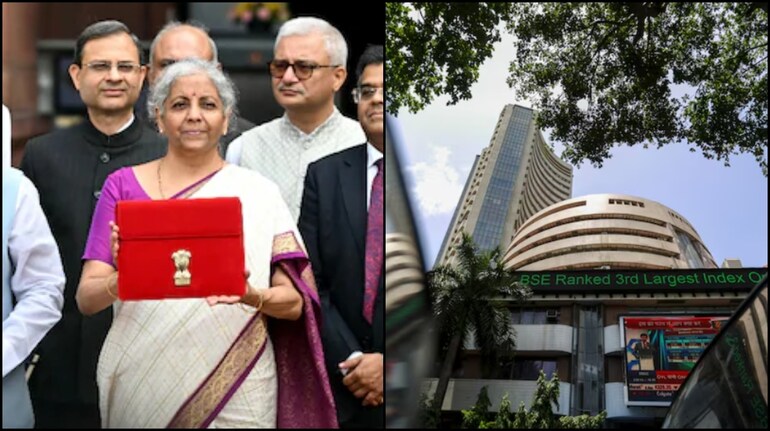

As FM Nirmala Sitharaman prepares to present the Budget, India is framing its growth strategy against a turbulent global backdrop, one where there are new global realignments and partnerships. With capital flows to emerging markets turning increasingly selective, policymakers are expected to rely on domestic growth engines like consumption, investment and structural reforms.
Globally, the outlook remains volatile. Commodity markets have seen sharp swings, with metals and precious metals rallying on supply concerns and safe-haven demand. At the same time, tighter global financial conditions and valuation concerns have made portfolio flows more volatile, increasing the importance of credible macro policy and stable growth visibility.
Domestically, India enters the Budget season on a relatively firm footing. Private consumption has been resilient, supported by improving urban demand and a gradual recovery in rural spending. The Budget is expected to support demand through tax simplification and targeted relief measures rather than large fiscal giveaways.
GST rationalisation remains another important growth lever. Recent rate restructuring has reduced complexity.
On the direct tax side, expectations are centred on income tax simplification rather than aggressive rate cuts. Potential measures include a higher standard deduction, further rationalisation of slabs under the new tax regime and consolidation of multiple TDS provisions. The government could consider either doing away with STT or Capital gains tax to avoid double taxation and simplify the regime.
Dividend income at present faces “onerous” double taxation whereby companies pay taxes on profits, then investors pay again on the dividend income. There is a possibility of moving back to a zero tax or a flat 10% dividend tax regime similar to the earlier practice.
Investment is expected to be a key growth pillar. Public capital expenditure is likely to stay elevated, with continued focus on infrastructure such as roads, railways, power, logistics and urban development. Beyond supporting near-term demand, sustained public capex has improved the investment climate by reducing logistics costs and easing supply bottlenecks. The Budget is also expected to focus on private capex, leveraging healthier corporate balance sheets through better PPP frameworks and credit facilitation.
Policymakers should also shift focus from capex alone to innovation-led growth, with targeted R&D incentives. This is critical for pharma, defence, and BFSI, helping India move up the value chain, deepen indigenisation, and broaden market participation while supporting long-term productivity and export competitiveness.
Simplification of FPIs compliance is emerging as an important reform lever amid volatile portfolio flows. After net equity outflows in FY25 and FY26, to improve ease of participation and stabilise foreign capital flows, we believe India should address current outstanding ambiguities around trade, regulations, and tax-related matters.
While recently, overseas inflows have been tepid, India’s growth alpha over other global economies and stable macro fundamentals make it a natural candidate to be a recipient of overseas flows, once geopolitical tensions subside.
Manufacturing is set to remain central to the medium-term strategy. The emphasis is gradually shifting from capacity creation to building robust ecosystems, deeper supply chains, higher domestic value addition, better logistics and skilling to support exports and employment.
Overall, Budget 2026–27 should prioritise continuity and execution. In an uncertain global environment, India’s ability to rely on resilient consumption, sustained investment, and incremental but credible reforms could once again underpin its competitive advantage and growth.
Disclaimer: The views and investment tips expressed by investment experts on Moneycontrol.com are their own and not those of the website or its management. Moneycontrol.com advises users to check with certified experts before taking any investment decisions.

Discover the latest Business News, Sensex, and Nifty updates. Obtain Personal Finance insights, tax queries, and expert opinions on Moneycontrol or download the Moneycontrol App to stay updated!
Find the best of Al News in one place, specially curated for you every weekend.
Stay on top of the latest tech trends and biggest startup news.





