






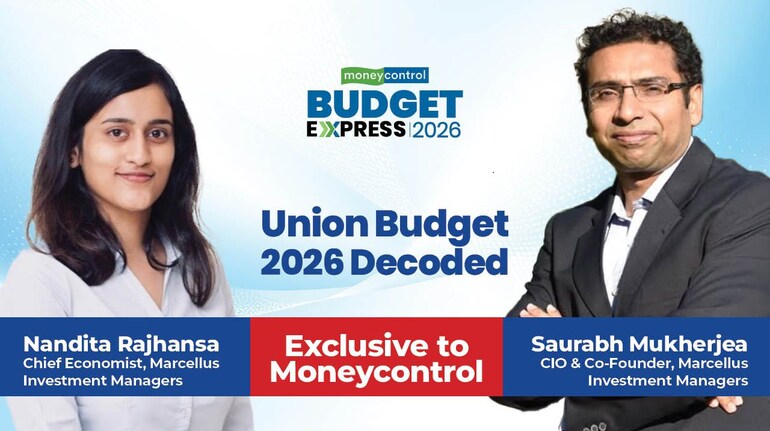

The government’s budget for 2026-27 is a positive for the economy, with three key takeaways, two of which are positive for the health of the Indian economy in the medium to long term. First is the increase in STT on F&O transactions in the country is likely to divert capital from futile and unproductive trading to actual economic activities like consumption and second is the setting up of a high level committee to review banking and financial sector in the country which could pave the way for privatization of PSBs and by extension attracting foreign capital in the country.
A key negative was the rise in capex in the context of slowing tax revenues in the country, at the expense of increased government borrowing. This could lead to rise in cost of funds in India via a tightening bond market.
Whilst the capital markets may have reacted negatively in the wake of the budget that was tabled on 1st February 2026, we believe most measures in the budget are largely steps taken in the right direction by the Government of India. There are broadly three major takeaways from this budget, two of which are with a view to bolster the Indian economy in the medium to long term.
The increase in Securities Transaction Tax or STT increase on Futures and Option (F&O) trading which is likely to shift money away from futile trading activity to economic activity and consumption.
High level committee which is to be set up to review the banking and financial system in the country which is likely to expedite privatization of public sector banks (PSBs), potentially attracting foreign capital; and
Rise in capex of Rs 1 lakh crore from FY26 budgetary estimate which has led to rise in gross borrowings of the government and which could raise the cost of borrowing for the economy.
Click Here To Read All Budget News
Let’s understand each of these in detail.
Increase in STT for F&O transactions
The Securities and Exchange Board of India (SEBI) has been highlighting for some time now that retail investors in India have been incurring a loss of Rs 1 lakh crore per annum in the F&O market in the country, often benefiting foreign institutional investors who generally tend to have sophisticated software and trading strategies in place. This means that over the last 3 years, gullible retail investors have lost around Rs 3 lakh crore (or $33 bn) in F&O trading, a pretty large sum of money for a country whose per capita income is just over Rs 2 lakh per annum ($2,500).
In this backdrop, the raising of STT on Futures from 0.02% to 0.05% and on option premia from 0.1% to 0.15% is step in the right direction. This is so because this creates a strong disincentive for retail investors to keep speculating in the F&O market. This change could divert money from futile and non-productive trading to growth inducing activities like consumption and saving (which then leads to investment).
High level committee for reviewing banking and financial sector
The FM in her budget speech mentioned that a high level committee will be set up to review banking and financial sector in the country. This is an interesting development, as prima facie this indicates that the government is probably thinking of privatizing PSBs and/or bringing more foreign capital and more corporate capital into the banking sector.
Increase in capex with tax revenue undershooting has led to increase in borrowings
The government, in its revised estimates for FY26 has shown that it’s gross and net tax revenues are falling short by a substantial 4.5% and 5.7% respectively. In this context, the Government's decision to increase capex by around Rs.1 lakh crore from the budget estimate of Rs 11.21 lakh crore in FY26 to Rs 12.2 lakh crore in FY27 is something we believe that could’ve been avoided.
This jump in capex has come at the expense of gross borrowings shooting up to more than Rs 17 lakh crore in FY27 from under Rs 15 lakh crore in FY26. This heavy borrowing by government of India could increase cost of funds in the country further at a time when bond yields have only gone up, despite 125 bps of rate cuts the RBI over the past 12 months.
Disclaimer: The views and investment tips expressed by investment experts on Moneycontrol.com are their own and not those of the website or its management. Moneycontrol.com advises users to check with certified experts before taking any investment decisions.
Discover the latest Business News, Sensex, and Nifty updates. Obtain Personal Finance insights, tax queries, and expert opinions on Moneycontrol or download the Moneycontrol App to stay updated!
Find the best of Al News in one place, specially curated for you every weekend.
Stay on top of the latest tech trends and biggest startup news.





