Naveen Aggarwal
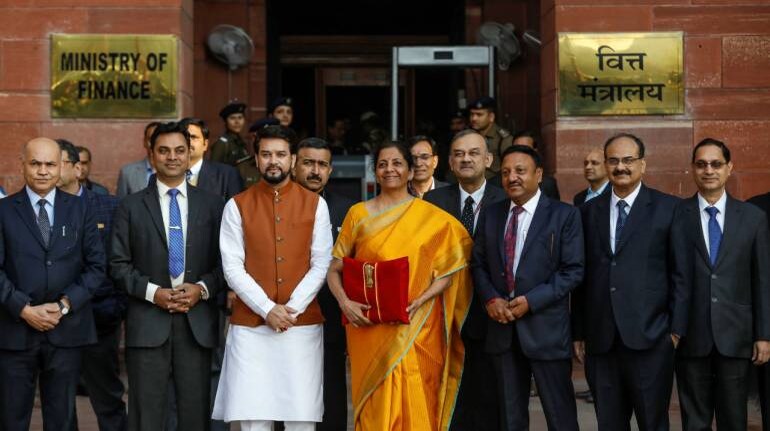
The government’s first Budget of the decade was all about reinforcing the ‘India opportunity’ and the dreams of an aspirational India. It brings together four key elements -- revival of consumption, creation of jobs in labour intensive sectors, moving towards tax certainty and driving competitiveness to compel fresh foreign investments. All this, at the back of a robust digital ecosystem to drive effective governance and accountability.
Aligning with dominant discourse, the Budget offered the flexibility of a new personal income tax regime with reduced rates, which will likely propel consumption in the immediate term. This coupled with the 16-point action plan will impact our agrarian economy in the medium term. Specific Public Private Partnerships (PPP) levers such as the Kisan Rail project have the ability to positively impact the availability of perishable produce and make farm-to-fork models a reality.
In addition, the Krishi Udaan scheme will significantly help improve value realisation, especially in North-East and tribal hinterland.
Taking cognisance of the government’s infrastructure development agenda, the push towards increased private investment and public sector participation is a welcome imperative. The ambitious investment outlay of Rs 103 lakh-crore of infrastructure projects through the National Infrastructure Pipeline (NIP) shows the government’s commitment towards building a world-class infrastructure ecosystem, connecting Bharat with India.
Given the volatility of global trade and investments, announcements of new schemes to encourage electronics manufacturing is seen as a step in the right direction. The sector has the ability to create large scale jobs. However, the implementation of these schemes will be the differentiator.
Another aspect is that it has incentivised Sovereign Wealth Funds (SWF) to participate in the country’s infrastructure development drive. The SWFs investing in Indian companies have been exempted from tax in India on their interest, dividend and long-term capital gains. To attract overseas funding, concessional tax rate of 5 per cent on specified overseas loans has been extended by three years to July 1, 2023.
The announcement of the disinvestment target of Rs 2.1 lakh-crore is reflective of the government’s intent to look at alternative modes for meeting its growing requirements for funding capital expenditure. Large public infrastructure projects can now be built on land parcels held by central ministries and central public sector enterprises all across India. These would be done through the use of innovative instruments such as joint development and concessions, public infrastructure and affordable housing, which will be taken up in due course of time. Overall, a lot of transformative ideas, where the criticality will lie in their expeditious implementation.
With a view to building trust and confidence, the FM has announced a scheme to reduce the backlog of litigation at various appellate forums for direct tax. While the fine print is awaited, the scheme includes only the disputed tax amount to be paid by the taxpayer if the option is exercised by March 31, post which certain additional payment will be required to be made. A good step, although one would have hoped a longer time period for the scheme to be in effect.
The abolition of the Dividend Distribution Tax (DDT) and its replacement with the classical tax withholding system is expected to reduce the overall cost of doing business and will position the country as an attractive investment destination. In order to reduce the compliance burden, non-residents have been exempted from filing their tax returns in India, provided their royalty and service fee income has been subjected to tax withholding.
Bringing Permanent Establishment (PE) profit attribution under the ambit of Advance Pricing Agreement (APA) will help reduce tax litigation while deferral of Significant Economic Presence (SEP) by one year will ensure that India aligns its thinking with the consensus building under the Organisation for Economic Cooperation and Development’s (OECD) inclusive framework.
While many good announcements were made, there was some unfinished agenda specifically around the Long-term Capital Gains (LTCG) tax which the industry was hoping would be rolled back. Effects of these were visible, as at the time of writing this article, the Sensex had dropped over a thousand points.
In addition, further clarity in Foreign Direct Investment (FDI) and External Commercial Borrowing (ECB) guidelines on education remains to be seen, to help create a positive impact on India’s education and skill development agenda.
So, in essence, the FM was candid in her budget speech when she said this is a Budget reminiscent of the fundamentals of economic policy and fiscal planning, which if deployed prudently, will make the promise of a $5trillion+ economy a reality, sooner than later.
Naveen Aggarwal, Partner – Tax, KPMG in India. Views are personal.

Discover the latest Business News, Sensex, and Nifty updates. Obtain Personal Finance insights, tax queries, and expert opinions on Moneycontrol or download the Moneycontrol App to stay updated!
Find the best of Al News in one place, specially curated for you every weekend.
Stay on top of the latest tech trends and biggest startup news.