






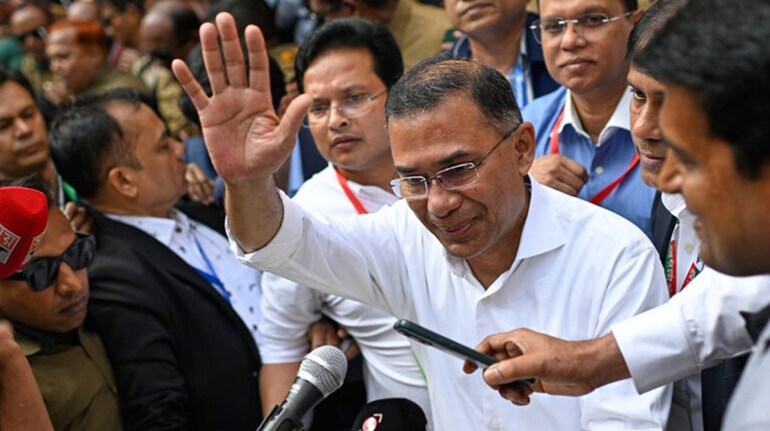
The election is over in Bangladesh. Seat shares are not clear as the declaration of results is unusually delayed. Unofficially, nearly 61 percent votes were polled (Netra News), Tarique Rahman’s Bangladesh Nationalist Party (BNP) is ahead or secured 175+ seats, Jamaat secured 70–80, interim head Dr Muhammad Yunus-backed National Citizen Party (NCP) got six in coalition with Jamaat. The referendum on constitutional reforms passed with a 72 percent majority.
Almost all trends were expected. Roughly one-fifth of the country’s electorate is below 25 years and they haven’t seen a semblance of an election in the last 15 years. It was natural that they would come out to vote.
Minorities were left with little choice
The country’s seven to eight percent Hindus voted in large numbers, without which they would have been marked and their sufferings would have gone up. Minorities had little choice beyond BNP and that tilted the results substantially in the party’s favour. That is irrespective of the atrocities and extortion by the party thugs over the last one-and-a-half years.
“Rigging” the referendum
‘Yes’ vote won in the referendum because it was made to win. In the past military rulers sought approval to stay through Yes and No votes. Yunus sought blanket approval to over three-dozen contentious issues, which are “too complicated for most to understand,” alongside the election fervour “in an opaque and non-serious manner,” claimed leading economist and political scientist Prof Rehman Sobhan (The Daily Star, 30 January 2026).
While parties barely spoke about it, the whole administration was geared up to get the referendum passed. The Election Commission initially kept watching as the entire interim administration starting from Dr Yunus was openly campaigning for ‘Yes’ votes. By the time they ordered a clampdown, even the school teachers were pressed into service. As it emerged yesterday, the opacity was maintained even in the ballot for the referendum.
The referendum result may run into BNP opposition
Interestingly, the ground rules set by the referendum suggest that the new Parliament will act as a constituent assembly for six months to implement all the proposals. BNP is unlikely to accept that and many expect that the problem will start from there. A political consensus for a two-tier Parliament is expected as it can accommodate more faces. What happens to others will depend on how BNP’s relation with its one-time coalition partner Jamaat evolves.
Bangladesh’s electorate extends support to Liberation history and some secular-liberals
The election had thrown up a few instances of secular-liberal resilience which Delhi must keep note of and invest in. Advocate Rumeen Farhana was denied nomination by BNP. She contested as an independent and won from a constituency that is adjacent to Tripura. The daughter of a top leader of the freedom movement, Farhana was a distinct critic of Yunus over the last year. She had openly criticized the attack on Liberation history and some of her observations went in favour of Hasina.
The biggest and the most memorable win of 2026 was of senior advocate Fazlur Rahman for BNP. A staunch Mujib loyalist and a fiery orator, he was once frustrated by the Awami League and ended up as an adviser to Khaleda Zia. After Hasina’s ouster, he emerged as the strongest voice speaking for Liberation, Mujibur Rahman and the rich history of the League. He has zero tolerance for Jamaat and has been direct in his attacks on the anti-Liberation and Islamist forces.
Over the last year, he was threatened with mobbing. BNP suspended him once but he was unrelenting. When he finally got the ticket, a section of the Awami League, reportedly closer to the former President Mohammad Abdul Hamid, tried their best to defeat him. Hamid’s brother-in-law contested for Jamaat from Fazlur’s constituency. Yet, Fazlur Rahman won by a landslide.
India cannot afford to be nostalgic about Hasina
Rumeen and Fazlur are not alone. There are BNP candidates like Md Ali Asghar Lobby of Khulna who protected Hindus. Dr Manisha Chakraborty of the Bangladesh Socialist Party lost the election but she is surely a face to reckon with. The fall of Hasina was a blessing in disguise. It helped throw up new faces at the front. It is time India dumps the Pranab (Mukherjee) doctrine and invests in faces and the future outside the party lines.
The fall of the Sheikh Hasina government of the Awami League came through a combination of a pile-up of dissent from internal failures and admitted orchestration of protests by Jamaat. Outside influences like admitted arm-twisting of the army by the UN human rights body paved the way to her ouster.
18 months of Jamaat harassment
Over the last one and a half years, Jamaat enjoyed maximum grip over the administration. They also established strong control over the media and dictated public discourse. Outrageous claims were made on national history. Jamaat-backed bloggers sitting abroad played a key role in spreading the fear of mobbing discordant voices. The administration helped it by either keeping silent or jailing targeted voices.
This election – held without Awami League – was their golden opportunity to acquire power. There were indications of tacit Western support – particularly from the US and UK – behind Jamaat. Delhi backed BNP. The headroom was artificial but Jamaat failed to turn the opportunity into a reality. They ended up with three to four times more seats compared to the previous best of 18 in 1991. Jamaat offered outside support to BNP’s Khaleda Zia government that year.
Re-entry of Awami League will change political dynamics
These results will change once Awami League is back into the fray in the next election. If everything goes well, the stranded Awami activists in India might return to the country this year. The fate of Hasina is a separate issue.
The League has not conducted itself well during the interim rule. On the one side, they were hounded by an extremely vicious disguised political disposition in power. On the other hand, the party’s internal reforms are overdue.
Most of those senior leaders stationed in India are unwanted by their own grassroots workers. They are a liability both to India and the League. Hasina knows that and it was last heard that she avoids the company (virtual) of senior leaders for the grassroots workers.
League’s stand on the election is not beyond criticism either. A ‘No boat (Awami symbol), no vote’ call from outside ended up helping the landslide win of the referendum. Roughly 10 percent of Bangladeshi voters are reportedly stationed abroad and the dominant majority did not participate in the election, indicating diaspora’s support to the League.
While the judiciary caved in, Army ensured polling was fair
Bangladesh army ensured a fair poll but the ground was not fair. Huge pressure was created on Jatiya Party and they could not create a mark in their stronghold of the greater Rangpur area. The benefits went to Jamaat. There was perceived backroom engineering to gift seats to student leaders of NCP.
Hasnat Abdullah, a face from the 2024 protest days, won by a record margin from a Comilla seat because the high court clamped down on the BNP candidate for bank default. That is despite over three dozen other questionable characters having passed the net. The state control over the courts reached an unprecedented high during the Yunus era, with acquittal of favourites and detention of critics becoming a norm.
Despite a successful election, Bangladesh enters an uncertain era
Overall, this is not an election to remember. Bangladesh will surely enter a new era of uncertainty. Tarique Rahman must erase his past and establish himself as a good administrator. The law-and-order situation had been the worst for the last 18–19 months. He must restore it. That requires support of the police.
It is to be seen if Rahman revokes the (illegal) indemnity granted by Yunus to crimes by the 2024 protesters. Three fourths of the country’s police stations were destroyed. Nearly half a dozen jails were emptied. And over 4000 sophisticated arms were looted. At least 1500 of them are untraceable.
Disclaimer: The figures and trends mentioned the article are at the time of publication. The final result may vary.
(Pratim Ranjan Bose is an independent columnist, researcher, and consultant. His X handle is @pratimbose.)
Views are personal, and do not represent the stand of this publication.
Discover the latest Business News, Sensex, and Nifty updates. Obtain Personal Finance insights, tax queries, and expert opinions on Moneycontrol or download the Moneycontrol App to stay updated!
Find the best of Al News in one place, specially curated for you every weekend.
Stay on top of the latest tech trends and biggest startup news.




