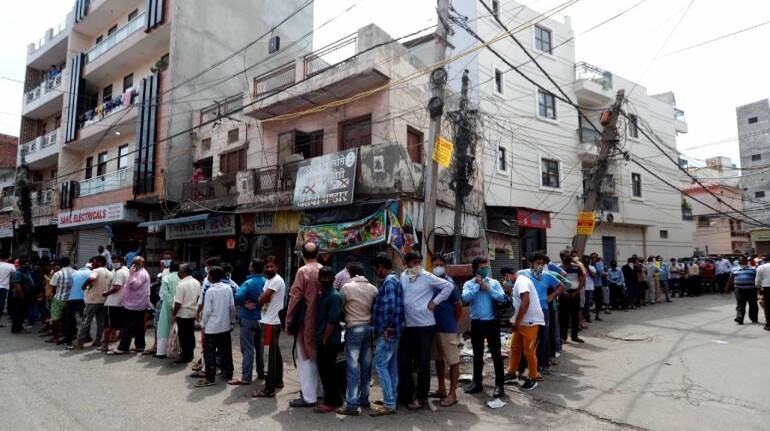
The recent illicit liquor tragedy in Bihar has proved, if proof is needed yet again, that banning alcohol has seldom had the desired results. Besides, historically, delusional zeal and overwhelming optimism embedded in false notions of success, by themselves, have never yielded any positive returns as regards the banning of alcoholic drinks.
The catastrophe in the present case linked to the consumption of hooch (derived from hoochinoo, a word used by the Tlingit, a native ethnic group from Alaska) is not an isolated incident nor is it uncommon in India. Many hooch-related deaths have occurred in quite a widespread way through the length and breadth of India, particularly so in states where sale and, by extension, drinking alcohol, is forbidden by law.
The word prohibition was earlier, and ordinarily, used for banning or not allowing something. But it assumed an almost extraordinary meaning from the 1920s onwards when the United States of America, by the Eighteenth Amendment, brought in Prohibition (with a capitalised P) through which the manufacture, transportation, and sale of alcoholic liquors was forbidden till 1933. The word prohibition has, gradually, developed a nexus with alcohol, wherein, invariably, it is being used to mean not allowing the imbibing of liquor or any kind of alcoholic drinks. We shall return and delineate below the tragic and completely unintended consequences the Eighteenth Amendment had in the US.
Currently the sale of alcohol is forbidden in the four states of Bihar, Gujarat, Mizoram, and Nagaland. However, rest of the states and the different union territories permit the sale of alcohol. Compared to the latter three states, Bihar is a late rider (since 2016) on the prohibition bandwagon. It has a common border with three other Indian states: Jharkhand, Uttar Pradesh, and West Bengal, and shares an international border with Nepal. Neither of the three states, nor Nepal, have prohibition of any sort; nor are the borders with any of these places absolutely non-porous. No marks for guessing what impact do porous borders have in terms of alcohol smuggling. Similar is the case concerning Gujarat, which shares its borders with Madhya Pradesh, Maharashtra, and Rajasthan, besides its proximity to the union territory of Daman where liquor is very cheap compared to the three other non-prohibition states.
In the northeast of India, Nagaland shares borders with Arunachal Pradesh, Assam, and Manipur, and these three states do not practise prohibition. Also, Mizoram has common borders with Assam, Manipur, and Tripura, which too are states that have no prohibition. Given such different geopolitical and administrative contexts, ‘dry’ states have virtually no way of enforcing prohibition and remaining dry islands given that they are surrounded by ‘wet’ states where liquor in all forms and alcoholic drinks of various kinds are in abundance.
Needless to emphasise, smuggling of liquor into the dry states of Bihar, Gujarat, Mizoram, and Nagaland is quite rampant. Usually, not a single day passes in all these so-called dry states without the confiscation of what is branded as contraband liquor, and the arrest of bootleggers, not necessarily only in the borders areas, but also quite spread out all over these four states that practise prohibition.
Also, what gets exposed quite frequently in the various media, even officially so, is the nexus that exists between the kingpins/lynchpins with political patronage who control the bootleggers, and establish cartels involving the police and the politicians. So, there is indeed quite a quick buck to be made when prohibition prevails, wherein the banning and forbidding of alcohol is just a smokescreen and an undiluted façade. In fact, all those involved in the alcohol racket laugh all their way to fill their coffers, and simultaneously cock a snook at the authorities concerned who, anyway, seem to provide loopholes for them to escape the dragnet of the law quite willingly.
The debate around prohibition raises many hackles, and the moral compass gets invoked whereby the arguments that get proffered in favour of prohibition are that the community/society concerned can be cleansed legally, and the scrouge of what is perceived as a social evil, can be got rid of. On the other hand, there are those who point out, undoubtedly quite pragmatically, that prohibition causes a huge loss to the state’s exchequer. Bihar, the state under our discussion, has reportedly lost a humongous Rs 40,000 crore during the last seven years since prohibition was imposed.
Prohibition that was imposed in the US in the 1920 had not only hugely increased the supply of illicit liquor, but had also caused a massive surge in organised crime, among other attendant undesirable issues. Also, prison expenditure had shot up a lot, besides corruption among the police and politicians. Ultimately, in 1933, prohibition in the US was revoked.
Many states in India have introduced and then rescinded prohibition after struggling with the aftermath of such an action, including the ravages of death and various instantaneous ailments due to the consumption of illicit liquor. The relatively well-developed south Indian states of Kerala, Tamil Nadu and the erstwhile composite state Andhra Pradesh too toyed with prohibition but have, fortunately, wisely, abandoned it.
It is not out of place in the present context to let it be known that almost all colleges and universities in Britain have their own bars that function in line with the timings of the general pubs outside of these educational institutions. For instance, the London School of Economics and Political Science has its own bar, and the School of Oriental and African Studies in London has two bars.
In a similar way in which the faculty and students in India go to the canteens in their educational institutions for tea, coffee, cold drinks, and snacks, their counterparts in Britain go for alcoholic drinks and snacks, yes of the meat kind too. Have these bars at the educational institutions in Britain brought about any kind of moral depravity in general? One is sure there is no need to wait for any jury for its verdict as regards alcohol to be considered as a social evil.
MA Kalam, a social anthropologist, is Visiting Professor, Centre for Economic and Social Studies, Hyderabad. Views are personal, and do not represent the stand of this publication.
Discover the latest Business News, Sensex, and Nifty updates. Obtain Personal Finance insights, tax queries, and expert opinions on Moneycontrol or download the Moneycontrol App to stay updated!
Find the best of Al News in one place, specially curated for you every weekend.
Stay on top of the latest tech trends and biggest startup news.