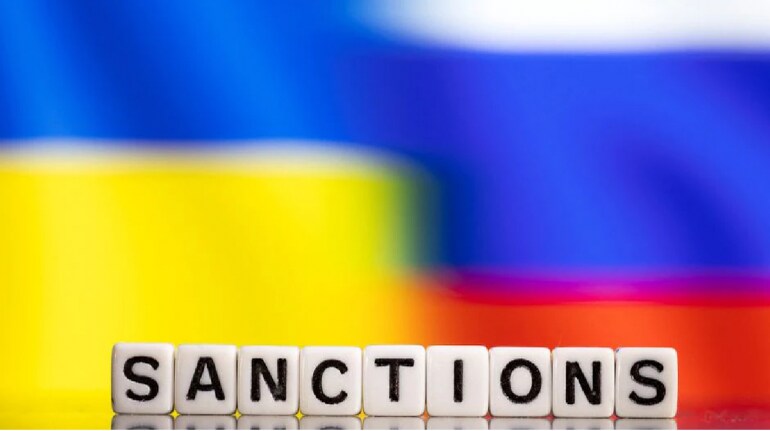
For anyone who had doubts, the precipitous decline of the ruble offers compelling evidence that economic sanctions are more than a mere annoyance for Russian President Vladimir Putin — and perhaps even a greater threat than the briefly rebellious mercenary leader Yevgeny Prigozhin, who reportedly perished this week in a plane crash. Yet it also raises a question crucial to global security: What, ultimately, is this punishment supposed to achieve?
As Western leaders keep the pressure on, they need to be clear that their aim is to end the war in Ukraine, not to further destabilize Russia.
The Kremlin has so far done an effective job of blunting sanctions, to the point that some Western analysts have questioned whether they work at all. It has propped up the currency by forcing exporters to exchange more dollars for rubles. It has found ways to get its oil and gas to market, sharply increasing deliveries to China and India. It has put money in Russians’ pockets by boosting defense and social spending, such that economists polled by Bloomberg expect growth of about 1% this year in inflation-adjusted terms.
Now, though, the ruble is suffering a crisis of confidence. Russia’s central bank has been forced into an emergency rate hike to halt its sharp decline, and Putin this week demanded further action to curb capital outflows and inflation. As of Wednesday, the Russian currency traded at $0.011, down 36% from a year earlier.
Granted, Putin has the resources to hold out a lot longer. Russians have become largely inured to currency fluctuations, and he can still tap the country’s $146 billion sovereign wealth fund. Eventually, though, he’ll have to face an unpleasant choice: Cut back on spending, or stoke excessive inflation by printing money. Either will increase the chances of unrest, and of the next Prigozhin gaining enough popular support to topple him.
Thus, Putin himself will play a key role in determining the outcome of sanctions. Will he keep doubling down on mobilization until the economic consequences lead to some kind of revolt, and potentially put someone even more dangerous in charge of Russia’s nuclear arsenal? Or will he choose a less disruptive path, seeking a peace deal that might allow Russia to pivot back to a more normal economy?
Western leaders of course prefer the latter option. To that end, even as they maintain solidarity, toughen sanctions and close loopholes, they should continue to seek opportunities to offer Putin a way out of the disastrous course he has set. Simply bringing Russia to its knees won’t end well for anyone.
Discover the latest Business News, Sensex, and Nifty updates. Obtain Personal Finance insights, tax queries, and expert opinions on Moneycontrol or download the Moneycontrol App to stay updated!
Find the best of Al News in one place, specially curated for you every weekend.
Stay on top of the latest tech trends and biggest startup news.