FIIs are falling out of love with Indian bonds -- Policy rates are not the only reason
Foreign investors are becoming less enthusiastic about Indian debt

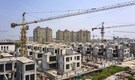
Chart of the Day | A puzzling dichotomy is shaping up between housing prices and bank lending
The House Price Index and home loan growth trends in banks show a divergent trend
Putin is vulnerable, US and Europe should capitalise on it
The US and Europe should exploit Russia’s economic vulnerability to negotiate a better peace
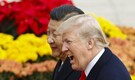
Trump-Xi bromance has a chance in 2025
The US-China relationship will be better served by collaboration, not acrimony. The moment for better ties could come next year
What can Hindu women really inherit?
Almost seven decades after The Hindu Succession Act was enacted to end gender discrimination in inheritance, there’s ambiguity in its interpretation. To bring finality to the issue, the Supreme Court recently referred it to a larger bench. A deep dive into the law and subsequent jurisprudence traces how a progressive legislation has not always produced the desired results
Don’t count on rural recovery by looking at crop output
The strength of rural recovery and its attendant impact on consumption depends not so much on output but on prices realized by farmers. On that score, there are worrying signs as the market price of three key crops, moong, soybean and groundnut, are ruling below their respective MSPs. Low returns for farmers can act as a drag on rural demand which will have a knock-on effect on GDP growth rate
China would baulk at a sweeping Mar-a-Lago accord
Given the need for a weak renminbi to support export growth, a reprise of the 1985 Plaza Accord with Japan is unlikely
Reforming India's personal insolvency framework for economic stability and growth
India's personal insolvency framework requires reform to address financial distress, promote economic stability, and empower individuals. A robust framework can prevent systemic risks, strengthen institutions, and foster sustainable growth by adopting global best practices and addressing local socio-economic realities
Bangladesh pot boils: Is secular Bengal turning right?
Mamata Banerjee is trying to outdo the Bengal BJP in their attempt to champion the cause of Hindus in Bangladesh
Oil markets are shifting gears downwards
The dim demand outlook has set the stage for a fall in oil prices in 2025 with ghost supply adding to the woes
Bank lending to NBFCs has dried up this year; can CRR cut turn the tide?
NBFC funding by banks may not pick up in the foreseeable future despite the liquidity infusion
Chart of the Day: AI initiatives to drive IT spends in 2025
Cost optimisation and productivity improvement objectives are expected to drive IT spends on AI initiatives in 2025
HAL: After an underwhelming 2024, hopes now rest on next fiscal for take-off
Revenue growth slowed in Q2 FY25 amid execution delays
India’s arms production and inferences from SIPRI report
India's domestic military industrial complex is thriving, with domestic production meeting two-thirds of weapons requirements. However, India remains a peripheral player in the global arms production market, with only 1.1% representation in SIPRI's top 100 companies, necessitating policy reforms
The Eastern Window: How the end of Assad's reign over Syria alters Middle East power equations
The fall of the Assad regime has created a power vacuum in Syria with several countries keen to exploit the situation by supporting or weakening the new leader, Jolani. Little attention is being paid to the declining economy that has left millions of Syrians starving and helpless
Russia remains a critical defence partner, but a recalibration is due
India’s defence and geostrategic ties with Russia are integral to its posture of strategic autonomy. A large section of India’s frontline defence equipment is of Russian origin – a legacy of more than half-a-century of defence collaboration. This partnership has led to evolution of mutual sensitivity on core interests. That said, a recalibration of defence ties in inevitable
Vijay Diwas: Remembering war victories without diminishing the role of heroes of other battles
India commemorates military victories like Vijay Diwas and Kargil Vijay Diwas. However, wars such as 1962 and Op Pawan, where many soldiers perished, remain largely forgotten. A more inclusive remembrance of all fallen soldiers is long overdue
Ruchir Sharma: How ‘the mother of all bubbles’ will pop
It’s time to bet against American exceptionalism
Flash PMI indicates growth is accelerating at the end of 2024
The PMI survey shows that demand at the end of the year is strong, animal spirits are high and jobs are plentiful while inflation pressures are subsiding. It’s a wonderful start to 2025
‘One Nation, One Election’ can boost India’s economic growth
Sanghnomics: Implementing ‘One Nation, One Election’ in India is expected to boost GDP growth, reduce inflation, and increase private investments, while also alleviating the financial burden on migrant workers and minimizing disruptions to production activities and governance
Chart of the Day: High cash levels with funds may be an optical illusion
While FIIs have been net sellers, domestic mutual funds have stepped into the breach. Despite this, what explains their growing cash holdings?
A ‘Badal’ over Akali revival in Punjab
Sukhbir Singh Badal and his colleagues in Shiromani Akali Dal may have finished the atonement prescribed by the Akal Takht, the supreme temporal seat of Sikhs. However, it may be a case of too little, too late for Badal who confronts a sceptical electorate. Even SAD may stand no chance if it avoids a leadership change
Google’s Willow: A quantum computing breakthrough, but hold the bubbly -- for now
It represents a big leap in Quantum Computing research but, as even Google admits, this is not likely to lead to even a small practical Quantum Computer by 2030
Swiss knife in tax treaty — How deep is the wound?
Switzerland’s decision to suspend MFN clause in tax pact with India can queer New Delhi’s pitch for global investment
Fed rate cut almost a certainty this week, but next year is a different story
While a 25-basis point cut is priced in for the FOMC meeting this week, the markets are expecting a shallower easing trajectory next year and higher level of rates at the end of the loosening cycle