A new claim out of Islamabad has reopened one of South Asia’s darkest chapters.
Pakistan President Asif Ali Zardari’s spokesperson Farhatullah Babar has written in a new book that the 26/11 Mumbai terror attacks were carried out in response to Zardari’s peace gesture toward India, his offer of a 'no first use' policy on nuclear weapons.
In 'The Zardari Presidency: Now It Must Be Told,' cited by India Today, Babar recounts how Zardari made the offer during a satellite interview with senior Indian journalist Karan Thapar at a media summit in New Delhi, a statement that, he claims, 'provoked Pakistan’s warmongers.'
The claim: peace offer, then terror strike
According to Babar’s account, Zardari’s public proposal that Pakistan would not be the first to use nuclear weapons, mirroring India’s own declared doctrine, infuriated elements within Pakistan’s military establishment.
“Within four days of the (Zardari) interview, on November 26, 2008, gunmen launched coordinated attacks in Mumbai, killing 166 people,” Babar writes, as quoted by India Today.
He argues that the attacks were a direct reaction from Pakistan’s powerful military “warmongers” who sought to sabotage civilian attempts at peace with India.
“It brought the two countries closer to war in years and dashed all hopes of peace,” Babar claims in the book.
The contradiction: timeline and evidence
But India Today notes that Babar’s version isn’t supported by facts.
The ten LeT attackers, trained and equipped by Pakistan’s Inter-Services Intelligence (ISI), had already set sail from Karachi on November 21, a full day before Zardari’s 'no first use' remarks.
By November 22, when Zardari’s peace offer was aired, the terrorists were already off the Gujarat coast. The next day, they hijacked the Indian fishing trawler Kuber, using it to approach Mumbai. By November 26, they had landed on Mumbai’s shoreline in inflatable boats, launching one of the most devastating terror sieges in India’s history.
The planning for 26/11, in fact, began years earlier, suggesting that the operation could not have been a spontaneous reaction to Zardari’s comments.
How Pakistan’s deep state built 26/11
According to India Today, Pakistan’s ISI began plotting the Mumbai attacks in 2005 through its terror proxy Lashkar-e-Taiba.
Operational planning began in 2006, when David Coleman Headley, a Pakistani-American LeT operative, arrived in Mumbai under a business cover to conduct reconnaissance of potential targets.
That same year, Pakistan’s deep state had already executed another major strike, the July 11, 2006 train bombings, which killed over 200 commuters.
By 2008, LeT’s elite trainers and Pakistan Army’s Special Services Group (SSG) had selected and prepared 30 militants for high-impact suicide missions.
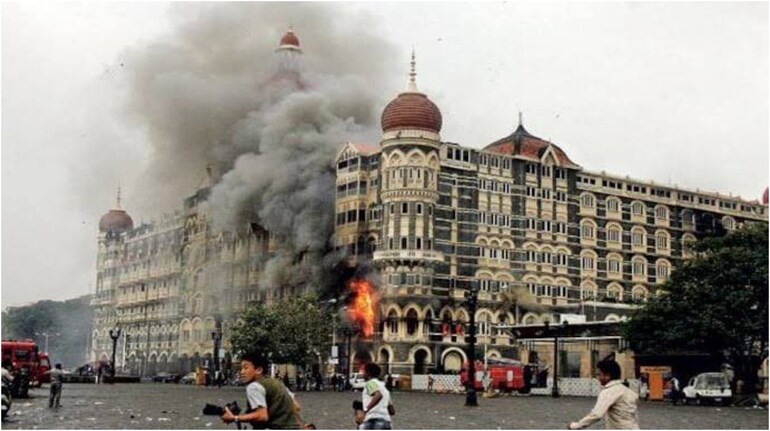
Ten of them were armed with AK-47s, grenades, and explosives to storm landmarks like the Taj Mahal Palace, Trident Hotel, CST Station, and Chabad House, taking hostages and holding out for as long as possible.
The 26/11 carnage lasted over 60 hours, leaving 166 people dead. It was Pakistan’s third-deadliest covert strike on Indian soil, after the 1993 Mumbai serial bombings (257 killed) and the 2006 train blasts.
A civilian president vs Pakistan’s military state
While the 'no first use' claim may falter on factual grounds, Babar’s book offers a revealing window into Pakistan’s civil–military imbalance.
He writes that Zardari’s ascent to the presidency in September 2008, months after the ouster of military dictator Pervez Musharraf, had caught the Pakistan Army off guard.
“Army chief General Ashfaq Parvez Kayani may have agreed to Musharraf’s ouster but did not want Zardari to replace him,” Babar writes, according to India Today. Kayani instead preferred Aftab Shaban Mirani, a former Sindh Chief Minister and Defence Minister.
Babar notes that Kayani, the first ISI chief to become army chief, was at the helm during both the 2006 train bombings and the planning of 26/11, symbolising the Pakistan military’s dual role as both intelligence overseer and power broker.
Pakistan’s nuclear paradox
The book also revisits Pakistan’s nuclear posture and the enduring role of its army in shaping it.
India Today points out that Pakistan remains the only nuclear-armed nation where the military directly controls the nuclear arsenal.
India’s doctrine promises no first use, while Pakistan, led by the army’s Strategic Plans Division, maintains deliberate ambiguity. The country’s 'red lines,' laid out in 2002 by Lt Gen Khalid Kidwai, envisage nuclear use in response to scenarios such as territorial invasion, military defeat, or economic blockade.
Zardari’s public offer to adopt a no-first-use stance was, therefore, a direct challenge to the army’s strategic doctrine, and, as Babar suggests, may have deepened the rift between the presidency and the generals.
Musharraf, A.Q. Khan, and a culture of denial
Babar’s book, as cited by India Today, also takes aim at former dictator Pervez Musharraf’s 2006 autobiography 'In the Line of Fire', which downplayed the A.Q. Khan nuclear proliferation scandal.
Musharraf claimed to be 'flabbergasted' when shown CIA evidence that Khan had exported nuclear technology to Libya, Iran, and North Korea, insisting the rogue scientist acted alone.
Babar dismisses this as implausible: “It’s surprising that one individual could run such a vast operation single-handedly, bypassing security cordons and loading centrifuge machines onto aircraft.”
Lost chances and history repeating itself
Babar also recounts how Zardari failed twice to bring Pakistan’s intelligence agencies under civilian control, most notably after the US raid that killed Osama bin Laden in Abbottabad in 2011.
Weeks later, militants struck the PNS Mehran naval base, destroying two U.S.-made P-3C Orion aircraft, a brazen reminder of the army’s continuing vulnerability and lack of oversight.
Now, nearly two decades after 26/11, Zardari has returned to the presidency under yet another military-dominated government.
Babar ends with a warning: “History is rhyming in Pakistan.”
Discover the latest Business News, Sensex, and Nifty updates. Obtain Personal Finance insights, tax queries, and expert opinions on Moneycontrol or download the Moneycontrol App to stay updated!
Find the best of Al News in one place, specially curated for you every weekend.
Stay on top of the latest tech trends and biggest startup news.