






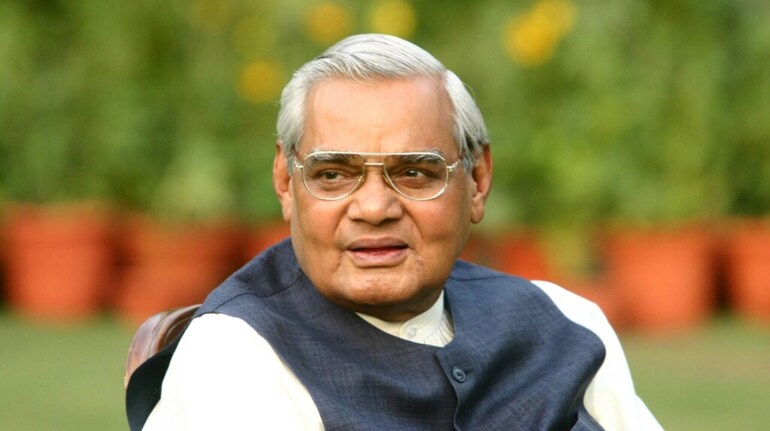

Prime Minister Narendra Modi will visit Lucknow on Wednesday to mark the 101st birth anniversary of Bharat Ratna Atal Bihari Vajpayee.
After Operation Sindoor in May this year, this is the first birthday of the three-time Prime Minister and BJP stalwart.
It was Vajpayee who ensured Bharatiya Jana Sangh's founding president Syama Prasad Mookerjee's statement on Kashmir— “Kashmir is an inseparable part of India” — came true when the reseolution was passed unanimously in the Parliament on the 50th anniversary of Independence.
Vajpayee emphasised that “guns can solve no problem; brotherhood can” while addressing the Jammu and Kashmir issue in Parliament on April 23, 2003.
'Mastak Nahin Jhukega’
His poem Mastak Nahin Jhukega (Head Will Not Bow) symbolised India’s refusal to bow before external pressure or internal intimidation. "Ek nahi, do nahi, karo beeson samjhote, Par swatantra Bharat ka mastak nahi jhukega (Negotiate once, negotiate twice, negotiate twenty times, But the head of independent India will never bow),” wrote the former PM.
Watch Vajpayee recite the poem.
Vajpayee recited this poem on various occasions, especially after the Kargil War (1999) to express India's unwavering resolve. In his poem, he said while India is willing to engage in numerous peace agreements, it will never compromise its sovereignty. It is a remembered as a quite challenge to Pakistan.
The poem stated that until the tide in the Indus River ceases, India's determination regarding its sovereignty remains absolute. He used various such metaphors to indicating India’s unyielding claim over Kashmir. He emphasised that India would not negotiate under threat.
The late 1990s was marked by nuclear tests by India and Pakistan (1998), Lahore peace initiative (1999) and mistrust over cross-border terrorism and Kashmir.
Vajpayee’s poem was warning to those who conspire against the nation, noting that "playing with sparks is dangerous" (chingari ka khel bura hota hai) and that those who try to set fire to others' homes often end up burning their own.
Vajpayee took a bus to Lahore in 1999 and hugged his Pakistani counterpart Nawaz Sharif leaving an endearing image that symbolised hope in bilateral ties.
Ties with Pakistan
During his second stint as Prime Minister, Vajpayee handled India’s second nuclear tests, diplomatic ties with Pakistan and the Kargil conflict. In 1999, he also inaugurated the Delhi-Lahore bus service in a gesture of peace with Pakistan.
"I bring the goodwill and hope of my fellow Indians who seek abiding peace and harmony with Pakistan... I am conscious that this is a defining moment in South Asian history and I hope we will be able to rise to the challenge," Vajpayee had said upon arrival at Lahore to a rousing welcome.
After his visit, the Lahore Declaration was signed. It was agreed upon that the two sides were fully committed to undertaking measures to reduce risks of accidental or unauthorised use of nuclear weapons.
Vajpayee is said to have always believed in giving diplomacy and talks a chance. In 2001 he invited the then Pakistan President Pervez Musharraf to India for a two-day Agra summit meeting.
However, the talks ended without an agreement. The Kashmir dispute was seen as the main reason for the deadlock.
Former Pakistan Foreign Minister Khurshid Mahmud Kasuri later wrote in his book 'Neither a Hawk nor a Dove', “"He (Vajpayee) was prepared to go the extra mile for peace, but he was also prepared to use military force in defence of the country as he did during Kargil and thereafter the military deployment after the Parliament attack.”
Discover the latest Business News, Sensex, and Nifty updates. Obtain Personal Finance insights, tax queries, and expert opinions on Moneycontrol or download the Moneycontrol App to stay updated!
Find the best of Al News in one place, specially curated for you every weekend.
Stay on top of the latest tech trends and biggest startup news.





