






Can Brahmins – widely regarded as socially and educationally advanced but poorly represented among elected grassroots bodies – be classified as politically backward classes (PBCs) and granted reservation in panchayat constituencies?
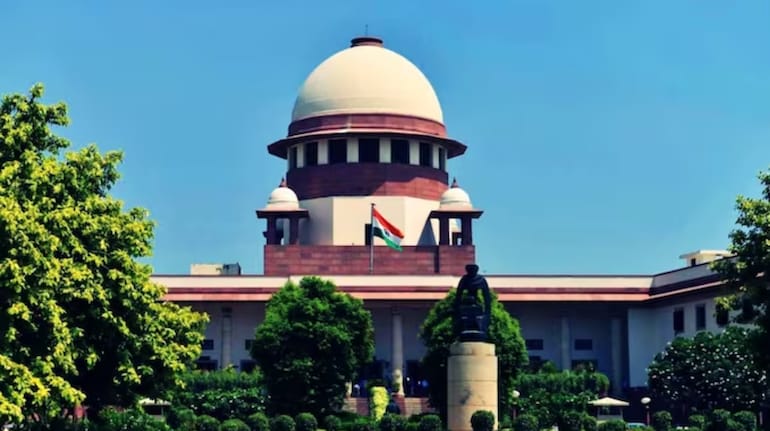
The petition, filed by NGO ‘Youth for Equality Foundation’, through senior advocate Gopal Sankaranarayanan, informed a bench comprising Chief Justice of India (CJI) Surya Kant and Justices R Mahadevan and Joymalya Bagchi that a five-judge Supreme Court bench in the K Krishna Murthy case had held “social and economic backwardness does not necessarily coincide with political backwardness”, according to a report by Times of India.
While the bench said it was willing to examine the issue, it observed prima facie that politically backward classes must emerge from within socially and educationally backward classes (SEBCs). It noted that under-representation within SEBC communities could justify categorisation as PBCs, but not the other way around, the TOI report added.
"If those among SEBC communities are under-represented...then they could be categorised as PBCs, but the reverse is not true."
In 2010, the five-judge SC bench had said, “In this respect, the state governments are well-advised to reconfigure their reservation policies, wherein the beneficiaries under Article 243-D(6) and 243-T(6) need not necessarily be coterminous with the Socially and Educationally Backward Classes (SEBCs) [for the purpose of Article 15(4)] or even the Backward Classes that are under-represented in government jobs [for the purpose of Article 16(4)].”
Discover the latest Business News, Sensex, and Nifty updates. Obtain Personal Finance insights, tax queries, and expert opinions on Moneycontrol or download the Moneycontrol App to stay updated!
Find the best of Al News in one place, specially curated for you every weekend.
Stay on top of the latest tech trends and biggest startup news.




