






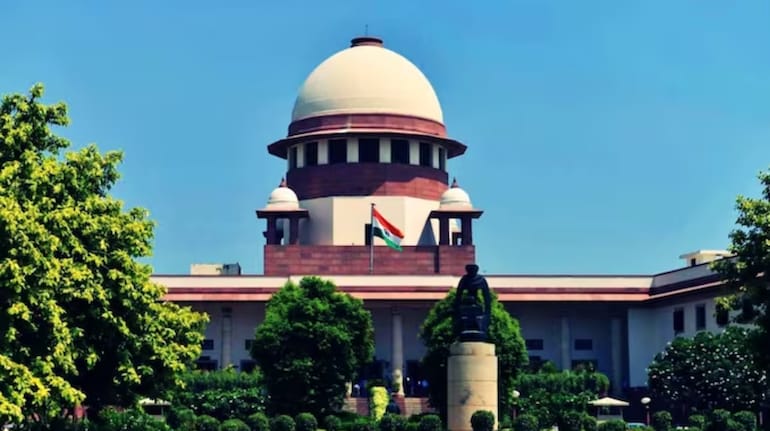
The Supreme Court in 2025 delivered a series of landmark judgments that shaped constitutional governance, civil liberties, environmental regulation, judicial independence, and gender equity. It clarified the limits of judicial power over Governors and the President on Bills’ assent, recalibrated environmental jurisprudence on ex post facto clearances, and struck down executive overreach in tribunal appointments.
The Court balanced public health and environmental concerns with cultural practices, reinforced Article 21 in cases ranging from stray dog management to criminal justice, and advanced gender representation by mandating women’s reservation in bar councils. It also revisited judicial recruitment norms to strengthen institutional competence.
Here are the 10 significant Supreme Court rulings that defined 2025:
Presidential reference
In a Presidential Reference under Article 143, a five-judge Constitution Bench of the Supreme Court held on November 20 that courts cannot fix judicial timelines for the President or Governors to grant assent to Bills under Articles 200 and 201, nor can they declare “deemed assent”, as this would violate the separation of powers. The reference was made by President Droupadi Murmu following a May verdict in the Tamil Nadu Governor case, where a two-judge Bench had laid down deadlines and used Article 142 to grant deemed assent to 10 Bills stalled by Governor RN Ravi.
The Tamil Nadu row arose from a prolonged standoff between the DMK government and the Governor, who had allegedly used a “pocket veto” to withhold assent to key Bills, prompting the court to term the delay “illegal and arbitrary”. Hearing arguments for ten days, the Bench led by ex-Chief Justice of India (CJI) BR Gavai (who demitted office on November 23), with Justices Surya Kant, Vikram Nath, PS Narasimha, and AS Chandurkar, answered 14 questions of law.
While holding assent decisions largely non-justiciable, the Court also said, “We don’t think governors have unfettered power to sit over bills,” and added that in cases of “prolonged or unexplained” inaction, courts may direct Governors to decide within a reasonable time, without examining the merits of the Bill.
Firecracker ban relaxed
The Supreme Court relaxed the absolute firecracker ban in the National Capital Region (NCR) for Diwali, permitting the sale and use of NEERI-approved green crackers as a temporary, test-case measure. Sale was allowed only from October 18 to 20, 2025, through licensed traders at designated locations, with strict policing, QR-code verification, and bans on e-commerce, imports, barium-based crackers, and joined laris (series).
Bursting was permitted only from 6 to 7 am and 8 to 10 pm on the eve of and on Diwali. The Court noted ineffectiveness of the blanket ban and unchanged AQI levels in 2018 and 201,4, where there was an absolute ban.
Stray dogs
The stray dog issue reached the Supreme Court after the court took suo motu cognisance on July 28 of media reports on rising dog bites and rabies cases, especially affecting children in Delhi. On August 11, a two-judge bench ordered that all stray dogs in Delhi-NCR be removed from the streets and kept in dedicated shelters, directing that they should not be released back. This sparked strong opposition from animal welfare groups, leading to the matter being referred to a three-judge bench.
On November 7, noting repeated attacks in schools, hospitals, railway stations, and sports complexes, the Court termed the situation a systemic administrative failure violating Article 21. Citing that over 90% of human rabies cases arise from dog bites, it directed authorities to remove stray dogs from institutional premises and relocate them to shelters after sterilisation and vaccination, without releasing them back to the same sites.
Later, the Supreme Court modified the order, calling it “too harsh.” It ruled that stray dogs must be sterilised, dewormed, and vaccinated, and then returned to the same locality, as mandated by the Animal Birth Control Rules, 2023. However, dogs that are rabid, suspected to be rabid, or aggressive must not be released and should be kept in separate shelters.
The Court also banned street feeding, ordered the creation of designated feeding areas, expanded the case by directing that all States and Union Territories be impleaded in the matter, and said all related cases pending before various High Courts should be transferred to it for a “final national policy or decision”.
Nithari serial killing
The Supreme Court acquitted Surendra Koli in the last remaining Nithari killings case and ordered his immediate release, holding that suspicion cannot replace proof beyond a reasonable doubt.
Allowing Koli’s curative petition, a bench led by ex-CJI Gavai noted that he had already been acquitted in 12 of 13 cases on identical evidence. The Court found serious investigative lapses, procedural violations in recording his confession, and a lack of forensic linkage. It stressed that upholding such a conviction would violate Articles 14 and 21, despite the heinous nature of the crimes uncovered in Noida in 2006.
Waqf Act
The Supreme Court refused to stay the entire Waqf (Amendment) Act, 2025, but put key provisions on hold in an interim order. A bench led by ex-CJI Gavai stayed the requirement that a person must be a practising Muslim for five years to create a waqf, citing the absence of rules, and halted the power of collectors to decide if waqf property is government land, citing separation of powers. It allowed nomination of non-Muslims to Waqf Boards with limits, and upheld mandatory registration of waqf properties.
Delhi air pollution
On December 17, the Supreme Court flagged serious civic and environmental failures in the Delhi-NCR region, focusing on traffic congestion and air pollution. Issuing notice to the National Highways Authority of India (NHAI), the Court suggested shifting Municipal Corporation of Delhi (MCD)’s nine toll booths at Delhi borders to NHAI-operated sites, with possible revenue-sharing to ease traffic snarls.
On pollution, a bench led by CJI Surya Kant (who assumed office on November 24) termed existing measures a “total failure” and stressed the need for long-term planning. The Court declined to interfere with school closures or hybrid classes, calling them temporary policy decisions for protecting children and the elderly.
Earlier in November, CJI Kant struck a cautious note, saying the Court does not have a “magic wand” to disappear the smog choking Delhi-NCR. He said the Court “needs to identify reasons” behind the persistent deterioration, noting that people often assume there is “only one reason, but there are various factors.”
On ex post facto environmental clearance
In a 2-1 verdict, the Supreme Court recalled its May 16 ruling that barred retrospective environmental clearances, citing public interest and legal errors. A bench led by ex-CJI BR Gavai held that refusing ex post facto clearance could lead to demolition of projects worth nearly Rs 20,000 crore, including hospitals and airports, harming public interest.
The majority found the earlier ruling ignored binding precedents, allowing post facto EC in exceptional cases. Justice Ujjal Bhuyan dissented, warning that the decision undermines core environmental jurisprudence and the precautionary principle.
30 per cent reservation for women in state bar councils
The Supreme Court mandated 30 per cent representation for women in State Bar Councils where elections are pending, terming it a significant step toward gender equality. A bench led by CJI Kant directed that 20% seats be filled through elections and 10% by co-option for the current year, and sought co-option proposals where adequate women advocates are unavailable.
Senior advocates Shobha Gupta and Charu Mathur, appearing for petitioners Yogamaya and Shehla Chaudhary, hailed the move as a “giant leap,” while stressing that the ultimate goal should be 50 per cent representation for women.
Tribunal Reforms Act striking down
The Supreme Court struck down key provisions of the Tribunals Reforms Act, 2021, holding them unconstitutional for violating the separation of powers and judicial independence. A bench of ex-CJI Gavai and Justice K Vinod Chandran said Parliament had reenacted provisions earlier invalidated by the Court with minor changes, terming the law “old wine in a new bottle.”
The Court reiterated that executive dominance in tribunal appointments is impermissible, rejected the Centre’s defence, and directed the government to set up a National Tribunals Commission within four months.
Mandatory 3-year practice for judiciary
The Supreme Court reinstated the three-year minimum practice requirement for law graduates to apply for civil judge (junior division) posts, overturning its 2002 ruling in the All India Judges Association case. A bench led by ex-CJI Gavai held that courtroom experience is essential for judicial efficiency and cannot be replaced by academic knowledge or training.
States were directed to amend rules, require certification by a 10-year standing advocate, count law clerk experience, and ensure one year of training. The requirement will not apply where recruitment processes have already begun.

Discover the latest Business News, Sensex, and Nifty updates. Obtain Personal Finance insights, tax queries, and expert opinions on Moneycontrol or download the Moneycontrol App to stay updated!
Find the best of Al News in one place, specially curated for you every weekend.
Stay on top of the latest tech trends and biggest startup news.




