One year since demonetisation: We've said goodbye to two notes and hello to four
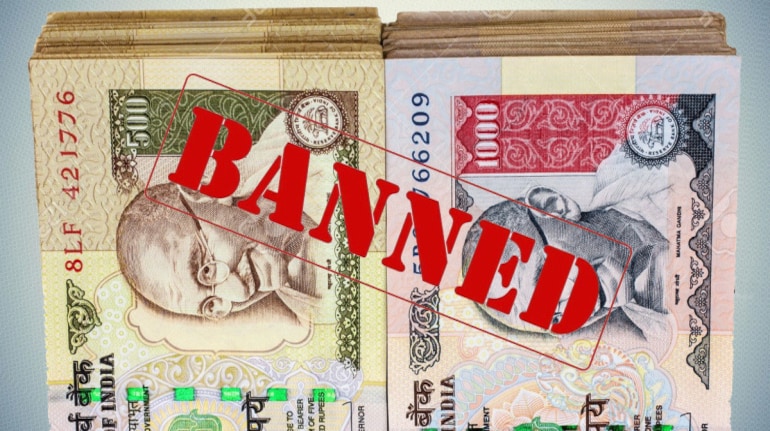
Since the old Rs 500 and Rs 1,000 notes were withdrawn on November 9 last year, the Reserve Bank of India (RBI) has introduced four new currency notes — Rs 50, Rs 200, Rs 500 and Rs 2,000
Anupa Kujur
November 07, 2017 / 16:38 IST
Four years after the government's decision to "demonetise" Rs 500 and Rs 1,000 notes, data suggest currency circulation in value and volume continuously increasing, a massive rise seen in the digital payments transaction, and seen a sharp decline in counterfeit notes detected in the banking system, according to data available on RBI. Demonetisation was announced by Prime Minister Narendra Modi on November 8, 2016, citizens were given 50-days to deposit old notes in banks and post-offices by December 30.
Currency notes and denominations have been a topic of key interest in the year since the government decided to do away with the Rs 500 and Rs 1,000 notes in circulation.
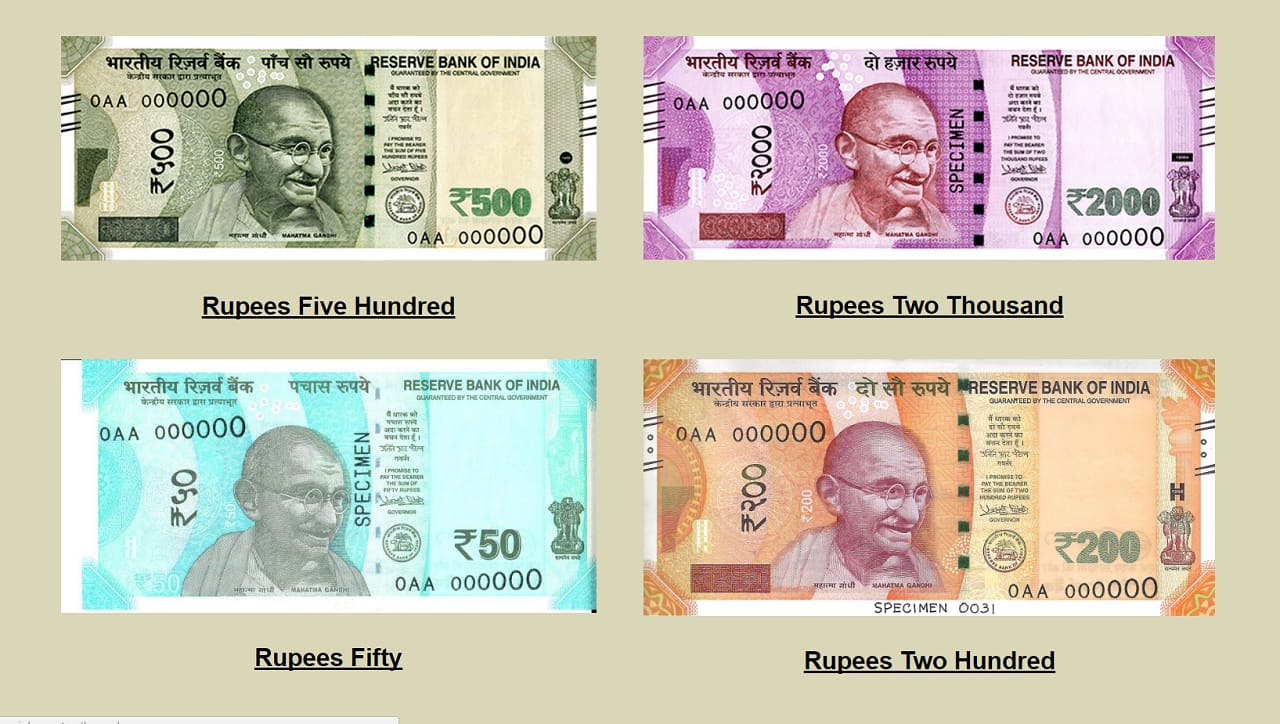
Since the old notes were withdrawn on November 9 last year, the Reserve Bank of India (RBI) has introduced four new currency notes — Rs 50, Rs 200, Rs 500 and Rs 2,000.
Two days after Prime Minister Narendra Modi announced the currency culling exercise on November 8, 2016, the new Rs 500 and Rs 2,000 notes came into circulation. Even as the new notes arrived in banks and recalibrated ATMs, a number of rumours did the rounds.
One rumour that did the rounds was that the new notes had an electronic Nan0-GPS chip installed in them that would track the transactions and prevent counterfeiting. A news channel even devoted a segment to detailing the features of the so-called GPS chip. As it turned out, the rumours circulated faster than the currency, as the new notes were in short supply for weeks after demonetisation.
Later, the RBI issued a statement clarifying that the security features of the Rs 2,000 note included latent images, coloured strip security threads, watermarks and several other features — but no GPS tracker.
In August, the central bank introduced new Rs 50 and Rs 200 notes. While the Rs 50 denomination already existed, Rs 200 was a new addition.
The latest inclusion of the bright yellow Rs 200 notes completed the Renard series, a series of preferred numbers first proposed by French army engineer Charles Renard which make it easier to get change for a higher value transaction.
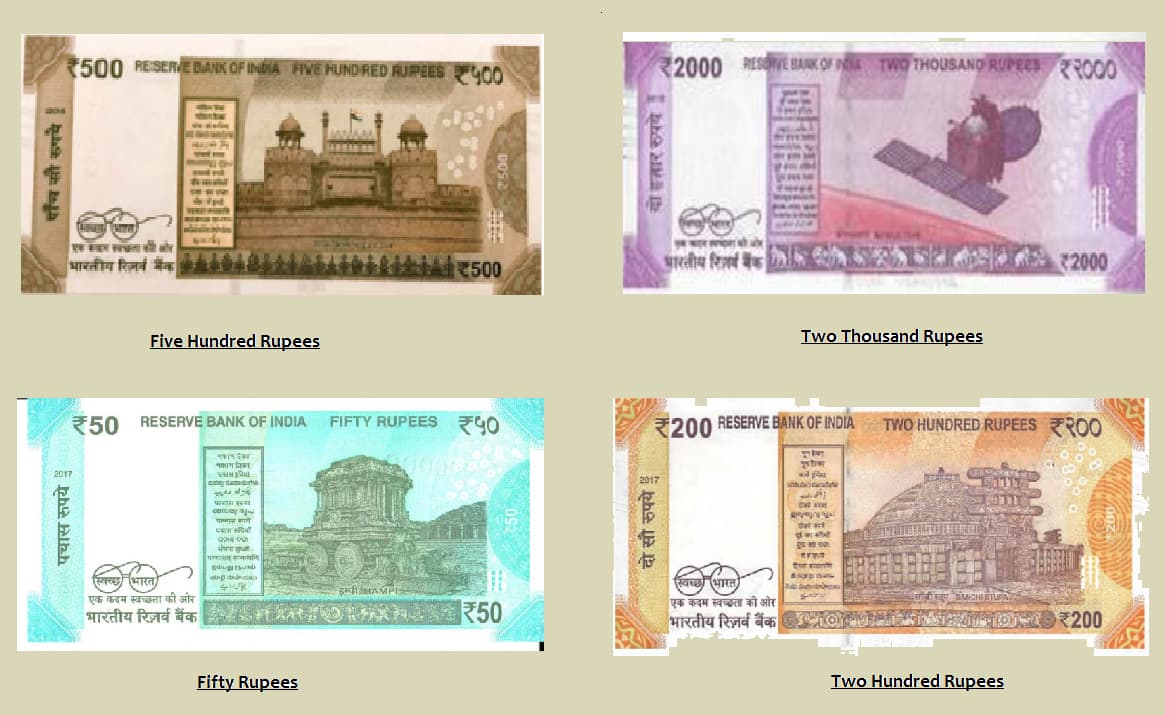
The four new notes contain designs that aim to showcase the nation’s rich and diverse culture, her struggle for freedom and proud achievements over the years. All the notes are themed around India’s heritage sites paired with myriad, geometric figures, intricate forms, and shapes along the corners.
Apart from the bright and colourful — fluorescent blue, stone grey, base-yellow and magenta — currencies, the new notes differ from the existing old notes in design, security features, dimensions, fonts in Devanagari script and the Swachh Bharat symbol.
All the currencies have security features such as a watermark, security thread, a latent image of the denomination numeral in colour shifting ink, number panels, see-through register, electrotype, bleed lines, and features designed for visually impaired citizens.
The never-seen-before notes of Rs 200 and Rs 2,000 have motifs of Sanchi Stupa and the Mangalyaan moon mission, respectively. The new Rs 50 note has a Hampi chariot motif while the Rs 500 note contains an image of the Red Fort in Delhi.