






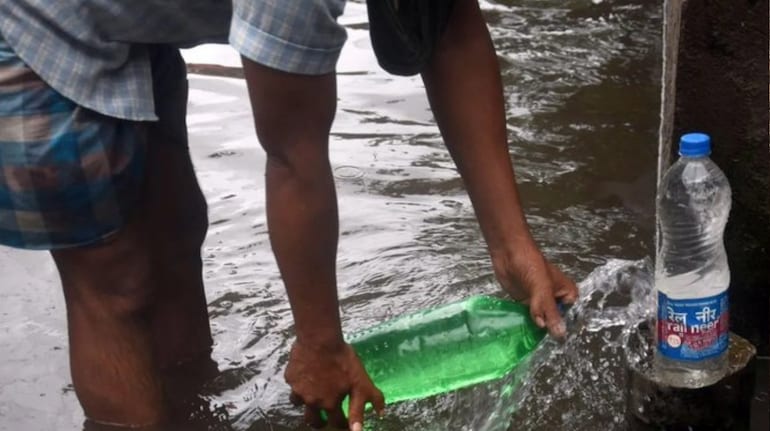

The Madhya Pradesh government has told the Indore bench of the High Court that bacterial contamination of drinking water triggered the vomiting and diarrhoea outbreak in the city’s Bhagirathpura locality, an episode that has claimed several lives since the end of December.
Appearing before the court through video conferencing, Chief Secretary Anurag Jain said laboratory testing of water drawn from 51 tube wells in the area revealed the presence of “E coli”.
He told the bench that this bacterium was responsible for the large-scale infections reported among residents.
The matter came up during hearings on two public interest litigations linked to deaths allegedly caused by consumption of polluted water in Bhagirathpura.
The division bench of Justices Vijay Kumar Shukla and Alok Awasthi questioned how the drinking water supply in what was described as the “epicentre” of the outbreak in “India’s cleanest city” became contaminated to such an extent that it resulted in a major tragedy.
Responding to the court’s queries, a government lawyer explained that leakage in a pipeline had allowed sewer water to mix with the potable water supply.
According to the submission, the source of contamination included sewage lines connected to a public toilet in the area. The lawyer added that surveys were continuing in Bhagirathpura and that water samples were still being collected and examined.
The High Court, after hearing arguments from all sides, reserved its order and fixed January 28 as the next date of hearing. The petitions before it seek a “judicial inquiry” into the deaths and the registration of an FIR against officials and others allegedly responsible for the incident.
During the proceedings, the state government informed the court that it had already set up a committee led by Sanjay Kumar Shukla, Additional Chief Secretary in the General Administration Department, to carry out a comprehensive review of the contaminated water supply episode.
The panel has been tasked with submitting findings, along with suggestions and recommendations.
However, petitioners’ counsel Ajay Bagaria questioned the credibility of this exercise. Addressing the bench, he said the committee had been constituted to hide the truth behind the drinking water disaster.
He urged the court to instead appoint a panel headed by a retired High Court judge to ensure an independent probe, and pressed for criminal action against those accountable for the deaths.
Jain told the court that all its directions in the Bhagirathpura case were being complied with. He reiterated that “E. coli” was detected in the water and that the bacteria typically enters drinking supplies through sewage or faecal contamination, leading to symptoms such as vomiting, diarrhoea, abdominal pain and fever.
Conflicting figures have emerged regarding the death toll. In a status report submitted on January 15, the state acknowledged seven deaths, including that of a five-month-old child. Local residents, however, have claimed that 24 people have died.
A “death audit” by a committee from Mahatma Gandhi Memorial Medical College suggested that 15 deaths may be linked in some manner to the outbreak.
The local administration has announced compensation of Rs 2 lakh each to the families of 21 deceased persons. Officials have maintained that some of these deaths were due to other ailments, but said assistance was being extended on “humanitarian grounds”.

Discover the latest Business News, Sensex, and Nifty updates. Obtain Personal Finance insights, tax queries, and expert opinions on Moneycontrol or download the Moneycontrol App to stay updated!
Find the best of Al News in one place, specially curated for you every weekend.
Stay on top of the latest tech trends and biggest startup news.





