







What began as a legislative exercise to formalise Malayalam’s role in governance has turned into a sharp inter-state dispute, pulling in border districts, school classrooms, and constitutional language rights. The Malayalam Language Bill, 2025, passed by the Kerala Legislative Assembly, is now at the centre of a row between Kerala and Karnataka, with leaders on both sides framing it as either inclusive governance or an imposition disguised as policy.
At the heart of the debate are two competing claims: Kerala’s assertion that the Bill protects linguistic minorities through explicit safeguards, and Karnataka’s fear that compulsory provisions, especially in education, could marginalise Kannada-speaking communities in Kerala’s northern border areas, particularly Kasaragod.
Kerala’s defence of the Bill
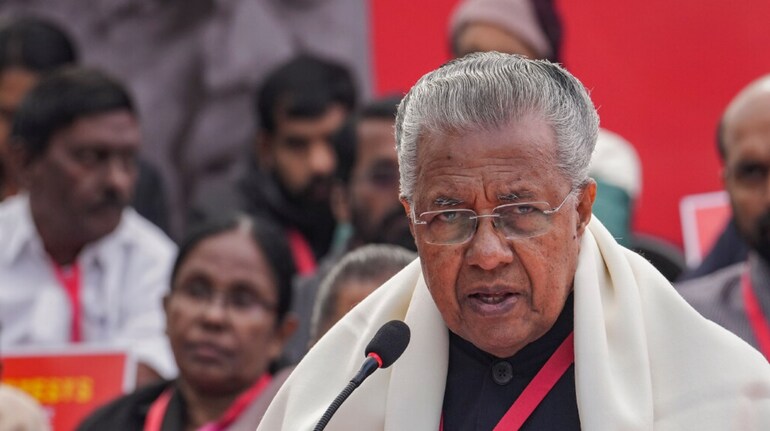
Kerala Chief Minister (CM) Pinarayi Vijayan has rejected the criticism, saying the concerns raised do not reflect either the facts or the intent of the legislation. In a post on X, he said that Kerala’s development trajectory has always been grounded in equality and coexistence.
"Kerala’s progress has always been rooted in comprehensive development anchored in equality and brotherhood. The Government remains steadfast in upholding the constitutional values of secularism and pluralism," he wrote.
According to Vijayan, the Bill contains a clear safeguard in the form of a non-obstante clause -- Clause 7 -- which, he said, explicitly protects linguistic minorities, particularly Kannada and Tamil speaking communities. He said that the state remains committed to linguistic diversity and that the law does not impose any language on citizens.
"Key provisions ensure that no language is imposed and linguistic freedom is fully protected," he said, adding that in notified areas, Kannada and Tamil speakers can continue using their mother tongues for official correspondence with government offices and receive replies in the same languages.
Education and the question of compulsion
One of the most contentious aspects of the Bill relates to schooling. The legislation makes Malayalam the compulsory first language from Classes 1 to 10 in Kerala syllabus schools. This has triggered objections from Karnataka leaders, who argue that such a provision could affect Kannada-medium schools in Kasaragod.
Vijayan sought to allay these fears by pointing to existing flexibility within the education system. He said students whose mother tongue is not Malayalam are free to choose languages offered in schools in line with the National Education Curriculum.
"Students from other states or foreign countries are not compelled to appear for Malayalam examinations at the IX, X, or Higher Secondary levels," he said.
The Chief Minister has also underlined that Kerala's language policy aligns with the Official Languages Act, 1963, and Articles 346 and 347 of the Constitution of India. "India's diversity must be celebrated, not forced into a single mould," he said, while saying that the state would resist any erosion of federal rights even as it protects linguistic identities.
'Attack on freedom of language': Siddaramaiah
The pushback from Karnataka has been led by Chief Minister Siddaramaiah, who described the Bill as “an attack on the freedom of language guaranteed by the Constitution.” Writing on X, he argued that making Malayalam mandatory as the first language in schools would deprive Kannada-speaking children in Kasaragod of the opportunity to study in their mother tongue.
"I regret to say that the Kerala government's proposed Malayalam Language Bill, 2025… is an attack on the freedom of language guaranteed by the Constitution," he said. He added that Kannada speakers in the border districts were deeply connected to their language and culture, and that it was Karnataka's duty to protect their interests.
Karnataka's concerns have been echoed institutionally by the Karnataka Border Area Development Authority (KBADA), which has urged that the Bill explicitly exempt linguistic minority areas in Kasaragod from the compulsory first-language provision. The authority has argued that without such clarity, the law contains inherent contradictions between promotion and protection.
Governor to review
The controversy has now reached Kerala Raj Bhavan, where Governor Rajendra Vishwanath Arlekar is expected to review the Bill. The KBADA has submitted a petition urging him to reconsider the legislation before granting assent.
This stage matters because the legislative process within Kerala is already complete. The Assembly has passed the Bill, and the debate has shifted from whether Kerala can promote Malayalam to how that promotion operates in districts with recognised linguistic minorities.
Why Kasaragod is different
Kasaragod, Kerala’s northernmost district bordering Karnataka, sits at the centre of the dispute. While Malayalam is the administrative language of the state, Kannada is widely spoken in several pockets of the district and has long been part of its educational and cultural life.
In such regions, language policy is not an abstract matter of symbolism. Decisions about a "first language" influence teacher appointments, textbook availability, examinations, and a child's comfort in the classroom. Critics argue that even with safeguards on paper, administrative defaults tend to favour the dominant language, shifting the burden of adjustment onto minorities.
Supporters of the Bill counter that legal assurances and notified-area protections are sufficient, and that fears of compulsion are speculative rather than evidence-based.
Constitutional arguments enter the frame
Karnataka’s opposition has been framed not just as political disagreement but as a constitutional concern. Leaders there have pointed to provisions that protect the rights of linguistic minorities and encourage mother-tongue instruction at the primary level. The argument is not that Kerala lacks the authority to promote its language, but that when a law reorganises schooling language in minority-heavy districts, it enters sensitive constitutional territory.
Vijayan, however, has maintained that the Bill is fully consistent with constitutional provisions and national language laws, and that minority rights remain intact.
BJP asks Kerala govt to withdraw the bill
The debate has also drawn in the BJP, which has urged the Kerala government to withdraw the Bill. Party leaders in Kasaragod have criticised local MLAs for not raising the issue during Assembly discussions and questioned whether the district’s linguistic diversity was adequately represented.
BJP representatives have stressed that Kannada-speaking communities in Kasaragod are not recent settlers but native populations with their own linguistic traditions. While highlighting that they are not opposed to promoting Malayalam, they have argued that minorities should not be denied the right to study in their mother tongue.

Discover the latest Business News, Sensex, and Nifty updates. Obtain Personal Finance insights, tax queries, and expert opinions on Moneycontrol or download the Moneycontrol App to stay updated!
Find the best of Al News in one place, specially curated for you every weekend.
Stay on top of the latest tech trends and biggest startup news.





