







India imports the bulk of its crude oil. It buys advanced defence systems from Israel. It has invested diplomatic capital in Iran’s Chabahar port. And it has millions of citizens working across West Asia.
When the United States and Israel launched joint strikes on Iran on February 28, the missiles did not just redraw military lines. They revived an old foreign policy test for New Delhi: when two strategic partners collide, can India truly remain equidistant?
The short answer, based on India’s official posture and past practice, is that New Delhi will try. The harder question is whether events will allow it to.
What has happened and where India stands
The latest escalation follows coordinated US-Israel strikes on Iranian targets, with Tehran responding with missile launches and warning of broader retaliation. Airspace closures, oil market volatility and diplomatic alarms have followed.
India’s response so far has been calibrated. Public messaging has urged restraint and de-escalation. Travel advisories have been issued for Indian nationals in the region. There has been no endorsement of military action, and no condemnation framed in binary terms.
This is consistent with India’s long-standing approach in West Asia: engage all sides, avoid bloc politics, protect national interests first.
Foreign policy analyst C. Raja Mohan, writing in the Indian Express, has repeatedly argued that India’s West Asia diplomacy today is guided by “interests, not slogans.” He describes India’s engagement with Israel and the broader Middle East as pragmatic statecraft rather than ideological positioning.
That framing explains why India is unlikely to reflexively align with either Tehran or Tel Aviv. The calculus is structural, not sentimental.
Why this is not a simple yes-or-no choice
The 'Will India pick a side?' framing suggests a binary. In practice, India’s policy is structured around overlapping, sometimes competing interests.
The economic exposure: oil first
Energy security is the most immediate transmission channel.
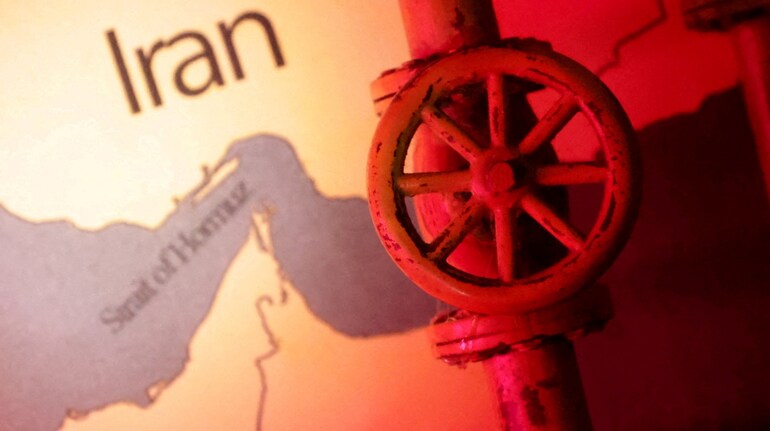
The Strait of Hormuz handles a significant portion of global crude flows. Roughly one-fifth of global oil passes through Hormuz. Even absent physical disruption, geopolitical risk can lift oil prices.
A senior Indian government official told The Economic Times that the current conflict has not yet had a “major economic impact” on India, but authorities are closely monitoring crude prices and shipping risks. That caveat matters. It signals preparedness rather than panic.
Energy economist Vandana Hari, founder of Vanda Insights, has told global outlets in past Hormuz-related tensions that markets often price “perceived risk ahead of actual disruption.” Her broader observation underscores how quickly oil premiums can emerge even without supply cuts.
For India, a large oil importer, that premium feeds directly into inflation and fiscal arithmetic.
Defence ties: a deepening partnership
On the other side of the equation lies Israel.
India’s defence partnership with Israel has expanded significantly over the past two decades. Former foreign secretary Shyam Saran, writing in policy forums, has argued that India’s relationship with Israel today is rooted in “shared security interests and technological cooperation,” not just arms purchases.
Prime Minister Narendra Modi’s engagement with Israeli leadership, reported by Reuters in the days before the escalation, reinforced continuity in strategic cooperation even as US–Iran tensions mounted.
That continuity makes a visible diplomatic break unlikely.
The Iran dimension: connectivity and geography
Iran matters to India beyond oil.
India’s investment in Chabahar port gives it strategic access to Afghanistan and Central Asia bypassing Pakistan. Former ambassador Talmiz Ahmad, a frequent commentator on West Asia in The Hindu and other publications, has noted that India’s ties with Iran are 'strategic and civilisational' but also deeply pragmatic, particularly around connectivity and regional access.
Abandoning that channel outright would have consequences extending beyond the current crisis.
A doctrine under scrutiny: strategic autonomy
India describes its foreign policy posture as strategic autonomy, the ability to engage major powers independently without entering rigid alliances.
Brookings scholar Tanvi Madan has argued in broader analysis of India’s global positioning that New Delhi seeks “issue-based alignment without alliance entrapment.” That concept captures India’s balancing behaviour in crises from Ukraine to West Asia.
Similarly, Carnegie scholar Ashley Tellis has written that India’s strategy involves maximising flexibility in a multipolar system, avoiding binary bloc choices wherever possible.
Applied to the Iran–Israel conflict, that means calibrated messaging, limited rhetorical escalation, and prioritisation of economic and security interests.
Could escalation force clarity?
Most analysts converge on one conditional view: India’s neutrality is durable until material interests are directly threatened.
Former diplomat Anil Wadhwa, speaking in policy discussions on West Asia, has observed that India historically calibrates its response based on energy flows and diaspora safety rather than ideological alignment.
Three developments could narrow New Delhi’s room:
None of these thresholds has yet been crossed.
How external observers see India
Palestine’s ambassador to India, Adnan Abu Alhaija, previously told The Economic Times that India is “well-placed to play a role to defuse crisis” because of its balanced ties in the region.
While not specific to this escalation, that assessment reflects how India’s diplomacy is perceived externally, as a bridge actor rather than a partisan one.
The open question: neutrality at what cost?
Remaining equidistant can preserve flexibility. But it also carries reputational risk if interpreted as ambiguity.
India’s calculus will likely remain interest-based rather than value-framed: protect citizens, secure energy flows, preserve defence cooperation, avoid entanglement.
The Iran–Israel conflict is not just another West Asian flashpoint. It is a test of whether a rising power can sustain strategic autonomy in an increasingly bloc-driven world.
For now, India has chosen balance. Balance works in grey zones. Wars erase grey zones.
Discover the latest Business News, Sensex, and Nifty updates. Obtain Personal Finance insights, tax queries, and expert opinions on Moneycontrol or download the Moneycontrol App to stay updated!
Find the best of Al News in one place, specially curated for you every weekend.
Stay on top of the latest tech trends and biggest startup news.





