





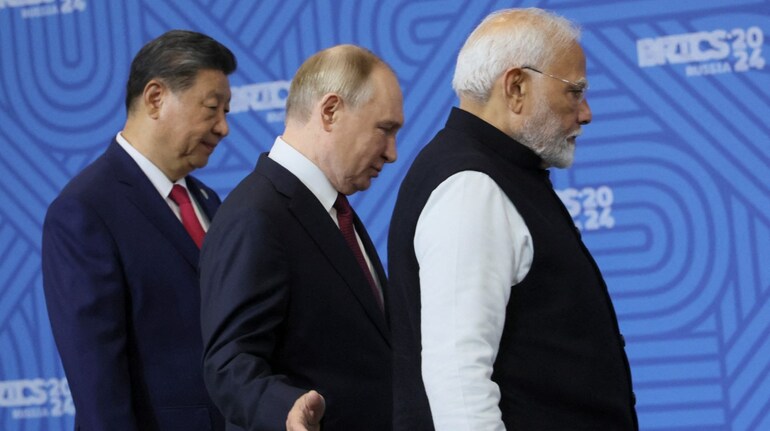

India on Thursday formally assumed the rotating presidency of the BRICS grouping for 2026, positioning the role as a platform to push inclusive development and amplify the Global South’s voice in global economic governance, at a moment when US President Donald Trump’s tariff moves have rattled trade flows.
New Delhi’s presidency begins with two overlapping realities: BRICS has expanded into a much larger club, and the global trading system is facing sharper protectionism.
What BRICS looks like now and why membership is messy
BRICS started as Brazil, Russia, India, China and South Africa. Over the past two years, the bloc has expanded to include Egypt, Ethiopia, Indonesia, Iran and the United Arab Emirates.
Saudi Arabia’s status remains disputed: the BRICS website has listed it as a member, but multiple accounts still describe Riyadh as yet to formally complete the process.
In scale terms, the expanded grouping is enormous. World Bank-linked figures cited in recent reporting put BRICS at roughly 49 percent of the world’s population, 29 percent of global GDP, and 23 percent of international trade.
Trump tariffs are the immediate pressure point
The trade context matters because India’s relationship with Washington has been under strain since Trump moved to impose 50 percent tariffs on Indian goods, including an additional levy linked to India’s purchases of Russian oil.
India likely to avoid a frontal de-dollarisation push
Trump has repeatedly warned BRICS against launching a common currency, threatening 100% tariffs and declaring “BRICS is dead” in public remarks earlier in his term.
Against that backdrop, Prerna Gandhi, associate fellow at India’s Vivekananda International Foundation, told NikkeiAsia that India is likely to resist confrontational de-dollarisation and instead promote local currency settlements to protect strategic autonomy.
Raj Kumar Sharma, senior research fellow at NatStrat, told NikkeiAsia that India will use the presidency to “defend and strengthen multilateralism” as protectionism rises — and to push reform in global institutions.
The 'Global South' playbook returns, but with a new rival calendar
Sharma told NikkeiAsia that India is expected to carry forward the Global South emphasis it pursued during its G20 presidency in 2023, prioritising human welfare and inclusive development, and keeping issues like food and fuel shortages, debt restructuring, and climate finance on the agenda.
He also flagged a political reality: the Global South agenda may face competition from America’s G20 presidency, where these priorities may not be foregrounded.
Expansion and Pakistan: where India may draw the line
India’s presidency also comes with a live membership debate. Sharma told NikkeiAsia that New Delhi may push for clearer criteria so BRICS does not lose meaning through unplanned expansion, including transparent benchmarks and consensus-based decisions.
Separately, Pakistan, facing economic stress, is keen to join the BRICS-backed New Development Bank (NDB) to broaden borrowing options, and has also previously applied for BRICS membership. That adds a geopolitical edge to what is otherwise framed as a development-focused grouping.
Discover the latest Business News, Sensex, and Nifty updates. Obtain Personal Finance insights, tax queries, and expert opinions on Moneycontrol or download the Moneycontrol App to stay updated!
Find the best of Al News in one place, specially curated for you every weekend.
Stay on top of the latest tech trends and biggest startup news.