






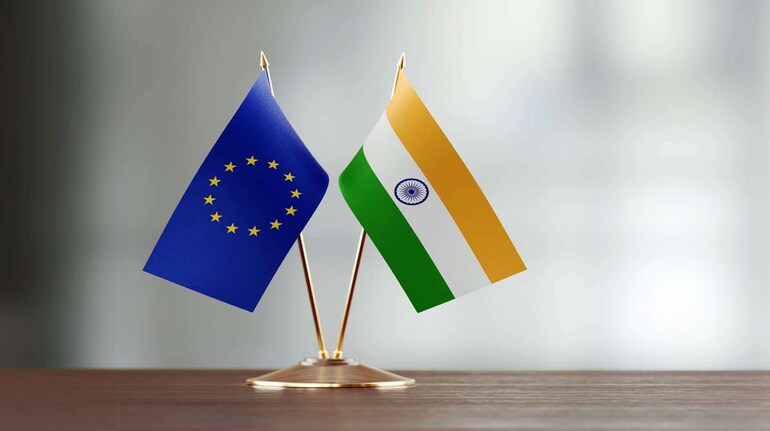

India and the European Union are on the brink of sealing a long-awaited free trade agreement (FTA), with an announcement expected at the India–EU Summit in New Delhi on January 27.
After nearly two decades of stalled negotiations, both sides are signalling political readiness to close one of the most complex trade pacts India has ever attempted, a deal EU leaders have dubbed the “mother of all deals”.
Senior EU leaders are already in the capital, and negotiators say only a handful of sensitive issues remain. If concluded, the pact would mark a decisive shift in India’s trade strategy and reshape economic ties with its largest goods trading partner.
Why this moment matters
Talks on the India-EU free trade agreement began in 2007 but repeatedly broke down over market access, labour standards, intellectual property and regulatory rules. The negotiations were revived in 2022 and accelerated sharply over the past year amid global trade disruptions and rising protectionism.
Officials say the difference this time is political will. Both New Delhi and Brussels see strategic value in locking in a stable, long-term economic partnership as supply chains are reconfigured and dependence on China is reassessed.
Cars and tariffs
The most eye-catching element of the proposed deal is India’s offer to sharply cut import duties on European cars, according to officials and Reuters.
Fully built cars currently attract tariffs ranging from 70% to 110%. Under the plan being discussed, peak duties on a limited number of EU-made cars priced above 15,000 euros could fall to 40% immediately, with a gradual reduction towards 10% over time.
Sources say the initial cuts could apply to around 200,000 internal combustion engine vehicles annually, though the final quota is still under negotiation. Battery electric vehicles are expected to be excluded for the first five years to protect domestic investments.
For European automakers such as Volkswagen, Mercedes-Benz and BMW, the move would open India’s heavily protected auto market in a way previously seen as politically unthinkable.
What india wants from the deal
India is seeking better access to the EU market for labour-intensive sectors such as textiles, garments, leather, gems and jewellery, engineering goods and processed foods.
Many of these industries lost tariff advantages after the EU began withdrawing concessions under its Generalised System of Preferences in 2023. Tariff cuts or eliminations under an FTA could help Indian exporters regain competitiveness in a high-value consumer market.
India is also pushing for smoother regulatory pathways for pharmaceuticals and chemicals, access for IT and professional services, easier movement of skilled workers and relief from double social security contributions.
Sensitive sectors such as agriculture and dairy remain excluded, reflecting New Delhi’s long-standing effort to protect domestic farmers.
What the EU stands to gain
For the EU, the deal offers deeper access to one of the world’s fastest-growing large economies.
European wines and spirits, which currently face import duties of up to 150–200%, are expected to see phased tariff reductions and simpler certification rules. High-end cars, machinery, chemicals, medical devices and electrical equipment are also set to benefit from lower tariffs and eased regulatory barriers.
Beyond goods, Brussels is seeking clearer rules on services, procurement, intellectual property, labour and environmental standards, as well as stronger investment protections. The agreement is also expected to encourage European investments in manufacturing, clean energy and digital infrastructure in India.
The unresolved friction points
Despite the optimism, several difficult issues remain. India is resisting EU demands to eliminate tariffs on more than 95% of goods, signalling closer to 90% instead. Autos, wines and spirits continue to be politically sensitive, with New Delhi favouring phased cuts or limited quotas.
A major concern for India is the EU’s Carbon Border Adjustment Mechanism, or CBAM, which could impose a 20–35% levy on carbon-intensive exports such as steel, aluminium and cement from 2026. Whether India secures relief or carve-outs remains unresolved.
Non-tariff barriers, including stringent standards, certification costs and regulatory delays in Europe, are another sticking point for Indian exporters.
What happens after the announcement
Even if leaders announce the conclusion of negotiations this week, the deal will not take effect immediately. It must be legally finalised and ratified by the European Parliament, a process that could take at least a year and may face political hurdles.
Investment protection and geographical indications are being negotiated separately, narrowing the FTA’s initial focus to goods, services and trade rules.
*With agency inputs
Discover the latest Business News, Sensex, and Nifty updates. Obtain Personal Finance insights, tax queries, and expert opinions on Moneycontrol or download the Moneycontrol App to stay updated!
Find the best of Al News in one place, specially curated for you every weekend.
Stay on top of the latest tech trends and biggest startup news.





