






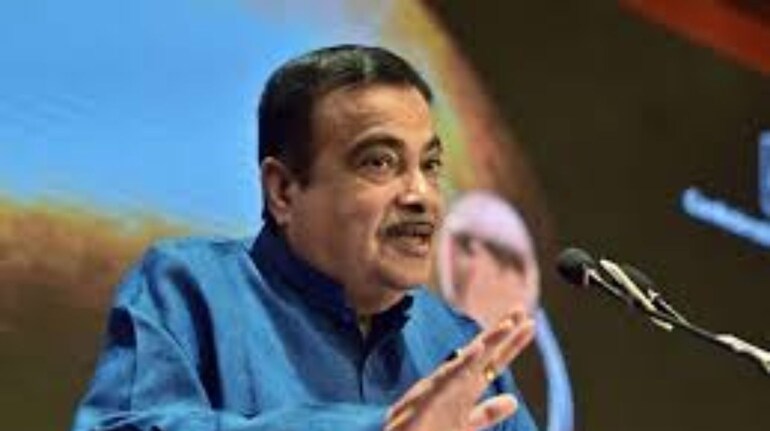
Union minister Nitin Gadkari has revealed that he came into close contact with Hamas political chief Ismail Haniyeh just hours before the latter was assassinated in Tehran, an incident that later shook the region and raised serious questions about security lapses in Iran.
Speaking at a book launch event, Gadkari recounted his visit to Iran, which he undertook at the request of Prime Minister Narendra Modi to represent India at the swearing-in ceremony of Iran’s newly elected President Masoud Pezeshkian.
Ahead of the formal ceremony, Gadkari said he was at a five-star hotel in Tehran where senior leaders and dignitaries from across the world had gathered informally.
"All the heads of various nations were present, but one person who wasn't a head of state was Hamas leader Ismail Haniyeh. I met him. I saw him going to the swearing-in ceremony along with the President and the Chief Justice," Gadkari said.
The minister said events took a dramatic turn in the early hours following the ceremony.
"After the swearing-in ceremony, I returned to my hotel, but around 4 am, the Iranian ambassador to India came to me and said we had to leave. I asked what happened, and he told me that the Hamas chief had been assassinated. I was shocked and asked how it happened, and he said, 'I don't know yet'," he added.
Iranian authorities later confirmed that Haniyeh was killed at around 1:15 am on July 31 while staying at a highly secured military complex in Tehran under the supervision of the Islamic Revolutionary Guard Corps (IRGC). His bodyguard was also killed in the attack.
Gadkari told the audience that uncertainty still surrounds the exact method used in the assassination.
"Some people say he was killed because of using his mobile phone. Some say it happened in some other way," he said.
At the same event, Gadkari underlined the importance of national strength in global affairs, citing Israel as an example.
If a country is strong, "no country can lay a hand on it," he said, referring to Israel as a small nation that has asserted influence through technological and military capability.
The IRGC had earlier stated that a short-range missile was used to strike the building where Haniyeh was staying. He was in Tehran at the time to attend President Pezeshkian’s inauguration.
Meanwhile, a report by The Telegraph has offered a different account of the killing. According to the report, Israel’s intelligence agency Mossad allegedly recruited Iranian security personnel to plant explosive devices inside the building where Haniyeh was accommodated.
The report said an earlier plan to assassinate Haniyeh during his visit to Tehran in May, when he attended the funeral of former Iranian President Ebrahim Raisi, was abandoned due to heavy crowds and concerns over exposure.
The revised operation reportedly focused on an IRGC guesthouse in northern Tehran, believed to be Haniyeh’s likely place of stay. Citing two Iranian officials, the report claimed that agents working under Mossad’s direction planted explosives in three separate rooms of the facility.
Surveillance footage reviewed by Iranian authorities allegedly shows the operatives entering and exiting the rooms within minutes. The agents are said to have exited Iran undetected while maintaining at least one local contact.
At around 2 am, explosives planted in the room where Haniyeh was staying were remotely triggered.
Senior officials within the IRGC have since acknowledged serious security failures. One senior IRGC official told The Telegraph that Mossad may have exploited personnel from the Ansar-al-Mahdi protection unit, which is tasked with protecting senior Iranian and allied leaders inside and outside the country.
Discover the latest Business News, Sensex, and Nifty updates. Obtain Personal Finance insights, tax queries, and expert opinions on Moneycontrol or download the Moneycontrol App to stay updated!
Find the best of Al News in one place, specially curated for you every weekend.
Stay on top of the latest tech trends and biggest startup news.




