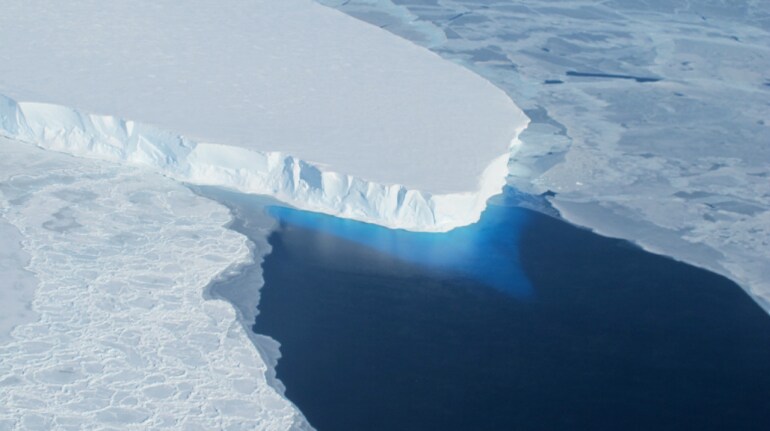
A recent study published in the journal PNAS has shed light on the alarming retreat of Antarctica’s Thwaites Glacier, known ominously as the “Doomsday Glacier” because of its potential to increase sea levels by two feet (60cm).
According to the study, the glacier’s rapid melt began as far back as the 1940s, spurred by an extreme El Niño event – much earlier than scientists had initially thought. Roughly the size of Florida, the glacier has been disintegrating since the 1980s, contributing to a 4 percent rise in global sea levels by losing around 595 billion tonnes of ice.
The study, led by Rachel Clark from the University of Houston, Texas, utilised sediment cores from seven locations near the Thwaites and its northern neighbour, the Pine Island glacier, to trace their retreat. Remarkably accurate climate proxies found within these cores revealed that the glaciers’ decline was kickstarted by a warm El Niño climate pattern between 1939 and 1942. This discovery is particularly concerning as it suggests that even after the triggering climate event ends, the glaciers’ response can persist for decades, leading to ongoing retreat.
The Thwaites 'Doomsday' Glacier and Pine Island glaciers are colossal, with surface areas of 1,92,000 square kilometres and 1,62,300 square kilometres each. The potential consequences of Thwaites Glacier’s complete meltdown are particularly dire, with projections suggesting it could raise sea levels by more than 60cm.
NASA Sea Level Change observations show that sea-level rise due to ice-melt and heating oceans will cause widespread damage, especially in flatter coastal areas, including in Asia. Storm surges and hide-tide flooding will contribute to this damage.
Researchers of the study emphasise the glacier’s significance not only in terms of sea-level rise but also as a crucial barrier holding back a vast expanse of ice. The destabilisation of Thwaites Glacier could unleash a domino effect, potentially destabilising all of West Antarctica's ice, with catastrophic implications for global sea levels. It could surge by approximately 11 feet (3.4m).
The findings once again highlight the urgency of climate action to mitigate further glacier melt.
Discover the latest Business News, Sensex, and Nifty updates. Obtain Personal Finance insights, tax queries, and expert opinions on Moneycontrol or download the Moneycontrol App to stay updated!
Find the best of Al News in one place, specially curated for you every weekend.
Stay on top of the latest tech trends and biggest startup news.