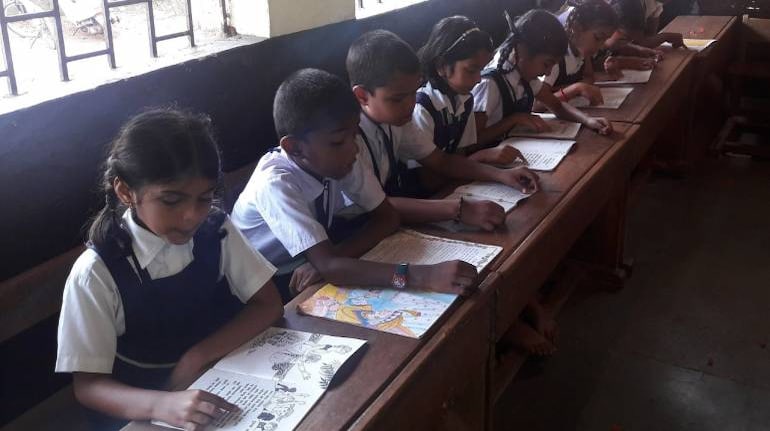
One in every five children born worldwide originates from India, a country renowned for its rich heritage and diverse culture. However, there is a big obstacle that lurks underneath this impressive figure: foundational literacy and numeracy (FLN), which is still out of reach for more than 50 million Indian children. According to UNESCO, this educational divide has far-reaching effects, and good quality FLN has the ability to pull 171 million people out of poverty globally, with more than half of them living in India.
Issues raised by Ramamurthi Committee (1990)Deep problems about fairness and social justice within the educational framework were revealed during the Ramamurthi committee's detailed examination of India's educational system in 1990. Today's substantial learning outcome differences make these inequities clear.
More recently, the Annual Status of Education Report (ASER) for 2018 revealed a depressing truth: only 28 percent of fifth-grade pupils in rural India could perform simple division, and only 50 percent of them could read at a second-grade level. Urban areas performed better, with 44 percent of fifth-grade children being able to do basic division and 70 percent of pupils reading at a second-grade level.
A further in-depth analysis of the data showed that low-income communities were in even worse shape. Compared to a startling 72 percent of children from the highest-income households in rural areas, just 32 percent of children from the lowest-income households could read at a second-grade level. Similarly, only 15 percent of children from Scheduled Castes, a historically underrepresented group, were able to execute fundamental division, as opposed to 43 percent of children from non-Scheduled Castes. These differences highlight how quickly a fair playing field must be created through action.
NIPUN Bharat: The LighthouseIndia made two significant policy changes in response to these urgent problems. The National Education Policy 2020 stressed FLN's crucial role, providing the groundwork for the revolutionary NIPUN Bharat program. NIPUN Bharat aims to achieve universal foundational literacy and numeracy for all children aged 3-9 by 2026-27. The interim school readiness module, Vidya Pravesh, a 12-week play-based curriculum developed by NCERT, attempts to improve a child's pre-literacy, pre-numeracy, cognitive, and social skills, to close the gap in preschool education quality. It includes a wide range of engaging, child-centered pedagogy activities and interactive toy-based learning, art-integrated, sport-integrated, story-integrated, and ICT-integrated learning opportunities, that encourage cooperation between peers and parents alike. Customizing resources considering language and socioeconomic diversity in each State/UT is also recommended.
Building a strong foundation: The Anganwadi revolutionEveryone has missed the big picture, as K.R. Venugopal, a prominent IAS official from the 1962 batch and a former Secretary to the Prime Minister, once observed. All of the human resource development initiatives undertaken by the Indian State have their foundation in the Integrated Child Development Services (ICDS). The Anganwadi system has grown over the past 20 years, going from 6 lakh centres in 2001 to around 14 lakh centres now. Nearly 80 million children under the age of six get critical nutrition and non-formal preschool education at these facilities, making them the largest public providers of early development services in the entire world.
A National ECCE Taskforce was established by the Ministry of Women and Child Development (MWCD) in March 2022 to strengthen the Early Childhood Care and Education (ECCE) framework inside Anganwadis. The TaskForce generated a list of suggestions that are meant to be put into action after thorough consultations with state governments, professionals, parents, and communities.
The first Early Childhood Care and Education (ECCE) programme, "Poshan Bhi Padhai Bhi”, in India was made possible thanks to these proposals, and it was introduced in May 2023 as part of Mission Saksham Anganwadi and Poshan 2.0. This innovative programme, which takes cues from successful efforts like Tamil Nadu's "Aadi Paadi Vialyadu Pappa" (APVP) and Maharashtra's "Aakar" programme, focuses on teaching-learning Materials (TLM), cutting-edge methodologies, and active community engagement.
The NIPUN Bharat policy states, "The quality of an education system cannot exceed the quality of its teachers." NCERT's innovative integrated teacher training programme, known as the National Initiative for School Heads' and Teachers' Holistic Advancement, or NISHTHA, places a focus on the professional development of both teachers and school heads. In addition to modules on overcoming language barriers and teaching in one's mother tongue, regional tongue, or native speech, the programme includes professional teacher-training modules that focus on essential reading and numeracy abilities. There is also a special section on peer learning and how parents can volunteer in the schools.
Poshan Bhi Padhai Bhi, a programme focusing on pre-numeracy and pre-literacy, also has an impact on parents and Anganwadi workers, ensuring a thorough approach to the development of young children in the age group of 3-6. The activities in their Anganwadi training programme emphasize physical play, language development, item discovery, using creativity to make things, building things, and playing games - with and without rules. This curriculum encourages the creation of a positive, child-centered environment and is in alignment with the development domains of the National Education Policy of 2020.
Due to its recognition of the critical role that parents play, the ECCE framework encourages parents' active participation and empowerment. Adults are strengthened in their role as early learning facilitators by overseeing and assisting the development of learning activities.
According to a study on the effects of active early learning by Rocket Learning based on the intervention approach of raising awareness, facilitating information, enabling motivation, and providing guidance to measure progress, the daily amount of time low-income parents spend engaging in active learning with their children has doubled.
Closing the achievement gap: A collective responsibilityBeyond moral obligation, tackling FLN has considerable long-term economic advantages. According to the World Bank, improving FLN results might increase India's GDP by 7.39 percent. This emphasizes the requirement for a coordinated effort to address this urgent issue, one that includes philanthropic resources, improved monitoring and capacity-building systems, and active community engagement.
India's journey to provide foundational literacy and numeracy is an inspiring story of perseverance and teamwork. We are on the path to realizing our nation's true potential through innovative policies, active community participation, and dedicated education. As we continue to invest in early learning, we lay the road for a brighter future in which every child may thrive and contribute to our great nation's progress and prosperity.
Early childhood education is the key to India's success.
Discover the latest Business News, Sensex, and Nifty updates. Obtain Personal Finance insights, tax queries, and expert opinions on Moneycontrol or download the Moneycontrol App to stay updated!
Find the best of Al News in one place, specially curated for you every weekend.
Stay on top of the latest tech trends and biggest startup news.