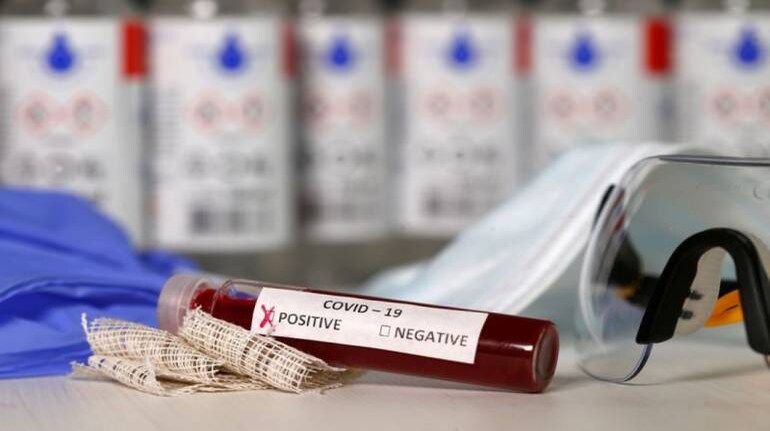
All viruses, including SARS-CoV-2 -- which causes COVID-19 – evolve over time. When a virus replicates, some of its attributes change at times; these changes are called “mutations”. A virus with one or more new mutations is referred to as a “variant” of the original virus.
At present, the Delta variant is fast emerging to be the most dominant strain in the world. Some of the other variants of the novel coronavirus that have left health experts concerned are the Delta Plus and Lambda variants.
Some of the dominant COVID-19 variants:
Delta variant: The Delta variant of the novel coronavirus or the B.1.617.2 strain, which was first detected in India, is now the dominant strain of COVID-19 in multiple countries. It has now become dominant in India, Singapore, the United Kingdom, and the United States and has been detected in more than 70 countries so far. The WHO elevated the Delta variant from ‘Variant of Interest’ to a ‘Variant of Concern’ citing “significantly increased transmissibility” and a “growing number of countries reporting outbreaks associated with this variant”.
Delta Plus variant: The Delta plus variants, known as AY.1 (B.1.617.2.1) and AY.2 (B.1.617.2.2), are fast emerging as a new cause of global concern. These variants, which are mutations of the Delta strain, are suspected to be more virulent and have greater transmissibility. One variant – the AY.1 -- has been declared a Variant of Concern by the Government of India.
Kappa variant: According to the World Health Organisation, the Kappa variant, which is the B.1.617.1 strain of SARS-CoV-2, is the only other COVID-19 variant that was first identified in India. However, it is not a new variant. According to the WHO, the Kappa variant was first identified in India in October 2020. This variant is listed as a Variant of Interest.
Lambda variant: The Lambda variant or the C.37 strain, designated a Variant of Interest by the WHO on June 14, was first identified in Peru in December 2020. The Lambda variant carries a lot of mutations with suspected phenotypic implications, such as increased transmissibility or resistance to neutralizing antibodies. This COVID-19 variant has been detected in over 30 countries.
Epsilon variant: The Epsilon variant of SARS-CoV-2, which was first detected in California in 2020, is also known as CAL.20C. It has five defining variations, including a mutation in spike protein L452R. It was declared a Variant of Concern by the United States’ Center for Disease Prevention and Control (CDC) initially but is now a Variant of Interest. It had been detected in 34 countries apart from the US but is not believed to be currently prevalent anywhere.
What is the difference between Variant of Interest and Variant of Concern?
Variant of Interest: A COVID-19 variant with specific genetic markers that have been associated with changes to receptor binding, reduced neutralisation from vaccination, reduced efficacy of treatments, potential diagnostic impact, or increased transmissibility and virulence.
Variant of Concern: A variant for which there is evidence of increased transmissibility, increased hospitalisations or deaths, significant reduction in neutralisation by vaccination/previous infection, reduced efficacy of treatments, diagnostic detection failures.
Can vaccination protect us from the emerging and existing COVID-19 variants?
When a virus is widely circulating in a population and causing many infections, the likelihood of it mutating increases. This means, the more opportunities a virus gets to spread, the more it replicates and mutates. Therefore, vaccination is of utmost importance to prevent further mutation.
According to the WHO, COVID-19 vaccines that are currently in development or have been approved provide protection against new virus variants. Since these vaccines elicit a broad immune response involving a range of antibodies and cells, mutations cannot make vaccines entirely ineffective.
In case the existing vaccines prove to be less effective against one or more variants, their composition can be modified accordingly to protect against the emerging variants.
Discover the latest Business News, Sensex, and Nifty updates. Obtain Personal Finance insights, tax queries, and expert opinions on Moneycontrol or download the Moneycontrol App to stay updated!
Find the best of Al News in one place, specially curated for you every weekend.
Stay on top of the latest tech trends and biggest startup news.