Kerala is likely to remain among India’s higher-inflation states even after the rollout of the revised Consumer Price Index (CPI) series, largely because its consumption basket remains skewed toward non-food items, services and certain volatile commodities such as jewellery and coconut.
The state’s structural consumption pattern is shaped by higher incomes, remittances and urbanisation.
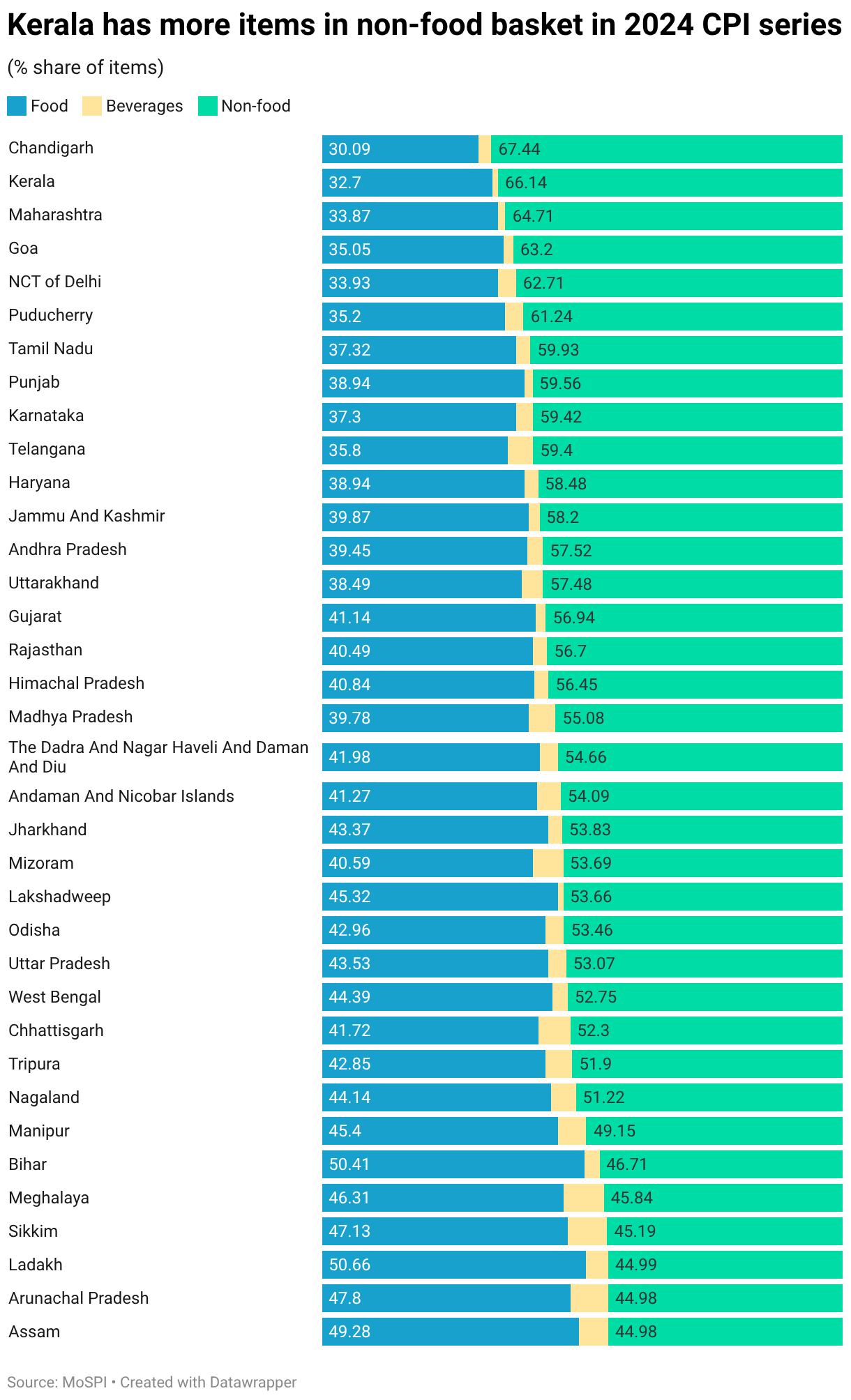
A key factor is the relatively high weight of non-food expenditure in Kerala’s inflation basket. At roughly 66 percent, non-food items account for a larger share than in most states. This includes services, discretionary consumption, fuel, housing, healthcare, transport and lifestyle spending.
Since services inflation tends to be stickier and slower to correct than food inflation, Kerala’s overall inflation trajectory often remains elevated even when food prices soften nationally.
Closely linked to this is Kerala’s comparatively higher services weight. Services inflation, including healthcare, education, housing rentals, transport and personal services, typically reflects wage costs, urban demand and structural factors rather than seasonal supply shocks.
Commodity-specific factors also matter. Jewellery inflation has historically exerted a stronger influence in Kerala because of cultural consumption patterns and the state’s significant gold demand linked to remittances and household savings preferences. Similarly, coconut and coconut-based products have a larger consumption weight than in most states. Volatility in global edible oil prices, weather disruptions or supply fluctuations can therefore disproportionately affect Kerala’s inflation readings.
In the new series, the weightage of gold and coconut in the states’ basket is 2.06 percent, comparable to Lakshadweep and the highest among other states.
Telangana is expected to give competition to Kerala, with the weightage of jewellery items higher at 1.99 per cent compared with Kerala’s 1.97 per cent in the new series.
Spot gold prices had risen nearly 20 percent since the start of the year until January 30.
In contrast, states such as Bihar — where food accounts for more than half of the CPI basket — could experience relatively lower inflation volatility under the new series if food prices stabilise.
The food basket had remained in deflation for a seventh consecutive month in December 2025, according to data released by the government last month.
Overall, the revised CPI series may modernise inflation measurement, but state-level consumption structures will continue to shape inflation outcomes. Kerala’s higher exposure to services, non-food consumption and specific commodities suggests that its inflation prints may remain above the national average even in the new framework.
Discover the latest Business News, Sensex, and Nifty updates. Obtain Personal Finance insights, tax queries, and expert opinions on Moneycontrol or download the Moneycontrol App to stay updated!
Find the best of Al News in one place, specially curated for you every weekend.
Stay on top of the latest tech trends and biggest startup news.