






India’s trade engagement with West Asia has undergone a significant transformation over the past decade, with geopolitical tensions and recurring conflict steadily reducing commercial flows with key regional partners.
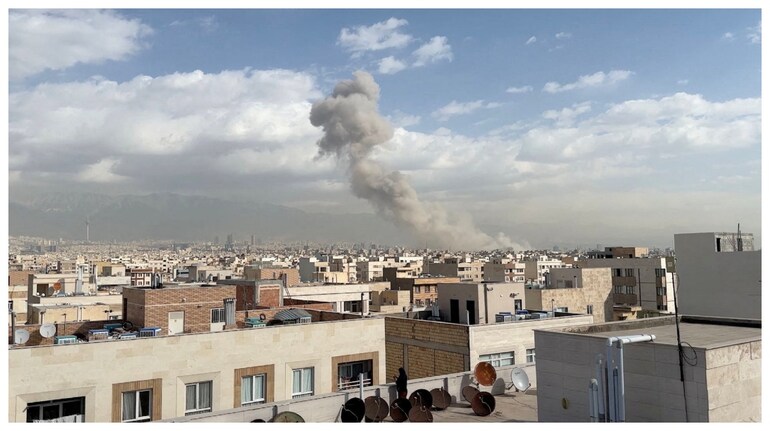
Fresh hostilities following Israel’s strikes on Iran on February 28 are expected to deepen these disruptions and weigh further on trade routes and costs.
India may see lower trade flows from West Asia as Israel and Iran appear headed toward another phase of confrontation — the second escalation in less than eight months — raising concerns over supply chains, energy logistics and maritime security beyond the immediate region.
A decade ago, Israel and Iran together accounted for nearly 70 percent of India’s trade with West Asia, excluding Gulf Cooperation Council (GCC) economies. By 2024, however, their combined share had dropped to roughly one-fifth, reflecting sanctions, geopolitical realignments and shifting trade priorities, according to a Moneycontrol analysis.
The steepest decline has been in trade with Iran. US sanctions targeting Iranian oil exports sharply curtailed energy shipments to India, shrinking bilateral trade to about $2.5 billion in FY24, compared with $26.5 billion a decade earlier.
Trade with Israel presents a contrasting picture. India’s exports to Israel have grown 21 percent over the same period, while imports declined 15 percent, leaving overall trade broadly stable. However, the composition of imports has shifted markedly toward defence and high-technology sectors.
India’s imports of arms and ammunition from Israel have surged nearly 100-fold, rising from around $1 million in FY13 to $104 million in FY24. Imports of aircraft, spacecraft and related parts have also expanded sharply, increasing from $31.8 million to $193 million during the period, signalling deeper strategic cooperation even as overall trade volumes remain steady.
Beyond bilateral ties, broader regional instability poses risks to global shipping. Disruption in the Red Sea corridor, a critical route linking Asia and Europe, is expected to push freight and insurance costs elevated. Higher logistics costs could dampen India’s exports to Western markets and raise import bills, particularly for energy and intermediate goods.
During the last round, Houthi Rebels in Yemen had attacked Red Sea routes, impacting global trade flows. Over four-fifths of India’s exports are routed via Red Sea.
If tensions escalate further, the impact is likely to extend beyond West Asia, influencing commodity prices, shipping timelines and global trade flows — underscoring how geopolitical risks are increasingly shaping India’s external trade dynamics.
Discover the latest Business News, Sensex, and Nifty updates. Obtain Personal Finance insights, tax queries, and expert opinions on Moneycontrol or download the Moneycontrol App to stay updated!
Find the best of Al News in one place, specially curated for you every weekend.
Stay on top of the latest tech trends and biggest startup news.




