







With expectations running high among salaried taxpayers ahead of the Union Budget 2026, Deloitte India Executive Director (Tax) Tarun Garg, on Sunday, said major personal income tax changes are likely to be limited, as substantial rationalisation has already been carried out under the new tax regime in recent budgets.
He said the government is expected to focus on targeted relief measures and further simplification of compliance rather than sweeping changes in personal income taxation.
Garg said that while salaried taxpayers and industry typically look for rationalisation in personal taxation every year, major reforms have already been undertaken in recent budgets, particularly under the new tax regime.
"In the Budget 2025, we saw a profound change with an increase in tax limits and slab rate revisions, effectively meaning income up to around Rs 12.75 lakh attracted zero tax," he said, adding that large-scale changes are unlikely this year as "a lot of rationalisation has already happened".
#WATCH | Delhi | Tarun Garg, Director, Tax, at Deloitte India, says, "So every year when this budget comes in, there are high expectations by the individual, salaried class, also, a lot of the industry thinks that, at least on the personal tax side, the government should do… pic.twitter.com/m6rt5QaXLo— ANI (@ANI) January 18, 2026
He said senior citizens could emerge as key beneficiaries in Budget 2026, with the government expected to consider higher deductions on interest income and healthcare-related expenses. "Medical expenditures are increasing and senior citizens have to allocate more towards healthcare. Some additional deductions may be given to them," Garg has been cited in an interaction with ANI.
Pointing to existing provisions, Garg said there is growing demand to raise the current limits on deductions for interest income from bank deposits and small savings schemes. "A vast majority of individuals are saying this should be increased," he stated, noting that higher exemptions could help senior citizens cope with inflation and rising living costs.
Garg said the Centre is more likely to fine-tune the new tax regime rather than announce "path-breaking or huge changes", partly due to fiscal constraints. One possible targeted measure, he said, could be the inclusion of employer-driven provident fund deductions within the new tax regime. "Provident fund contributions are structured through the employer and do not require additional proofs. This could help bridge gaps between the old and new regimes without increasing compliance," he said.
He also flagged the standard deduction as an area where limited relief could be offered. “This is one area that can see some tweaks," Garg said, adding that the standard deduction under the new tax regime could be increased by Rs 25,000 or more, providing relief to salaried taxpayers without altering slab rates.
On tax rates, Garg said significant changes were unlikely. "From a rate perspective, I do not see much change," he said, though he added that there could be "certain tweaks" on the surcharge front, amid demands for marginal reductions.
Garg also highlighted the Centre's continued push towards digitisation and ease of compliance. Referring to the Annual Information Statement (AIS) and Tax Information Statement (TIS), he said that these auto-generated reports, available on the income tax portal, have made return filing easier. "At least 50-60 per cent of the information is already pre-filled," he said.
#WATCH | Delhi | Tarun Garg, Director, Tax, at Deloitte India, says, "When we saw in the last few years the budget speech by the finance minister, she had clearly promised that there will be changes and a specific focus of the government on the digitisation and ease of… pic.twitter.com/mKNzWsSjCg — ANI (@ANI) January 18, 2026
However, he cautioned taxpayers to carefully verify the details. "You need to check whether the information is correctly populated, as errors or duplication could lead to the same income being taxed twice," Garg said.
Overall, he said, Budget 2026 is expected to prioritise targeted relief and administrative efficiency over broad-based personal tax reforms.
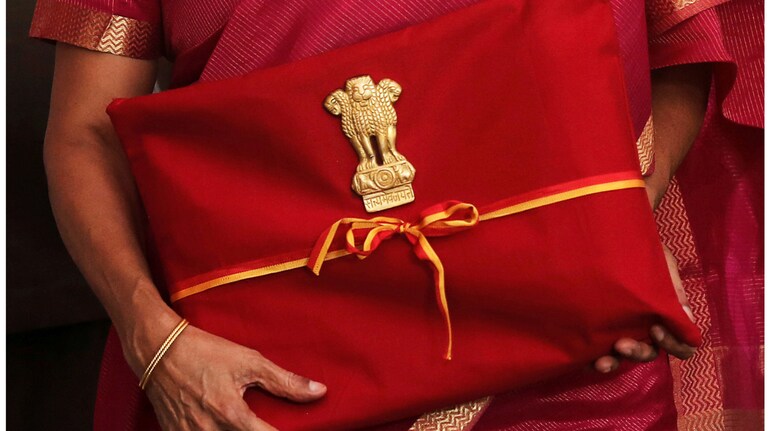
The Union Budget for 2026 will be presented in Parliament at 11 am on February 1, with Lok Sabha Speaker Om Birla confirming the schedule earlier this month. February 1 has, in recent years, become the fixed date for the annual Budget presentation, a practice that was also followed for the Union Budget 2025.
The upcoming Budget will be Finance Minister Nirmala Sitharaman’s ninth consecutive Union Budget, placing her among the longest-serving finance ministers in terms of uninterrupted Budget presentations.
The Budget documents are prepared by the Department of Economic Affairs in the Finance Ministry, which undertakes the extensive annual exercise of compiling estimates of government expenditure and revenue. Beyond detailing the Centre’s fiscal position, the Union Budget also lays out policy priorities, proposed financial schemes and spending plans for the forthcoming financial year.
Discover the latest Business News, Sensex, and Nifty updates. Obtain Personal Finance insights, tax queries, and expert opinions on Moneycontrol or download the Moneycontrol App to stay updated!
Find the best of Al News in one place, specially curated for you every weekend.
Stay on top of the latest tech trends and biggest startup news.





