






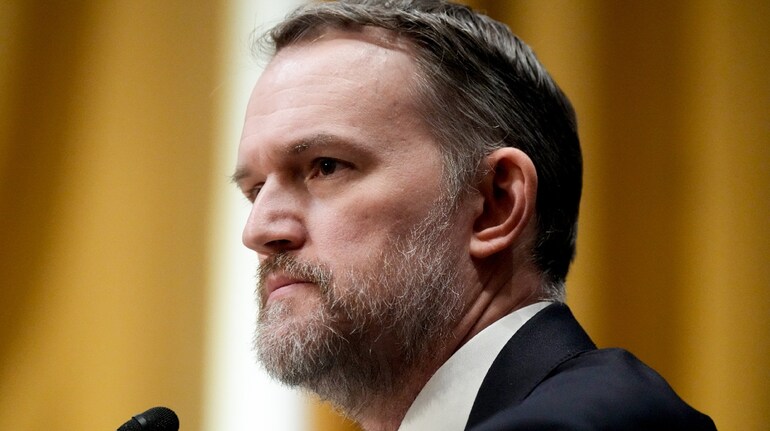

The Office of the United States Trade Representative, on Saturday, said the Trump administration would press ahead with alternative tariff measures after the Supreme Court of the United States limited the president’s use of emergency powers to impose sweeping duties.
In a statement following the ruling on the International Emergency Economic Powers Act (IEEPA), US Trade Representative Jamieson Greer said the decision "affects one element of the Administration’s successful work to reorient the global trading system to benefit American workers and businesses".
President Trump’s use of the International Economic Emergency Powers Act was a necessary and appropriate tool to address the major challenges originating from outside the United States, including the fentanyl, immigration, and trade deficit crises.Regardless of the Court’s… pic.twitter.com/SPKlGDQRtL — United States Trade Representative (@USTradeRep) February 21, 2026
President Donald Trump had used IEEPA to impose what the administration described as "Reciprocal and Fentanyl Tariffs".
Greer defended the move, saying Trump’s use of IEEPA "was a necessary and appropriate tool to quickly and flexibly address major challenges originating from outside the United States, including the fentanyl, immigration, and trade deficit crises".
The Supreme Court, on Friday, held that IEEPA does not authorise the president to levy broad-based global tariffs, dealing a setback to that strategy.
Hours after the ruling, Trump announced he had signed an executive order imposing a new 10% global tariff on imports from all countries, saying the measure would take effect "almost immediately". In a separate earlier post, he said "the adjustment process begins", signalling a shift to alternative legal authorities after the court curtailed the IEEPA route.
The administration has maintained that the court’s decision blocks only one pathway and does not invalidate tariffs imposed under other statutes.
Greer, in his statement, argues that the tariffs had compelled China, Mexico and Canada to act against fentanyl flows and improve border controls. Greer also said the administration used IEEPA to tackle a trade deficit that had "skyrocketed by 40%" during the previous administration. "Between April 1, 2025, and December 31, 2025, the trade deficit in goods has declined 17%," he said.
Despite the court’s ruling, Greer asserted that "these challenges—and the enormous progress we’ve made—remain," and stressed that the administration was committed to continuing Trump’s trade agenda.
The trade office outlined several steps it plans to take “in short order”:
>> Immediately impose a temporary 10% surcharge on imports under Section 122 of the Trade Act of 1974.
>> Launch multiple investigations under Section 301 of the same law into what it described as “unjustifiable, unreasonable, discriminatory, and burdensome” trade practices by major trading partners.
>> Continue ongoing Section 301 probes involving Brazil and China.
>> Maintain existing tariffs under Section 232 of the Trade Expansion Act and conclude pending investigations.
Greer said the Section 301 investigations would likely address issues such as industrial overcapacity, forced labour, pharmaceutical pricing, digital services taxes, discrimination against US technology firms, and practices related to seafood and agricultural trade. If unfair practices are found, “tariffs are one tool that may be imposed,” he noted.
The statement noted that the court’s decision applies only to the president’s reciprocal and fentanyl tariffs under IEEPA. "Extensive tariffs that President Trump has imposed pursuant to other statutory authorities will remain in place," Greer said.
Existing Section 301 tariffs on Chinese goods range from 7.5% to 100%, while sector-specific Section 232 tariffs range from 10% to 50%, depending on the product, covering roughly 30% of US imports, according to the statement.
The administration’s response echoes Trump’s own remarks earlier in the day, when he said the court had not overruled tariffs entirely but had only curtailed one legal pathway, and vowed to use alternative authorities to continue his trade policy.
Discover the latest Business News, Sensex, and Nifty updates. Obtain Personal Finance insights, tax queries, and expert opinions on Moneycontrol or download the Moneycontrol App to stay updated!
Find the best of Al News in one place, specially curated for you every weekend.
Stay on top of the latest tech trends and biggest startup news.





