






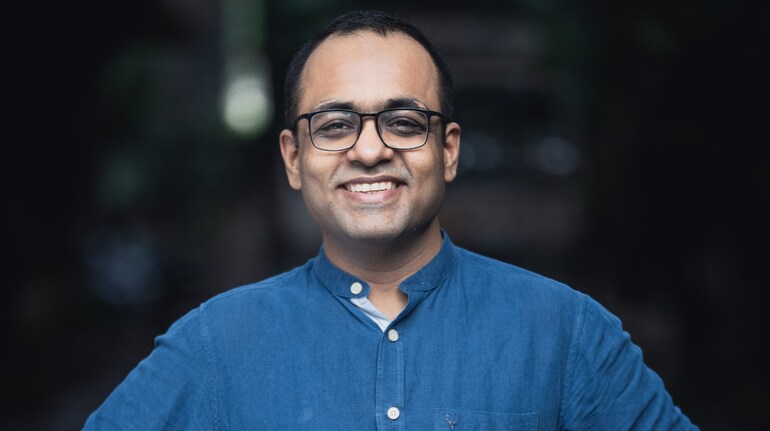
Long before The Whole Truth sold its first protein bar, it was a blog.
Shashank Mehta, then a marketing professional at Hindustan Unilever (HUL), had begun writing about his struggle with obesity and what he saw as a deeper problem on supermarket aisles: packaged food that claimed to be healthy but hid behind technicalities and fine print.
He would buy products, flip them over and decode ingredient lists for readers — often discovering that the “healthy” promise on the front of the pack did not match what was inside.
“I realised writing about the problem wasn’t solving it,” Mehta recalls. “If I could see the tools of the trade being used, what was my excuse not to build a solution?”
That question eventually turned into The Whole Truth, a clean-label packaged food brand launched in 2019 and which recently raised $51 million in funding. The Whole Truth follows a deceptively simple proposition: say exactly what is in the food, and build products that do not rely on additives, artificial flavouring or hidden sugars.
It was not conceived as a protein brand. Nor as a direct-to-consumer (D2C) disruptor. Mehta describes it instead as “a truth company ”, one attempting to rebuild trust in packaged food, category by category.
That philosophical starting point has shaped nearly every decision the company has since made.
Growing in a sector where most D2C brands stall
India’s D2C boom has produced hundreds of brands but very few have crossed the Rs 100–200 crore revenue threshold sustainably. Customer acquisition costs rise, repeat demand weakens, and supply chains become harder to manage as companies attempt to scale beyond digital-first audiences.
The Whole Truth has, quietly, broken past that ceiling.
It operates at an annual revenue run rate of over Rs 500 crore, employs around 270 people directly with another 500 in production and related roles, and has grown roughly eightfold over the last two years, according to Mehta.
Yet its growth trajectory looks very different from the archetypal venture-backed consumer startup.
Instead of outsourcing manufacturing and focusing purely on brand-building, The Whole Truth chose early to control production. Most of its manufacturing is owned and operated in-house — a decision that adds complexity and capital intensity but gives the company tighter control over ingredients, sourcing and quality.
“Scaling food is fundamentally different from scaling other consumer categories,” Mehta says. “If you don’t control the supply chain, you can’t control the promise.”
That choice makes the company look less like a digital-native disruptor and more like a young fast-moving consumer goods (FMCG) company being built from scratch.
Riding the protein wave, without wanting to be defined by it
There is no denying that protein has powered the brand’s rise.
Protein bars and protein powders form the largest share of the company’s business today, riding a broader shift among urban Indian consumers toward fitness, functional nutrition and ingredient awareness. Investors have taken note of that macro trend, fuelling strong interest in the segment.
But Mehta is wary of defining the company around a single nutritional fad.
“Protein is a secular trend, yes,” he says. “But generational brands are not built on one nutrient. Trends change. What lasts is the human insight behind the brand.”
For The Whole Truth, that insight is not about protein consumption but about consumer distrust.
“No one likes being lied to,” Mehta says. “That insight doesn’t change with time, geography or category.”
This framing explains why the company has steadily expanded beyond protein into muesli, peanut butter and dark chocolate, with the long-term ambition of addressing a consumer’s entire packaged food basket.
The goal, Mehta says, is simple in theory and enormously difficult in practice: “If someone trusts us in one part of their pantry, we want to earn the right to serve the rest,” he said.
A different use of venture capital
In February, The Whole Truth raised about $51 million (roughly Rs 400–425 crore) in a Series D round led by Sofina and Sauce.vc, with participation from Peak XV Partners, Rainmatter Health and Ayra Ventures.
The funding came a year after a $15 million Series C round in February 2025 led by Sofina with participation from Z47 (formerly Matrix Partners), Peak XV Partners and Sauce.vc and followed a $15 million Series B in late 2022–early 2023 led by Sequoia Capital India (now Peak XV Partners). Seed and Series A investors between 2019 and 2021 included angels such as Nithin Kamath, Sriharsha Majety and Jaydeep Barman.
Unlike earlier D2C success stories, however, this capital is not being deployed to chase growth through advertising or discounting.
“We were always flush with funds,” Mehta says. “This raise is really for working capital and building infrastructure—new facilities, better production, stronger systems.”
The company’s logic is straightforward: food businesses scale not through marketing alone but through manufacturing depth, inventory management and operational resilience.
It is, in effect, using venture money to build the unglamorous backbone of an old-economy company.
The hard economics of 'real food'
Building a clean-label brand, however, comes with structural disadvantages.
Margins in packaged food are significantly thinner than in categories such as beauty or personal care. Commodity volatility — from cocoa to nuts to dairy-derived proteins — can sharply affect input costs, leaving little room for manoeuvre.
“If you are working only with real ingredients, you don’t have anywhere to hide,” Mehta says. “You can’t change the recipe to manage inflation.”
The company has absorbed substantial cost increases in raw materials over the last two years rather than fully passing them on to consumers, a choice consistent with its positioning but one that makes profitability harder to achieve.
That tension — between integrity and economics — is one the company will need to manage carefully as it scales.
Choosing depth over distribution
Unlike traditional fast-moving consumer goods giants built on sprawling general trade networks, The Whole Truth’s business remains heavily digital.
Its website contributes roughly a quarter to a third of total sales and is still the fastest-growing channel. Quick commerce platforms account for a large share of the remainder, while offline retail remains a relatively small contributor.
The company is intentionally focusing on a narrow but affluent consumer base rather than chasing mass-market penetration prematurely.
“The top few percent of the country may sound small,” Mehta says, “but that’s still crores of consumers—and we are barely scratching that.”
In other words, the company believes it can build meaningful scale before needing to solve for India’s far more complex mass-market distribution puzzle.
Not for sale and not in a hurry
At a time when several venture-backed consumer brands have opted for strategic sales to larger fast-moving consumer goods companies, Mehta insists that selling is not part of The Whole Truth’s roadmap.
The past few years have seen a steady wave of such acquisitions as incumbents look to buy their way into new-age health and digital-first categories rather than build them from scratch.
HUL acquired nutrition-led brand Oziva, ITC picked up Yoga Bar to strengthen its presence in the health-snacking segment and Marico has been particularly active — first scaling Beardo in men’s grooming and, most recently, acquiring a majority stake in plant-based nutrition brand Cosmix.
These deals reflect a broader pattern — large consumer companies are using acquisitions to tap into urban, premium consumption niches that startups have been quicker to identify.
Mehta, however, believes folding into a larger organisation could dilute the very proposition The Whole Truth is trying to build.
“We want to build a 100-year company. This is not about building and selling,” he says.
Instead of pursuing an exit, the company is working toward achieving profitability and reaching roughly Rs 1,200–1,300 crore in revenue with sustainable earnings before interest, taxes, depreciation and amortisation margins before considering a public listing.
“The goal is to never have to raise money again,” Mehta says. “That’s when you know you’ve built a real business.”
The real test lies ahead
The Whole Truth has already broken out of the early-stage growth trap and attracted sustained investor confidence.
But the far-harder phase of transforming from a fast-growing, trust-led brand into a scaled, operationally disciplined food company that can endure commodity cycles, category shifts and competitive imitation has just begun.
Many have tried that transition. Few have succeeded.
How The Whole Truth fares will not only determine its trajectory but also decide if India’s D2C experiment can produce companies that last long enough to resemble FMCG giants they once set out to disrupt.


Discover the latest Business News, Sensex, and Nifty updates. Obtain Personal Finance insights, tax queries, and expert opinions on Moneycontrol or download the Moneycontrol App to stay updated!
Find the best of Al News in one place, specially curated for you every weekend.
Stay on top of the latest tech trends and biggest startup news.






