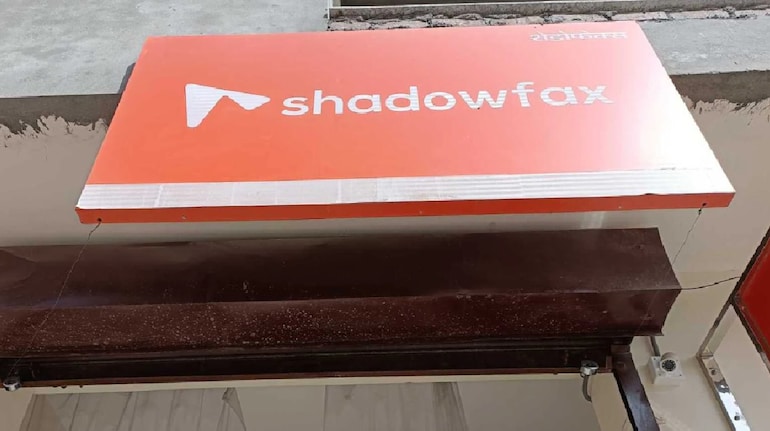
Logistics platform Shadowfax Technologies, backed by Flipkart, Mirae Asset, and Eight Roads Ventures, has filed an Updated Draft Red Herring Prospectus (UDRHP-I) with SEBI for a Rs 2,000- crore initial public offering.
The filing comes as the Bengaluru-based company looks to expand its network, strengthen balance sheet and provide partial exits to early investors through the IPO, split evenly between a Rs 1,000-crore fresh issue and a Rs 1,000-crore offer for sale (OFS).
According to sources, the company is likely to target a valuation of around Rs 8,500 crore.
Who’s selling and who’s staying?
The Rs 1,000-crore OFS will see partial exits by several marquee investors. Flipkart Internet will sell shares worth about Rs 237 crore, while Eight Roads Ventures plans to offload Rs 197 crore worth of stock. IFC plans to sell shares worth Rs 169 crore, NewQuest Asia Rs 166 crore, Mirae Asset–Naver Asia Growth Fund Rs 153 crore and Qualcomm Ventures Rs 52 crore.
The promoters and senior management are not selling, signalling confidence in the business. Founders Abhishek Bansal and Vaibhav Khandelwal together hold 19.13 percent in the company on a fully diluted basis, with Bansal owning 10.76 percent and Khandelwal 8.37 percent.
ICICI Securities, Morgan Stanley India, and JM Financial are managing the offer. Shadowfax may also raise up to Rs 200 crore through a pre-IPO placement, reducing the fresh issue size accordingly.
How will the company use the funds?
The fresh issue proceeds will be used to fuel expansion and strengthen Shadowfax’s logistics infrastructure. The company plans to allocate Rs 423 crore for network expansion, Rs 139 crore for lease payments on existing and new facilities, and Rs 89 crore for marketing and brand-building, the documents show. The remaining amount will be used for potential acquisitions and general corporate purposes.
Shadowfax, which operates across 4,299 touchpoints and 14,758 pin codes, covering over 3.5 million sq ft of space, intends to expand into tier-2 and 3 cities as it deepens its presence across e-commerce, hyperlocal and enterprise logistics categories.
What do the financials reveal?
Shadowfax’s financial trajectory reflects a clear turnaround. Revenue from operations grew to Rs 2,485.1 crore in FY25 from Rs 1,884.8 crore in FY24 and Rs 1,415.2 crore a year earlier. The company reported a net profit of Rs 6.4 crore in FY25, reversing losses of Rs 11.9 crore in FY24 and Rs 14.3 crore in FY23.
In the first half of FY26, the company recorded revenue of Rs 1,805.6 crore and a profit of Rs 21 crore, up from Rs 10.7 crore in the year-ago period.
EBITDA (excluding other income) rose to Rs 561.9 crore in FY25 from Rs 113.7 crore in FY24, while adjusted EBITDA reached Rs 489.7 crore, implying a margin of 1.96 percent, up from 1.02 percent a year earlier.
The company’s debt-to-equity ratio improved to 20.02 percent in FY25 from 26.21 percent in FY24, even as lease liabilities increased.
The founders’ pay
Shadowfax’s founders continue to have modest compensation compared to their peers. Bansal, the company’s managing director and CEO, and Khandelwal, the whole-time director, each earned Rs 1.05 crore in FY25, including Rs 1 crore in fixed pay and Rs 20 lakh in variable pay.
Newer executive directors Gaurav Jaithlia and Praharsh Chandra, who joined the board in June 2025, draw annual remuneration of Rs 11.5 crore and Rs 8.3 crore, respectively. The shift reflects a professionalised management structure, as the company transitions to a listed entity.
How is revenue distributed across business segments?
Shadowfax’s core business remains driven by e-commerce and hyperlocal deliveries. In FY25, express logistics contributed 69 percent (Rs 1,716 crore) to the total revenue, followed by hyperlocal deliveries at 20.6 percent (Rs 513 crore) and other logistics services at 10.3 percent (Rs 256 crore).
Client concentration remains high. The company’s top customer accounted for 48.9 percent of total revenue in the first half of FY26, while the top five customers together contributed 74.6 percent in FY25.
Shadowfax continues to benefit from its close association with Flipkart. In FY25, Instakart Services Pvt Ltd, Flipkart’s logistics arm, contributed Rs 2,668.6 crore, accounting for 10.7 percent of annual revenue, while Flipkart Internet Pvt Ltd added Rs 183.5 crore.
How large is its workforce?
As of September 2025, the company employed 4,472 permanent staff and 17,182 contractual workers, compared to 3,381 and 8,294, respectively, in FY25. Attrition fell to 15.3 percent, down sharply from 50 percent in FY25, indicating improved workforce stability.
Employee benefits expenses rose to Rs 2,655.8 crore in FY25, underscoring the company’s labour-heavy model. Shadowfax also works with an average of 2.05 lakh unique quarterly transacting delivery partners, making it one of India’s largest crowdsourced logistics networks.
What are the key risks?
The company’s updated DRHP flags several structural challenges. Client concentration remains the biggest vulnerability, with nearly three-fourths of revenue tied to a handful of large e-commerce and quick-commerce customers. A slowdown in volumes or contract renegotiation with key clients such as Meesho or Flipkart could materially impact revenue.
Shadowfax’s reliance on a non-exclusive gig workforce also poses operational risks, as delivery partners can shift to rival platforms. The introduction of India’s Social Security Code for gig and platform workers could further increase compliance costs.
Rapid diversification into newer business lines such as EV logistics, dark stores and BFSI parcel delivery introduces execution risks, given limited experience in these segments. Lease liabilities have also risen sharply to Rs 1,322 crore in FY25 from Rs 403 crore in FY24, adding to fixed-cost pressure.
The bottom line
Shadowfax’s Rs 2,000-crore IPO marks one of the most significant public market debuts in India’s logistics tech space. With profitability restored, EBITDA margins improving, and founders holding their full stake, the company is entering the market from a position of financial strength.
Yet the road ahead will demand more than profitability. As Shadowfax seeks a valuation of about Rs 8,500 crore, it will need to prove that its leaner balance sheet and stronger fundamentals can hold up against client concentration, rising lease obligations, and an unpredictable gig workforce.
For investors, the company offers something rare in the logistics-tech space — scale with profits — but sustaining both will determine whether this delivery leader can truly go the distance on Dalal Street.


Discover the latest Business News, Sensex, and Nifty updates. Obtain Personal Finance insights, tax queries, and expert opinions on Moneycontrol or download the Moneycontrol App to stay updated!





Find the best of Al News in one place, specially curated for you every weekend.
Stay on top of the latest tech trends and biggest startup news.