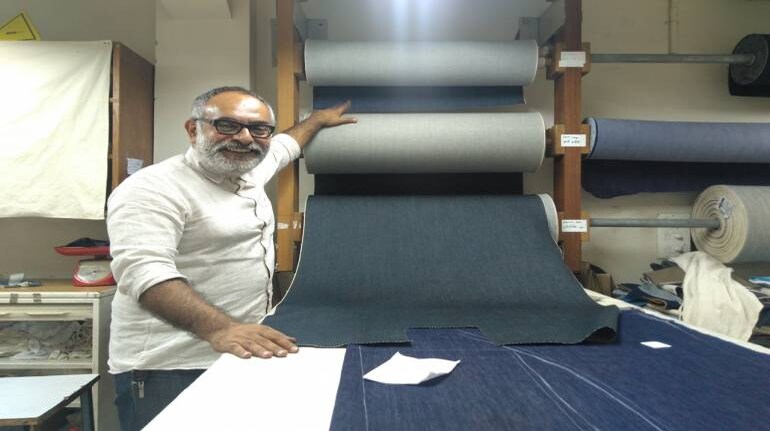
What is the one common thing across recycled polyester zips, organic cotton threads and second hand machines? All of these are used to prepare jeans for customers who are willing to shell out a few extra dollars for keeping the environment in good shape.
Owned and operated by Goodpeople Clothing Company Pvt, private label brand Korra makes environment friendly jeans for conscientious customers.
Jeans manufacturing is one of the most polluting industries in the world. The fabric dyeing involves usage of heavy metals such as cadmium, lead and mercury. The wastewater consisting of these metals is discharged into the local rivers by most factories globally without proper treatment.
According to a 2010 report by environment NGO Greenpeace, people who work in dyeing and washing factories of China’s Xintang (also referred as the jeans capital of the world) complain about reproductive and fertility problems. Xintang produces 40 percent of the total jeans sold in the US every year. As per locals, river water has become so fetid that it is not fit even for laundry forget about drinking.
Founded in 2014, Korra started off by making a conscious choice to produce a sustainable clothing line.
“We built it as a response to a lot of the ills we see in the industry. One of them is the sustainable aspect of manufacturing a product, be it a material or process. It is becoming increasingly important,” says Shyam Sukhramani the company's founder.
Korra uses a combination of organic cotton and better cotton, besides organic threads and zippers made from recycled polyester yarn.
However, this process doesn’t come cheap.
Unlike a regular pair of branded jeans which has an average price of around Rs 2,500, the average ticket size of a jeans at Korra is Rs 4,400. The company claims to have an average order value size of Rs 6,300.
With an aim to keep the input costs low, Korra decided to do away with inventory. It doesn’t store products and instead prepares the jeans only after receiving an order. The company customises it based on the needs and size of each individual customer. The theme clicks with many of its customers who become repeat buyers.
“As people become more aware, they become more specific about what they want and what they don't want and hence the role of customisation becomes extremely important,” says Sukhramani who believes that customers should wear their clothes more instead of buying more.
“When something is made for you specially and it fits well, you will wear the product the longest and that is the biggest contributing factor to a more sustainable environment,” he adds.
But is this school of thought not affecting his business? “No,” he says.
“While the downside of this as a brand is that the customers will not come to me for a long period of time. The good part is that if they have worn our products and if that lasts, the next time when they want to purchase they will definitely consider us before they opt for any other brand,” he adds.
The company delivers 300 orders on a monthly basis and mostly relies on pop-up stores and its own website.
These jeans are made by one tailor completely from the beginning. The tailor gets to sign the product before shipping it to the customer.
Korra is not alone in its endeavour to save the planet. Over the years a dozen companies have emerged in this area such as Indigreen and Avishya.
Indigreen claims that their products are completely made out of organic cotton and bamboo fabric. Avishya on the other hand claims to be using natural dyes.
But has the market evolved to give these brands their due credit? Experts disagree.
“While the United States and Europe are married to the story of these fabrics and farmers, India is not yet ready given the low disposable income,” says Harish Bijoor, Chief Executive Officer of brand and business strategy firm Harish Bijoor Consults, adding that the need of the hour is to create a strong brand recall and associated it with a motive.
For instance, apparel manufacturers can create a strong selling story such as the faux leather industry has done. They call themselves as vegetarian material, given that they are produced from glazed or waxed cotton or paper instead of skin of animals. So, customers who are animal lovers or vegetarians like to stick to those lines instead of buying pure leather, which led to the killing of an animal.
“How do you go and tell a guy that he has to pay Rs 6,000 instead of Rs 3,000 for a jeans? What are the pulls? How uniquely are you positioning it? Can someone else copy the same positioning and get away with its own label?” asks Bijoor, adding that a brand needs to keep in mind all these questions while trying to sell its products.
Even from an investments perspective this segment is unlikely to see Silicon Valley funds fighting for stakes given their limited growth potential.
Therefore, they are most likely to have two types of takers – large apparel companies who want to have a presence in sustainable fashion or investors who like to keep do-gooders in their portfolio.
“These products are not volume drivers. They are seen as a 'value drivers'. Some of these who are successful in combining design, elegance and sustainability will end up being gobbled up (by larger fast fashion brands)," says communications consultant Dilip Cherian.
“There have been epic cases where niche players have grown into occupy large markets, but those are rare cases,” Cherian says, adding that the other option, which will allow them to grow, would be to get into a second segment (non-sustainable) that will then drive volumes.


Discover the latest Business News, Sensex, and Nifty updates. Obtain Personal Finance insights, tax queries, and expert opinions on Moneycontrol or download the Moneycontrol App to stay updated!
Find the best of Al News in one place, specially curated for you every weekend.
Stay on top of the latest tech trends and biggest startup news.