



Moneycontrol PRO
HomeNewsBusinessSingapore says GDP outlook challenged by war, COVID shocks

Singapore says GDP outlook challenged by war, COVID shocks

Supply-chain tensions have risen amid Russia’s invasion of Ukraine and COVID-related lockdowns in China, exacerbating inflation and triggering a global march toward higher interest rates

May 25, 2022 / 08:12 IST
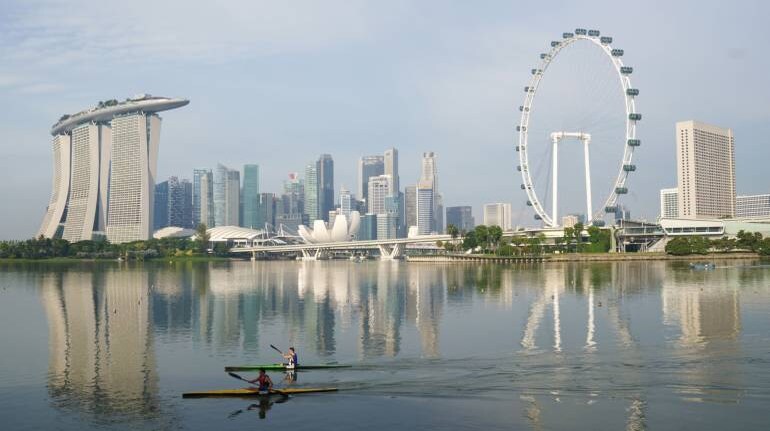
Paddlers row past the central business district, at Marina Bay in Singapore, on Sunday, Oct. 3, 2021. Singapore is looking to launch new vaccinated travel lanes by the end of the year and is in negotiations with several countries including those in Europe and also the U.S., Trade Minister Gan Kim Yong said, signaling continued caution even as other advanced economies open up. Photographer: Ore Huiying/Bloomberg

Singapore sees its economy expanding at the lower end of its expected range this year as the war in Ukraine and sustained supply chain disruptions due to COVID-19 weigh on the outlook for the trade-reliant city-state.

While reiterating its earlier 3 percent to 5 percent growth expectations for 2022, the Ministry of Trade & Industry said Wednesday that “the external demand outlook for the Singapore economy has weakened compared to three months ago.”

Supply-chain tensions have risen amid Russia’s invasion of Ukraine and COVID-related lockdowns in China, exacerbating inflation and triggering a global march toward higher interest rates. Meanwhile, the reopening of the domestic economy and tighter labor market will pressure wages higher.
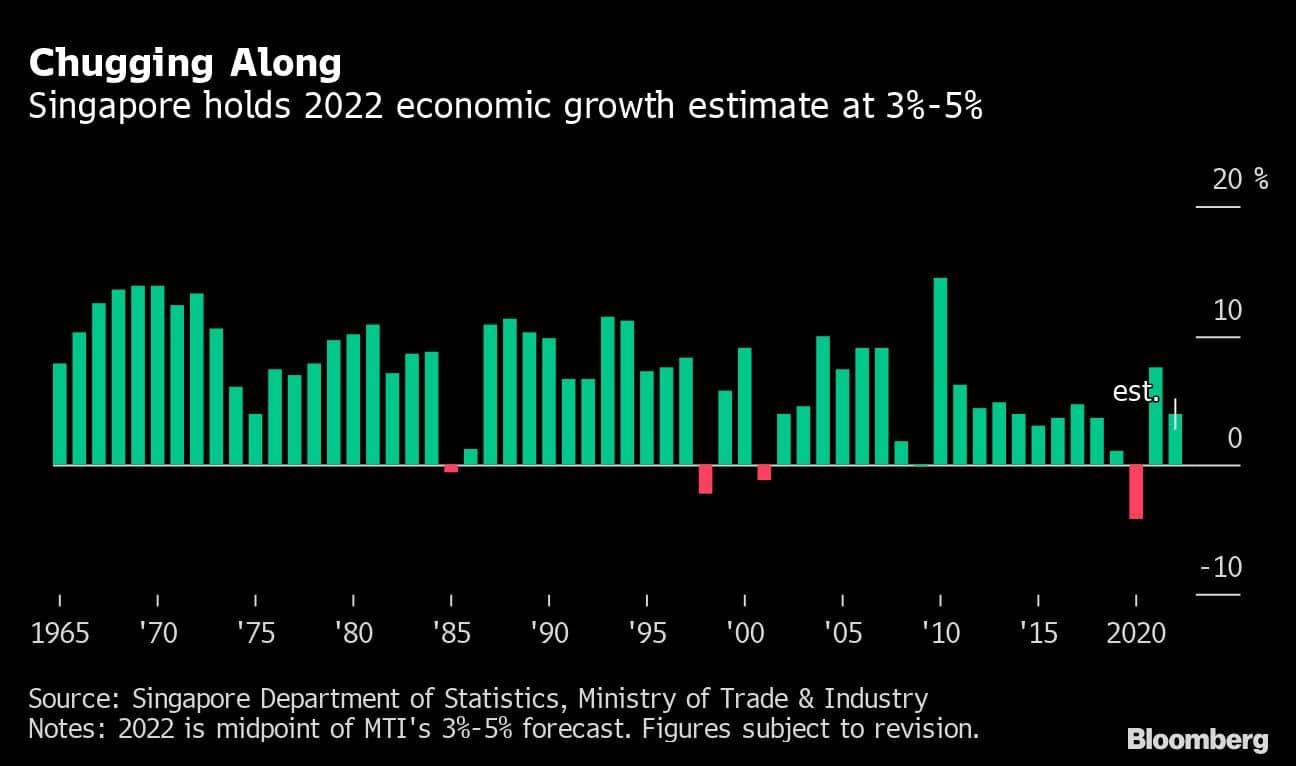
Chugging Along | Singapore holds 2022 economic growth estimate at 3%-5%

“The downside risks in the global economy remain significant,” Gabriel Lim, permanent secretary at the MTI, said in a briefing. He added that global supply disruptions are likely to persist throughout the year and “dampen GDP growth in some external economies by more than we have previously projected.”

COVID-19 Vaccine

Frequently Asked Questions

View more
How does a vaccine work?

A vaccine works by mimicking a natural infection. A vaccine not only induces immune response to protect people from any future COVID-19 infection, but also helps quickly build herd immunity to put an end to the pandemic. Herd immunity occurs when a sufficient percentage of a population becomes immune to a disease, making the spread of disease from person to person unlikely. The good news is that SARS-CoV-2 virus has been fairly stable, which increases the viability of a vaccine.

How many types of vaccines are there?

There are broadly four types of vaccine — one, a vaccine based on the whole virus (this could be either inactivated, or an attenuated [weakened] virus vaccine); two, a non-replicating viral vector vaccine that uses a benign virus as vector that carries the antigen of SARS-CoV; three, nucleic-acid vaccines that have genetic material like DNA and RNA of antigens like spike protein given to a person, helping human cells decode genetic material and produce the vaccine; and four, protein subunit vaccine wherein the recombinant proteins of SARS-COV-2 along with an adjuvant (booster) is given as a vaccine.

What does it take to develop a vaccine of this kind?

Vaccine development is a long, complex process. Unlike drugs that are given to people with a diseased, vaccines are given to healthy people and also vulnerable sections such as children, pregnant women and the elderly. So rigorous tests are compulsory. History says that the fastest time it took to develop a vaccine is five years, but it usually takes double or sometimes triple that time.

View more
Show

Singapore’s core inflation gauge accelerated in April to its fastest in more than a decade, complicating the outlook for the Monetary Authority of Singapore, which tightened policy last month.

Edward Robinson, deputy managing director of the MAS, said at the same briefing that the central bank’s current policy is appropriate and that its previous three tightening moves will slow inflation momentum. However, he warned that monetary policy cannot be the only tool to tackle supply-side disruptions and that there’s a need to brace for market volatility as global financial conditions tighten.

The trade ministry on Wednesday also published final economic estimates for the first quarter, which showed year-on-year gross domestic product growth of 3.7 percent, compared with a prior estimate of a 3.4 percent and in line with a Bloomberg survey. The economy expanded 0.7% in the first quarter from the prior three months.

The view that full-year growth will come in at the lower end of the range “is realistic,” said Selena Ling, head of Treasury Research & Strategy at Oversea-Chinese Banking Corp. “The headwinds of supply chain disruptions, Ukraine conflict inflicting inflationary pain, and China’s inexorable slowdown still have no end in sight.”


Bloomberg
first published: May 25, 2022 08:12 am

Discover the latest Business News, Sensex, and Nifty updates. Obtain Personal Finance insights, tax queries, and expert opinions on Moneycontrol or download the Moneycontrol App to stay updated!

Subscribe to Tech Newsletters

  • On Saturdays

    Find the best of Al News in one place, specially curated for you every weekend.

  • Daily-Weekdays

    Stay on top of the latest tech trends and biggest startup news.

Advisory Alert: It has come to our attention that certain individuals are representing themselves as affiliates of Moneycontrol and soliciting funds on the false promise of assured returns on their investments. We wish to reiterate that Moneycontrol does not solicit funds from investors and neither does it promise any assured returns. In case you are approached by anyone making such claims, please write to us at grievanceofficer@nw18.com or call on 02268882347