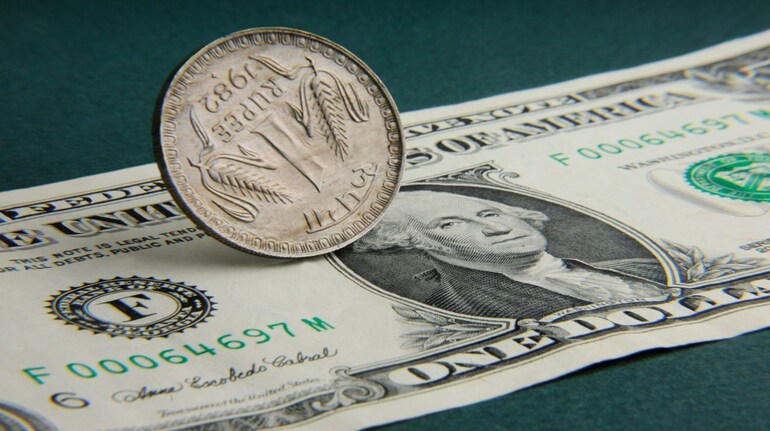

The rupee recovered 13 paise from the record low in the morning trade on January 22 on improved risk appetite after US President Donald Trump stepped back from his threat to impose tariffs on European allies over Greenland.
At 11.55 am, the rupee was trading at 91.5712 against the dollar. It ended the previous session at 91.70 after hitting a record low of 91.74.
Trump, who headlined the World Economic Forum on January 21, said he has put together a “framework of a future deal” on Greenland, following a meeting with NATO Secretary General Mark Rutte on the sidelines of the WEF in Davos.
Trump also said new tariffs on European countries that opposed his Greenland ambitions were no longer needed, signaling a softer approach after weeks of tension.
On January 21, the rupee sank to a new low of 91.74 against the dollar in the afternoon trade following risk-off sentiment over Greenland and consistent selling by the foreign investors, currency experts said.
A DBS Bank India report said on the markets end, the maturity of short-term swaps in the NDF market contributed to the swift pace of depreciation this week. “Authorities have intervened to slow the pace of the rupee correction, although the measured rise in vols pointed to absence of speculative intent or panic,” it said.
Amit Pabari, managing director at CR Forex Advisors, said the rupee’s weakness was largely driven by global risk aversion rather than domestic factors. Renewed geopolitical tensions pushed markets toward safe havens like the US dollar and gold, while equities fell, creating an unfavourable backdrop for emerging-market currencies and keeping the rupee under pressure.
Discover the latest Business News, Sensex, and Nifty updates. Obtain Personal Finance insights, tax queries, and expert opinions on Moneycontrol or download the Moneycontrol App to stay updated!
Find the best of Al News in one place, specially curated for you every weekend.
Stay on top of the latest tech trends and biggest startup news.