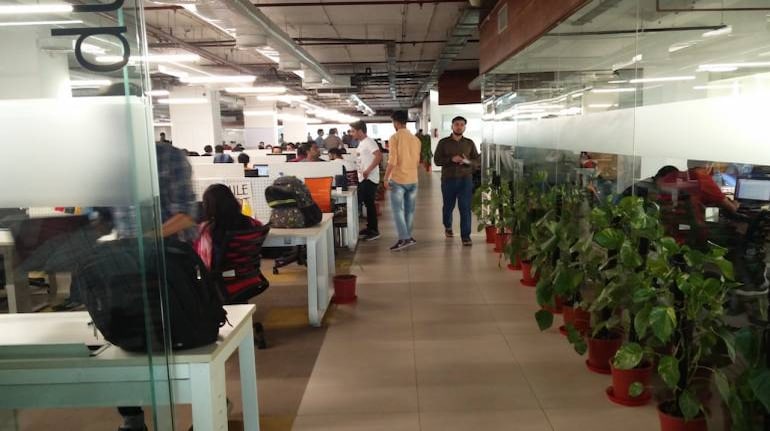
The total net absorption of office space for top eight Indian cities was recorded at 30.57 million square feet (msf) for 2017. India also saw 50 large leasing deals that were over 100,000 sf in 2017 constituting over 11.5 msf, says a report by Cushman & Wakefield.
The trend of large deals has been picking up steam as many companies are in rapid expansion mode. These companies are seeing a strong long-term potential in India’s growth story. Hyderabad emerged as a clear winner with over 10 large deals concluded in 2017, with one of them being over 1.4 msf, it says.
Chennai saw the largest year–on–year increase in net leasing on account of high demand and availability of quality space beating the overall trend in India. The city recorded over 2.7 msf of net leasing. Attractive rental values and stable supply of manpower have been the primary attraction for companies. Additionally, as the Indian government focused on Make in India campaign for companies to set up a manufacturing base in India, Tamil Nadu has emerged as a hub for manufacturing activities in the country. This gives Chennai a clear advantage of being the front office for many such businesses.
Mumbai saw an increase in net absorption by about 9 percent in 2017, mostly driven by the continued growth in the IT/ BPM uptake in the peripheral locations of Thane-Belapur Corridor and some significant front office deals by BFSI and consulting sectors. Pune, which recorded an increase of 18% in net absorption in 2017, recorded a surge in activities in the last quarter with a few large deals concluded in the IT/ BPM sector. Pune remained a strong competitor to Hyderabad with comparable rental values.
Hyderabad which has been a growth story for over 6 quarters now, recorded a moderate decline of - 3% in net absorption in 2017. The city has been attracting large-scale transactions on the back of attractive policies, stable rental values and high availability of talent in the state, pushing companies to expand in the city. Stability in political conditions of the state has been a strong element of attraction, especially when compared to its other peer cities of Bengaluru and Chennai.
“India’s focus on creating an attractive and lucrative business environment has created significant impact. With India’s rise in position in “ease of doing business”, investor confidence is set to grow. Further, with various strategic government programmes such as Make in India and Start Up India, there is a clear focus on long-term stability of Indian economy. This is given a great fillip recently by Moody’s who promoted India upwards in their investment ratings showing confidence in the growth story of India. We expect these positive developments to create a very strong base for office space growth in the next 2 – 3 years,” says Anshul Jain, country head and managing director, India.
The beginning of the year saw a slowdown in momentum in office leasing, due to numerous reasons. Last year’s BREXIT and Donald Trump’s election as the US President were expected to have an adverse impact on commercial office leasing in India, which depends very heavily on global outsourcing activities. Even countries like Australia, Singapore and a few other countries announced protectionist policies that had dampened business sentiments at the beginning of the year. Activities turned favourable in the second half leading net absorption inching closer to the previous year’s volumes.
Chennai (+38%), Pune (+18%), and Mumbai (+9%) recorded growth in net leasing activities keeping the growth momentum positive. The biggest decline in net absorption was recorded by Bengaluru, which saw a decline of 30% y-o-y in 2017 mostly due to low supply. However, Bengaluru remained the largest office market in volume terms recording over 8.6 msf of net absorption in 2017. Kolkata recorded the highest growth in incremental supply growing at 180%, adding 2.7 msf to its current stock in the year. Coupled with low rents, Kolkata offers interesting opportunities to occupiers for expansion.
“The office leasing trends have been positive in the second half 2017 as global and national uncertainties settled. By the second half, it was clear that impact of events such as BREXIT, US FED rates revisions, GST implementations in India, RERA in India, were going to be minimum on the growth of the commercial real estate sector of the country. Even while the GDP growth showed a drop in the mid-quarters, the outlook for India’s GDP growth is positive, giving a further boost to corporates to carry on with their growth plans,” adds Jain.

Discover the latest Business News, Sensex, and Nifty updates. Obtain Personal Finance insights, tax queries, and expert opinions on Moneycontrol or download the Moneycontrol App to stay updated!
Find the best of Al News in one place, specially curated for you every weekend.
Stay on top of the latest tech trends and biggest startup news.