






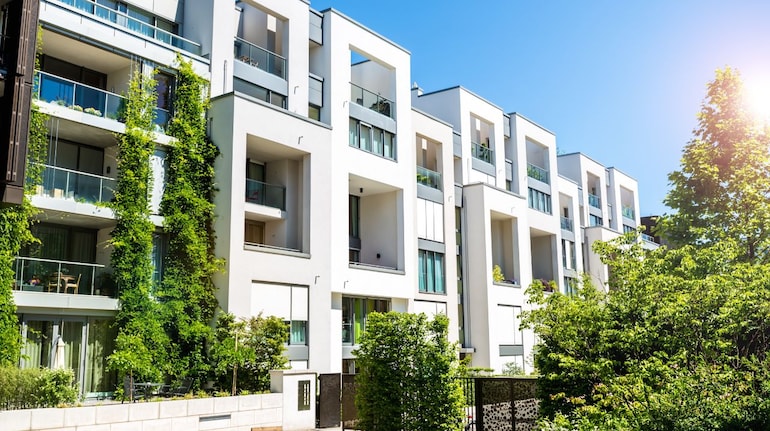

After sharp price gains across top cities for the past two years, India’s residential property market is entering 2026 with prices expected to stabilise, though the risk of a slowdown in select markets remains.
Home prices rose at their fastest pace in years through 2025 because of strong end-user demand, tight inventory in prime micro-markets, rising construction and land costs, and sustained appetite for premium and luxury housing.
Industry experts said 2026 is unlikely to see a repeat of last year’s sharp price escalation. Instead, the market is expected to transition into a phase of calibrated growth, with pricing becoming increasingly micro-market and segment specific.
They said property price growth is expected to moderate after sharp gains across major cities such as Noida, Gurugram, Mumbai, Bengaluru, Hyderabad and Pune in previous years.
Residential sales, which rebounded sharply after the pandemic, have moderated in recent quarters alongside a weaker domestic equity market. Real estate developer Signature Global (India) Ltd earlier this month said it might not meet its sales guidance for the current fiscal, citing softer demand conditions.
Analysts said that the slowdown is expected to extend to other listed developers as well. Nomura Securities projects a 92 percent fall in DLF’s pre-sales and a 43 percent decline for Oberoi Realty. Analysts said that housing demand in Gurugram and Noida could soften amid elevated prices and a slowdown in new project launches.
From momentum to moderation
According to the CREDAI-CREMatrix Developer Sentiment Survey 2026, most developers expect residential prices to either stabilise or grow at a slower pace this year, with demand holding firm but becoming more value-conscious. The survey also points towards a moderation in property price hikes rather than more cautious buyer behaviour.
“The market has absorbed a lot of price increase over the last 18–24 months. In 2026, buyers are more discerning. They are still willing to pay a premium—but only for the right location, connectivity and product quality. We are clearly seeing a shift from aggressive pricing to strategic pricing,” said Sandeep Chhillar, Founder & Chairman, Landmark Group.
City-wise divergence emerging
City wise trends point to divergence rather than a uniform slowdown. Market observers said that Delhi-NCR remains one of the strongest markets, driven by infrastructure projects such as the Dwarka Expressway, Noida International Airport and metro expansions.
However, affordability pressures are beginning to temper demand in peripheral micro-markets where prices have risen faster than income growth.
Sehaj Chawla, Managing Director, TREVOC Group said that demand remains resilient in well-connected corridors where infrastructure delivery is clearly visible.
“Across NCR and other metros, price appreciation in 2026 is expected to become more calibrated. Projects at well-connected locations will attract greater traction,” he added.
Mumbai continues to see resilience in premium and redevelopment-led supply, though mid-segment buyers are increasingly price-sensitive. Experts said that Bengaluru and Hyderabad are witnessing steady absorption, supported by technology-sector employment, but price growth is expected to moderate as new supply comes on stream. Pune and Chennai are likely to remain end-user-driven, with limited speculative activity, they said.
Developers recalibrate strategies
Market observers said that developers are recalibrating strategies in 2026 due to slow momentum.
Amit Modi, Director, County Group, said that affordability has become a key conversation again, so instead of chasing headline price hikes, developers are focusing on optimising unit sizes, introducing flexible payment plans, and phasing launches to align with demand absorption.
“Developers are responding by fine-tuning product mix, more efficient homes, fewer speculative launches, and sharper pricing discipline. The objective is volume-led growth rather than aggressive appreciation,” he added.
CREDAI-CRE Matrix survey echoes this trend, indicating that developers are prioritising execution and cash-flow visibility over rapid expansion. New launches are increasingly concentrated in established micro-markets with proven demand rather than peripheral locations.
Stability over slowdown
Industry watchers anticipate that 2026 will test the market’s ability to sustain demand without relying solely on price momentum. Interest rates are expected to remain largely stable, supporting housing demand, but affordability constraints will cap sharp upside.
Chawla of TREVOC Group said the next phase of growth would be driven less by speculation and more by fundamentals. “Markets with infrastructure, employment visibility and quality supply will continue to perform,” he said.
Discover the latest Business News, Sensex, and Nifty updates. Obtain Personal Finance insights, tax queries, and expert opinions on Moneycontrol or download the Moneycontrol App to stay updated!
Find the best of Al News in one place, specially curated for you every weekend.
Stay on top of the latest tech trends and biggest startup news.





