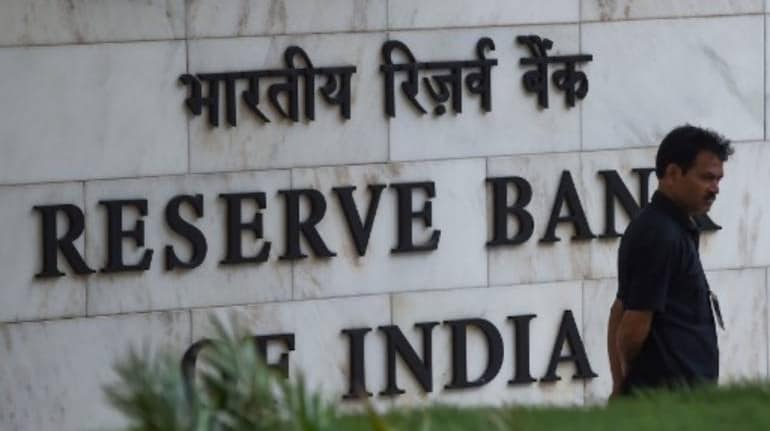
The Monetary Policy Committee (MPC) is prepping to announce the last monetary policy of FY24. Coming quickly on the heels of a fiscally prudent interim Budget, expectations from the upcoming monetary policy have arisen. A change of stance? Measures to provide durable liquidity injection? With a monetary policy pivot in sight (not just in India but globally as well in 2024), such discussions are expected and perhaps will amplify as we move into FY25.
But for now, we expect the February 2024 policy to be a non-event (on both stance and rates), for three primary reasons:
Comfort on food remains evasive
After slipping below 5.0 percent briefly in October 2023, CPI inflation accelerated yet again in the range of 5.6-5.7 percent over November-December 2023. At a granular level, while seasonal correction in food prices quickened in December 2023, it remained lower than historically seen in December. As such, CPI food inflation has remained northwards of 8.0 percent over November-December 2023, ending the calendar year at a 5-month high of 8.7 percent. The still elusive comfort on food inflation and the prospect of non-core price pressures to pass through to core inflation or upend inflation expectations suggests that the RBI almost definitely will be unwilling to lower its guard on inflation any time soon.
Fed cuts: The wait got longer
Blockbuster additions to non-farm payrolls (373,000 in January 2024) and continued growth in US wages are reinforcing the ‘exceptionalism’ in US growth momentum continuing well into 2024. This has pushed back not just the timing (beyond March 2024) but also the quantum (115 bps versus 150 bps earlier) of rate cut expectations for the imminent rate easing cycle. In our opinion, the RBI would follow and not lead the US Federal Reserve (in terms of timing its first rate cut) in a bid to keep the rate differential intact.
Interim Budget, after all
Although the interim Budget appears non-inflationary and projects the desired macro signal, it was after all interim in nature. The RBI is likely to be cautious and perhaps would like to prefer waiting for the final Budget in June/July 2024 to get the full picture.
Having said so, the February 2024 monetary policy will be keenly watched for RBI to reveal its full FY25 GDP growth forecast. With the government pegging nominal GDP growth at 10.5 percent for FY25, wherein the 6.5-7.0 percent range will RBI peg its FY25 growth forecast? (recall, RBI’s Dec-23 Q1-Q3 FY25 GDP projections average at 6.4 percent).
Now let us shift focus to the big picture, and look beyond February 24.
On growth, clearly, there has been a fair degree of comfort. The higher-than-projected first advance estimate of FY24 GDP growth by NSO, at 7.3 percent completely defies the expectation of moderation in FY24 (versus 7.2 percent in FY23). Growth momentum is anticipated to find support in FY25 from the broad-basing of the investment cycle (to include private sector) and an end of El Nino allowing agriculture/rural demand to recover. Having said so, the slowdown in global growth, moderation in urban demand (both goods and services) and absence of a deflator ‘kicker’ akin to last year (FY24) will mean lower GDP growth in FY25. We peg growth in the range of 6.1-6.3 percent in FY25.
CPI inflation trajectory is likely to turn favourable. As per our assessment, inflation could turn out to be marginally below RBI’s estimate of 5.2 percent in Q4 FY24, on account of delayed winters and positive seasonality, along with administrative measures perhaps beginning to have an impact. We had highlighted in the December 2023 inflation assessment that some staples (beyond perishables) within the food basket namely pulses, sugar and spices had shown nascent signs of let up in price pressures. This could perhaps intensify in Q4 FY24, as sales under the ‘Bharat’ brand especially for rice, wheat and pulses galvanise. Further, the expectation of a normal monsoon, as global agencies predict a complete withdrawal of El Nino (ENSO turns neutral) by Apr/May 2024 augurs well for food price pressures, alongside well-behaved crude oil prices despite tensions in the Red Sea region.
The comfort on core inflation, which slipped to a cyclical low of 3.9 percent in December 2023, could also remain intact. We project core inflation remaining close to current levels up to Q2 FY25; moving marginally higher thereafter in the range of 4.5-5.0 percent in H2 FY25. Having said so, we will be watchful of the emergence of core inflation pressures on account of an increase in import costs from the Red Sea disturbance (if it were to persist).
Overall, we expect inflation to moderate to 4.8 percent (RBI’s estimate of 4.5 percent) in FY25 from 5.3 percent in FY24. This builds on FY24’s achievement of ‘getting back to the target band’, to ‘alignment with the target’ in FY25.
What does this mean for the rate cut trajectory in FY25?
The strength of growth eliminates any urgency for RBI to soften its stance when inflation is yet to align with the target. This gives RBI a ‘wait window’ to draw clarity on the 2024 Southwest monsoon, the impact of Rea Sea tensions, timing of US Fed actions before it embarks on its rate easing cycle.
Remember, market pricing of a pivot can move aggressively, thereby loosening financial conditions rapidly. This could potentially bring forward de facto monetary easing earlier than desired. We have seen the Fed struggle with this aspect of volatility in market pricing, only to provide pushbacks to restore normalcy. RBI should avoid drawing itself into a similar situation.
That said, we expect RBI to pivot on stance (turn neutral) in Q2 FY25 (August 2024 policy), setting the stage for embarking on a shallow rate cutting cycle from October 2024, and sniping a cumulative 75 bps in FY25.
…And liquidity implications
There have been signs of RBI turning mildly hawkish over the last few months, via its liquidity curtailment steps. Despite the net liquidity deficit soaring to a record of Rs 3.3 trillion on January 24, 2024 (though it has eased thereafter possibly owing to a drawdown in government cash balance towards the end of the month), the RBI is unlikely to provide any durable liquidity easing measures as long as monetary policy stance remains in “withdrawal of accommodation” mode. Steps to ease frictional tightness in liquidity would continue to be taken for fine-tuning operations, which does not require the monetary policy platform.
As we expect the repo rate to remain unchanged until Q2 FY25, the RBI could signal its ‘steady for longer’ bias by curbing core liquidity surplus to ensure that money market rates trade in the upper band of the LAF corridor. However, this stance could reverse in H2 FY25 (timed to the rate easing cycle) with the RBI deploying easing measures (OMO purchases) to supplement reserve money growth (in the absence of which core liquidity will get extremely restrictive).
Yuvika Singhal is Economist at QuantEco Research. Views are personal, and do not represent the stand of this publication.
Discover the latest Business News, Sensex, and Nifty updates. Obtain Personal Finance insights, tax queries, and expert opinions on Moneycontrol or download the Moneycontrol App to stay updated!
Find the best of Al News in one place, specially curated for you every weekend.
Stay on top of the latest tech trends and biggest startup news.