






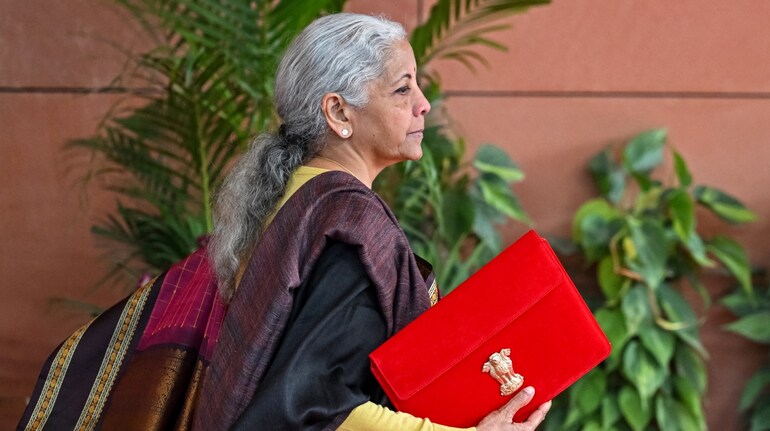

Contrary to widespread expectations, the Hon’ble Finance Minister did not announce any changes in personal income tax slab rates in Union Budget 2026. While many taxpayers were hoping for rate cuts or higher deductions, the government instead chose to focus on procedural reforms aimed at simplifying compliance, reducing litigation, and easing the burden on individual taxpayers, especially small taxpayers, as evident from the following proposals.
Extended Filing and Revision Timelines
In a major relief for taxpayers, filing timelines have been rationalised. For individuals filing ITR-1 and ITR-2, the due date will continue to remain 31 July. However, for non-audit cases involving business or professional income and partners of non-audit firms, the due date has been proposed to be extended from 31 July to 31 August.
Another key reform relates to timelines for filing of revised returns. Currently, revised and belated returns share the same deadline of nine months from the end of the relevant tax year (i.e., 31 December), leaving no scope for revision, if a belated return is filed at the last moment. To address this anomaly, the government proposes to extend the time limit for filing revised returns, to 12 months, from the end of the tax year (i.e., 31 March), with a nominal fee.
Updated Returns and Reduced Litigation
The Budget proposes flexibility in filing updated returns, even in certain reassessment scenarios, subject to payment of additional tax of 10%. Also, such income will not attract penalty. This move is expected to reduce prolonged litigation and encourage voluntary correction of errors.
Buying Property from NRIs Gets Easier with TAN Relaxation
An important relief has also been announced for home buyers. Going forward, a resident individual or Hindu Undivided Family buying property from a non-resident seller will no longer be required to obtain a Tax Deduction Account Number (TAN) for deduction of taxes. This change, effective from 1 October 2026, removes an unnecessary compliance step.
Rationalisation of TCS Rates
To ease cash flow pressures, especially for students and families, a reduction in Tax Collected at Source (TCS) rates has been proposed. Under the Liberalised Remittance Scheme, TCS for education and medical treatment has been reduced from 5% to 2%. Similarly, TCS on overseas tour programme packages has been rationalised to a flat 2%, replacing the earlier slab-based structure.
Foreign Assets of Small Taxpayers – FAST-DS 2026
One of the most significant announcements is the proposed Foreign Assets of Small Taxpayers - Disclosure Scheme, 2026 (FAST-DS 2026). This scheme seeks to address non-disclosures of foreign income or assets by resident taxpayers.
This proposal owes its origin to the Black Money (Undisclosed Foreign Income and Assets) and Imposition of Tax Act, 2015, under which a one-time compliance window was offered in 2015. Since then, tax authorities have been observing that non-compliance continues to persist, particularly among small taxpayers who failed to inadvertently disclose foreign assets.
Such cases commonly include ESOPs or RSUs received during overseas employment, dormant foreign bank accounts held by former students, savings or insurance policies of returning NRIs, or assets held during short-term foreign deputations.
To address this, the government has proposed a one-time opportunity to declare foreign income or assets that were not reported earlier, with no prosecution exposure if the conditions of the scheme are met with.
If the total value of undisclosed foreign income and/ or assets is up to INR1 crore, the taxpayer will need to pay 30% tax each on the value of undisclosed income and/ or assets and an equal amount as additional tax. For cases where foreign assets were bought from income that accrued or arose out of India when such a taxpayer was non-resident and the asset was not disclosed in the tax return, a fixed fee of INR 1lakh will be levied, provided the asset value does not exceed INR 5 crore.
Relief from prosecution has also been extended to non-reporting of foreign assets (other than immovable property) of up to INR 20 lakhs retrospectively from 1 October 2024.
Overall, the Budget marks a clear step towards simplification, ease of compliance, and reduced fear of penalties. By addressing long-standing procedural pain points, the Budget aims at moving steadily towards a more trust-based and user-friendly tax administration.
Divya Baweja, Partner, Deloitte IndiaDiscover the latest Business News, Sensex, and Nifty updates. Obtain Personal Finance insights, tax queries, and expert opinions on Moneycontrol or download the Moneycontrol App to stay updated!
Find the best of Al News in one place, specially curated for you every weekend.
Stay on top of the latest tech trends and biggest startup news.





