






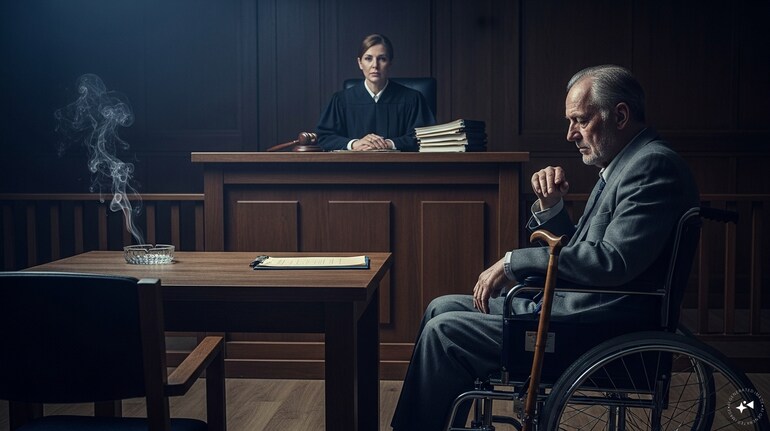

In a judgment that may shape future cases involving military disability pensions, the Supreme Court has rejected a former Army personnel’s appeal for compensation over a brain stroke, ruling that the ailment stemmed from lifestyle factors and was not attributable to military service.
What is a disability pension, and who is entitled to it?
A disability pension is a monetary benefit granted to members of the armed forces who sustain a disability, or whose existing condition is worsened, while performing their duties. It is generally made up of two components: the service element, which is linked to the individual’s length of service, and the disability element, which depends on the degree of disability certified by a medical board. The structure is designed to provide greater financial support to personnel with more severe disabilities.
What did the Court say?
Referring to Regulation 173 of Pension Regulations for the Army, 1961 and paragraph 6 of the Guide to Medical Officers, 2002, the Court said that “compensation cannot be awarded for any disablement or death arising from intemperance in the use of alcohol, 'tobacco' or drugs or sexually transmitted disease, as these are the matters within the member's own control.”
“By denying disability pension to Sarevesh Kumar, the Supreme Court of India has reinforced a clear principle: ailments arising from personal habits like smoking fall outside service-attributable disabilities unless a direct service nexus is proved,” said Alay Razvi, Managing Partner, Accord Juris.
What is the case?
The case relates to Civil Appeal No. 773/2024, filed by Sarevesh Kumar against the Union of India, decided by the Supreme Court of India on February 12, 2026. The appellant, a former Army personnel, had sought disability pension on account of suffering an ‘Ischemic Stroke (RT MCA Territory). However, the Medical Board concluded that the stroke was neither attributable to military service nor aggravated by service conditions, noting that the appellant was a habitual smoker who consumed around ten bidis per day. The Board opined that smoking is a known risk factor for ischemic stroke, and therefore, the disability arose from personal habits rather than service-related causes.
The Court referred to Regulation 173 of the Pension Regulations for the Army, 1961 and the Guide to Medical Officers, 2002, which clearly state that compensation cannot be granted for disability arising from intemperate use of alcohol, tobacco, or drugs, as these are within the individual’s control. Distinguishing this case from earlier judgments such as Bijender Singh vs Union of India, where disability was linked to high-altitude service in Siachen, the Court held that the present facts were different. Finding no error in the Tribunal’s decision, the Supreme Court dismissed the appeal and upheld the denial of disability pension.
What will be the future implications of this case?
This judgment reinforces a strict evidentiary standard, signalling that the ‘aggravation by service’ plea cannot override clear clinical evidence of self-induced health risks. “By distinguishing this from cases involving high-altitude postings, the Court has narrowed the path for lifestyle-related disability claims. Moving forward, Judicial Tribunals will likely prioritise specific medical risk factors like hypertension or smoking over general service stress when determining pension eligibility,” said B. Shravanth Shanker, Managing Partner, B. Shanker Advocates LLP.
Is there any scope that the other case has a chance to get disability pension despite having a similar habit
For instance, “another serviceman having similar smoking habits would not necessarily suffer from the same disability as in the captioned case, and such a serviceman may suffer from a disability completely unrelated to such habits. In such a case, since such habits would not be attributable to the disability, there still lies scope for a claim for disability pension to be considered,” said Deeksha Prakash, Advocate, ASL Partners.
What has changed in disability pension tax after Budget 2026?
Under Budget 2026, only those armed forces personnel who were invalidated out of service before completing their tenure due to a bodily disability will be eligible for tax exemption on disability pension. Personnel who retire after completing their full term of service (superannuation), even if they have a disability, will no longer qualify for this tax exemption.
“This will significantly impact veterans who complete their tenure but continue to live with service-related disabilities, as their disability pension component will now face tax implications. From a tax policy perspective, this change prioritises early medical discharge cases but narrows relief for long-serving personnel,” said Tushar Kumar, Advocate, Supreme Court.
Discover the latest Business News, Sensex, and Nifty updates. Obtain Personal Finance insights, tax queries, and expert opinions on Moneycontrol or download the Moneycontrol App to stay updated!
Find the best of Al News in one place, specially curated for you every weekend.
Stay on top of the latest tech trends and biggest startup news.





